Tree Care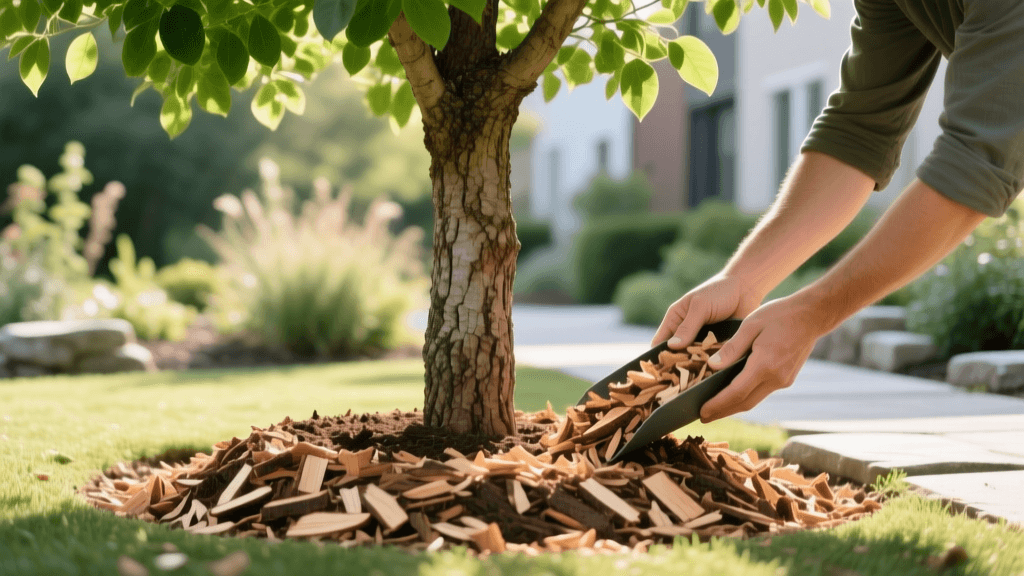
Sustainable Tree Mulching: Eco-Friendly Materials and Tips
The Hidden Environmental Cost of Conventional Mulch
When homeowners think about tree care, mulching is often the first step that comes to mind. However, not all mulch is created equal. The landscaping industry is heavily reliant on dyed hardwood mulches and rubber mulches, both of which pose significant environmental and ecological drawbacks. Rubber mulch, often marketed as a permanent, eco-friendly solution because it recycles old tires, actually leaches heavy metals like zinc and toxic volatile organic compounds (VOCs) into the soil as it degrades under UV exposure. It offers zero nutritional value to the soil food web and can overheat tree roots during summer months.
Similarly, brightly dyed commercial wood mulches are frequently made from recycled construction waste, pallets, and demolished structures. According to Penn State Extension, these processed woods often lack the diverse lignin and cellulose profiles necessary to support beneficial soil fungi. Furthermore, the carbon-to-nitrogen ratio in these uniform, dry wood chips is incredibly high. As soil microbes attempt to break them down, they rob the surrounding soil of vital nitrogen, leading to nutrient-deficient trees with yellowing foliage. Transitioning to sustainable, eco-friendly mulching methods is essential for long-term tree health, water conservation, and soil regeneration.
Top Eco-Friendly Mulch Materials for Sustainable Tree Care
To build a resilient landscape, we must mimic the natural forest floor. In a woodland ecosystem, trees are surrounded by a diverse, layered blanket of decaying leaves, twigs, and fallen branches. Here are the best sustainable alternatives to commercial bagged mulch.
1. Arborist Wood Chips and Ramial Chipped Wood (RCW)
Arborist wood chips are a byproduct of local tree pruning and removal services. Instead of sending this biomass to a landfill, you can repurpose it for your landscape. The gold standard within this category is Ramial Chipped Wood (RCW), which consists of chipped branches less than 3 inches in diameter. RCW is rich in soluble sugars, pectins, and proteins found in the cambium layer of young branches. When processed by mycorrhizal fungi, RCW rapidly builds stable humus and dramatically improves soil structure. Best of all, local arborists will often drop off a load of fresh wood chips for free, or you can use community-sharing apps like ChipDrop to connect with local tree care companies looking to offload their daily chipping.
2. Leaf Mold
Leaf mold is simply shredded leaves that have been allowed to decompose over a period of one to two years. Unlike traditional compost, which is bacteria-driven and heat-generating, leaf mold is a cold, fungal-driven decomposition process. The resulting material is a dark, crumbly, earthy-smelling humus that can hold up to 500 times its own weight in water. To create it, simply rake your autumn leaves into a wire mesh cylinder, wet them thoroughly, and let nature do the work. Shredding the leaves first with a mulching mower accelerates the process and prevents them from matting together.
3. Sustainably Sourced Pine Straw
For acid-loving trees like oaks, dogwoods, and magnolias, pine straw is an excellent, lightweight mulch that allows water and air to penetrate easily while preventing soil erosion on slopes. However, sustainability is key here. Avoid commercially harvested pine straw that strips commercial pine plantations of their natural ground cover. Instead, look for locally raked straw from sustainable forest management operations, or simply collect the needles from your own property's coniferous trees.
Comparing Sustainable Mulch Options
Choosing the right material depends on your budget, local availability, and specific tree needs. Below is a comparison chart to help you select the most eco-friendly option for your yard.
| Mulch Material | Estimated Cost (Per Cubic Yard) | Water Retention | Decomposition Rate | Soil Biology Impact |
|---|---|---|---|---|
| Arborist Wood Chips (RCW) | $0 - $15 (Delivery fee) | High | Slow (2-4 years) | Excellent (Fungal dominance) |
| Homemade Leaf Mold | $0 (Labor only) | Very High | Fast (6-12 months) | Excellent (Humus builder) |
| Sustainable Pine Straw | $40 - $60 | Moderate | Moderate (1 year) | Good (Acidifies soil slightly) |
| Commercial Dyed Mulch | $35 - $50 | Low | Very Slow | Poor (Nitrogen robbery) |
The "Donut" Method: Proper Application Measurements
Even the most sustainable, eco-friendly mulch can harm a tree if applied incorrectly. The most common mistake homeowners make is "volcano mulching"—piling mulch high against the tree trunk. The Arbor Day Foundation explicitly warns against this practice, as it traps moisture against the bark, leading to rot, disease, and the growth of secondary roots that can eventually girdle and strangle the tree.
Instead, utilize the sustainable "Donut" method, often referred to as the 3-3-3 rule:
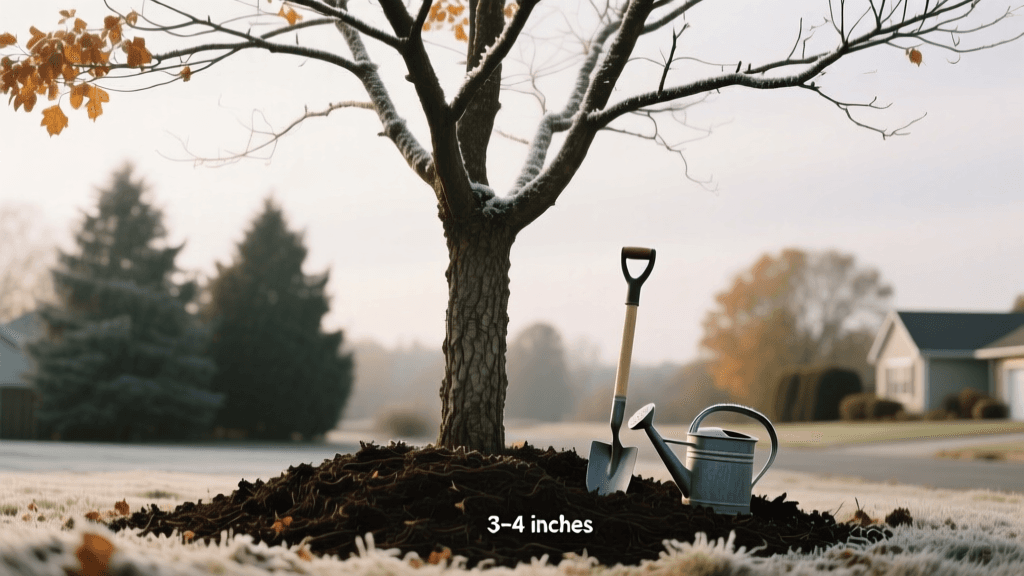
- 3 Inches Deep: Apply a layer of mulch no deeper than 3 to 4 inches. Deeper layers restrict oxygen flow to the feeder roots and create anaerobic conditions that breed harmful pathogens.
- 3 Feet Radius: Extend the mulch ring at least 3 feet outward from the trunk. For mature trees, extending the mulch to the tree's drip line (the outer edge of the canopy) is the ultimate sustainable goal, as this is where the majority of the water-absorbing feeder roots are located.
- 3 Inches Away: Keep the mulch exactly 3 inches away from the base of the trunk. The root flare—the area where the trunk widens and meets the roots—must remain completely exposed to the air.
Pairing Mulch with Sustainable Watering Techniques
Mulch acts as a thermal insulator and a moisture trap, but to truly embrace an eco-friendly landscape, you must pair it with sustainable watering methods. Relying on municipal tap water to keep your trees hydrated is resource-intensive and costly.
Rain Barrel Integration: Connect your downspouts to 50-gallon rain barrels. Use the harvested rainwater to deeply soak your mulched trees during dry spells. Rainwater is naturally soft, slightly acidic, and free of the chlorine and fluoride found in municipal water, making it ideal for soil biology.
Olla Pots for Young Trees: For newly planted saplings that require consistent moisture, bury unglazed terracotta Olla pots near the root zone. Fill the pots with water and cover the top. The water slowly seeps through the porous clay directly into the soil and the surrounding mulch bed, reducing surface evaporation by up to 70% compared to overhead watering.
Drip Irrigation under Mulch: If you use a drip line system, always run the tubing underneath the mulch layer. This prevents the mulch from wicking moisture away from the soil surface and protects the plastic tubing from UV degradation, extending the life of your irrigation materials and reducing plastic waste.
Long-Term Soil Biology and Carbon Sequestration
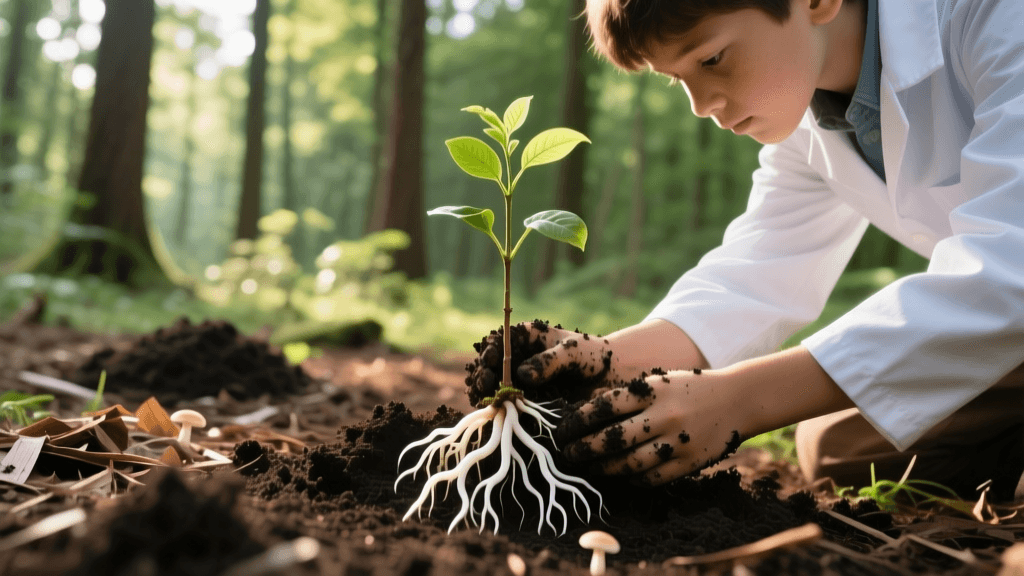
Embracing eco-friendly tree mulching is not just about saving money or avoiding chemicals; it is a direct contribution to carbon sequestration and climate resilience. As arborist chips and leaf mold break down, they feed mycorrhizal fungi. These microscopic fungal networks form symbiotic relationships with tree roots, extending their reach by hundreds of feet and trading water and phosphorus for liquid carbon (sugars) produced by the tree during photosynthesis.
By feeding this fungal network with sustainable, un-dyed organic matter, you are actively locking carbon into the soil profile. According to the University of Minnesota Extension, maintaining a healthy, organic mulch layer also buffers soil temperatures, protecting vital root systems from the increasingly common extremes of summer heatwaves and winter freeze-thaw cycles.
Ultimately, sustainable tree care requires a shift in perspective. We must stop viewing fallen leaves and wood chips as yard waste that needs to be bagged and hauled away, and start recognizing them as the most valuable, eco-friendly resources our landscapes have to offer. By sourcing local biomass, applying it using the Donut method, and pairing it with rainwater harvesting, you can cultivate a thriving, drought-resistant, and ecologically balanced urban forest right in your own backyard.