Gardening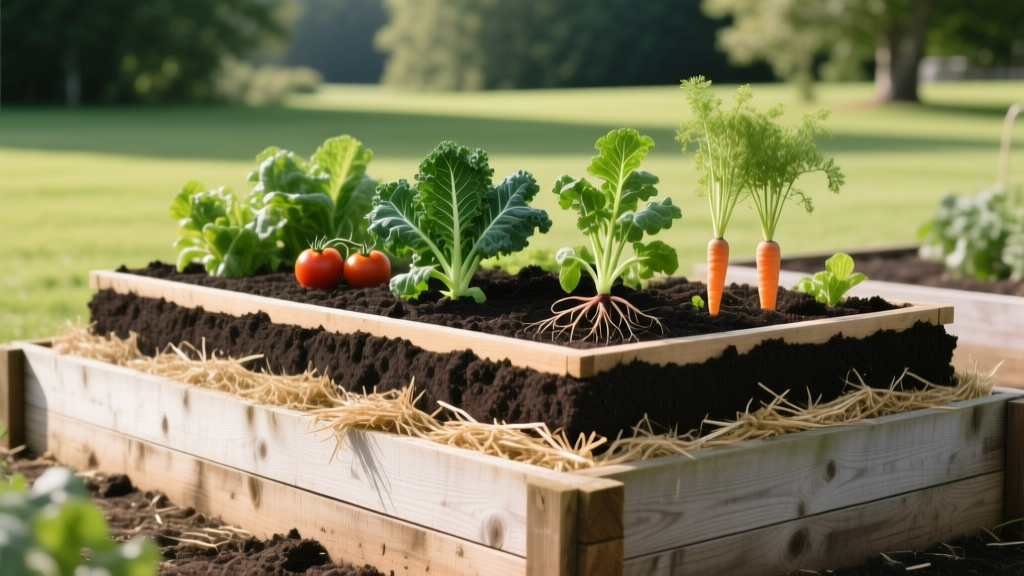
A Sustainable No-Till Gardening Guide For Raised Beds
Sarah ChenPublished
Introduction to Eco-Friendly No-Till Gardening
For decades, the rototiller was considered the undisputed king of garden preparation. Homeowners and gardeners alike would spend hours each spring tearing up the earth, believing that pulverized soil was the secret to a bountiful harvest. However, modern soil science has revealed a different truth. Tilling destroys the intricate soil food web, accelerates erosion, and releases sequestered carbon into the atmosphere. Enter no-till gardening—a sustainable, eco-friendly approach that mimics natural ecosystems by leaving the soil structure undisturbed. By adopting no-till methods in your raised beds, you not only reduce your carbon footprint but also cultivate a resilient, living soil ecosystem that requires less water, fewer fertilizers, and minimal weeding over time.
The Science Behind Undisturbed Soil Ecosystems
Beneath the surface of a healthy garden lies a complex network of mycorrhizal fungi, beneficial bacteria, nematodes, and earthworms. These organisms work symbiotically with plant roots to cycle nutrients and improve soil structure. When you run a tiller through the earth, you physically sever these fungal networks and expose dormant weed seeds to sunlight, triggering mass germination. Furthermore, tilling introduces excess oxygen into the soil profile, which rapidly oxidizes organic matter and depletes the soil of its vital carbon stores. According to the Rodale Institute, regenerative no-till practices can significantly increase soil organic matter, effectively turning your garden into a carbon sink rather than a carbon source. Undisturbed soil also features superior aggregation, meaning it can absorb and retain significantly more rainwater, protecting your crops during drought conditions while reducing runoff into local waterways.
Building Your Raised Bed: The Lasagna Layering Method
Transitioning to a no-till system is remarkably straightforward, especially when utilizing raised beds. The most effective way to build a new no-till bed or rehabilitate an old one is through sheet mulching, commonly known as the Lasagna Method. This technique builds soil fertility from the ground up using alternating layers of carbon-rich and nitrogen-rich organic materials.
To construct a standard 4-foot by 8-foot raised bed (32 square feet), follow these precise measurements and layering steps:
- The Base Layer (Weed Barrier): Lay down overlapping sheets of uncoated, plain brown corrugated cardboard directly over the existing grass or weeds. Avoid cardboard with glossy inks or heavy tape. Wet the cardboard thoroughly until it is saturated. This layer blocks sunlight, smothering existing vegetation while allowing earthworms to migrate upward. Cost: Free (sourced from local appliance or grocery stores).
- The Bulk Carbon Layer: Add a 4-inch layer of bulk carbon material such as straw, shredded autumn leaves, or untreated wood chips. This layer provides long-term structure and slowly breaks down to feed soil microbes. For a 4x8 bed, this requires roughly 10 cubic feet of material. Cost: Approximately $35 for four bales of straw.
- The Nitrogen and Compost Layer: Apply a 3-inch layer of high-quality, finished organic compost or aged manure. This introduces the necessary microbial inoculants and immediate nutrients for your first planting. You will need about 8 cubic feet of compost. Cost: Approximately $45 for bulk local compost or bagged organic equivalents.
- The Protective Top Mulch: Finish with a 2-inch layer of premium mulch to lock in moisture and protect the compost from UV degradation. Cost: $15 to $20.
Total initial investment for a 4x8 sustainable raised bed: Approximately $95 to $100.
Mulch Material Comparison Chart
Selecting the right top mulch is critical for maintaining moisture and regulating soil temperature in a no-till system. Below is a comparison of the most common eco-friendly mulches.
| Mulch Material | Carbon-to-Nitrogen (C:N) Ratio | Breakdown Time | Best Application |
|---|---|---|---|
| Straw | 40:1 to 100:1 | 3-4 Months | Vegetable beds, pathways |
| Shredded Leaves | 30:1 to 60:1 | 6-9 Months | Perennial beds, garlic patches |
| Arborist Wood Chips | 400:1 | 1-2 Years | Fruit trees, permanent pathways |
| Grass Clippings | 15:1 to 25:1 | 1-2 Months | Nitrogen-hungry crops, quick mulch |
Planting Strategies for Undisturbed Soil
Planting in a no-till raised bed requires a shift in technique. Because you are not loosening the soil with a tiller, you must rely on the biological aeration provided by deep-rooted cover crops and earthworms. When transplanting seedlings like tomatoes, peppers, or brassicas, use a handheld dibbler or a narrow trowel to excavate only the exact volume of soil needed for the root ball. Gently push the mulch aside, dig the minimal hole, place the transplant, and pull the mulch back snugly around the base of the stem.
For direct-seeded crops like carrots or radishes, part the mulch layer to expose a narrow band of bare compost. Sow your seeds in this shallow furrow, cover them lightly with a fine sifting of compost, and leave the surrounding mulch intact. To alleviate deep soil compaction without inverting the soil layers, invest in a broadfork. A broadfork costs between $90 and $160 and allows you to manually fracture compacted subsoil by stepping the tines into the earth and pulling back gently, creating channels for air and water without disrupting the soil microbiome.
Sustainable Weed and Pest Management
Weeds are often just nature's way of protecting bare soil. In a no-till system, the thick mulch layer and undisturbed weed seed bank drastically reduce weed pressure. However, for stubborn perennial weeds or when preparing a bed for a new season, utilize occultation. This involves covering the bed with a reusable, UV-treated black silage tarp for three to four weeks. The tarp traps heat and blocks light, terminating weeds and crop residue while encouraging earthworms to surface and break down organic matter.
Furthermore, integrating cover crops is a cornerstone of sustainable no-till gardening. Instead of leaving beds bare over winter, plant a mix of winter rye, hairy vetch, and crimson clover. According to the USDA Natural Resources Conservation Service, cover crops prevent erosion, scavenge leftover nutrients, and fix atmospheric nitrogen. In the spring, rather than pulling these crops out by the root, use a weed whacker or a specialized roller-crimper to terminate them, leaving the roots to decompose in place and the foliage to act as a nutrient-dense mulch.
Long-Term Soil Fertility and Composting
In traditional gardening, synthetic fertilizers are often watered into the root zone. In a no-till ecosystem, the mantra is 'feed the soil, not the plant.' Fertility is maintained through continuous top-dressing. Each spring and fall, apply a half-inch layer of finely screened compost or worm castings directly over the bed, right on top of the decomposing mulch. Soil biology will naturally incorporate this organic matter downward.
Additionally, brewing and applying aerated compost tea introduces liquid biology to the soil surface, inoculating the mulch layer with beneficial microbes that accelerate decomposition and suppress foliar diseases. The Environmental Protection Agency (EPA) highlights that recycling yard trimmings and food scraps into compost not only reduces methane emissions from landfills but also creates a vital soil amendment that reduces the need for chemical fertilizers. By maintaining a closed-loop composting system in your backyard, you ensure a perpetual, free supply of fertility for your no-till raised beds.
Conclusion
Embracing eco-friendly, no-till methods for your raised beds is a profound investment in the long-term health of your local environment. While the initial setup requires a modest financial investment and a shift in gardening philosophy, the dividends are immense. You will spend less time weeding, less money on irrigation and fertilizers, and significantly less physical labor wrestling with heavy machinery. Ultimately, no-till gardening allows you to step back and let nature's brilliant underground workforce do the heavy lifting, resulting in a vibrant, sustainable garden that thrives season after season.
