Tree Care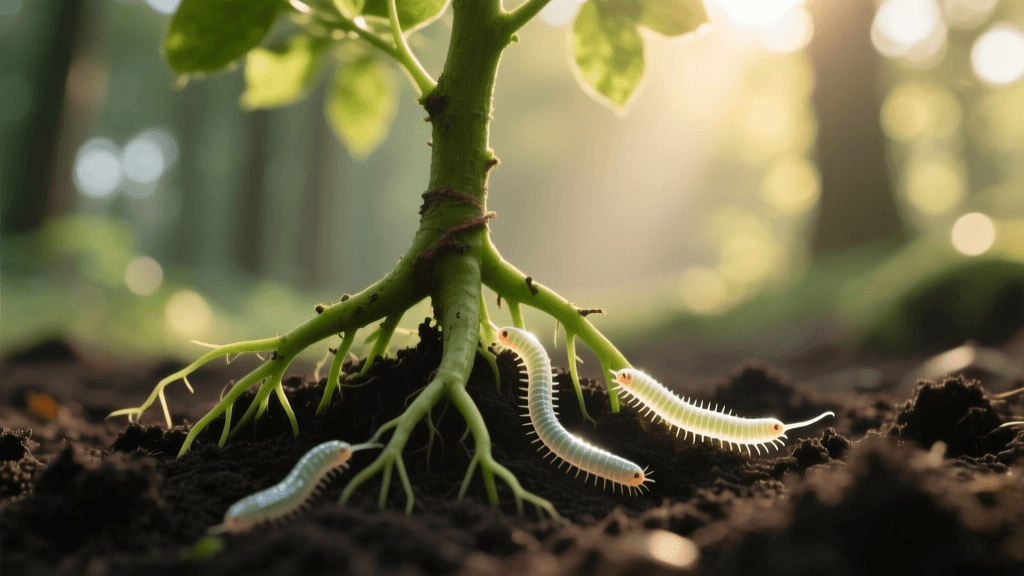
Eco-Friendly Tree Pest Control Using Beneficial Nematodes
Trees are the structural anchors of our home landscapes, providing essential shade, improving air quality, and supporting local ecosystems. However, maintaining tree health often involves battling a myriad of soil-borne and wood-boring pests that can silently devastate root systems and trunks. Historically, homeowners and arborists have relied on broad-spectrum synthetic chemical pesticides to manage these threats. While effective in the short term, these chemicals often cause long-term ecological damage. Today, sustainable tree care relies heavily on biological controls, with beneficial nematodes emerging as one of the most powerful, eco-friendly tools in the modern arborist's toolkit.
The Ecological Cost of Synthetic Pesticides
When faced with a severe tree pest infestation—such as Japanese beetle grubs decimating root systems or emerald ash borers tunneling through cambium layers—the immediate instinct is often to reach for systemic chemical insecticides. However, these synthetic treatments come with a heavy environmental price tag. Broad-spectrum pesticides do not discriminate between harmful pests and beneficial soil organisms. They can decimate native earthworm populations, disrupt the delicate mycorrhizal fungal networks that trees rely on for nutrient uptake, and leach into local waterways, contributing to groundwater contamination.
According to the Environmental Protection Agency's principles of Integrated Pest Management (IPM), sustainable pest control should prioritize biological and cultural methods before considering chemical interventions. By shifting our focus to the soil microbiome and utilizing natural predators, we can protect our trees while preserving the broader ecological balance of our yards and gardens.
Enter the Beneficial Nematode: Nature's Microscopic Assassins
Beneficial nematodes are microscopic, unsegmented roundworms that occur naturally in soils worldwide. While some nematode species are plant parasites, the strains used in eco-friendly tree care are entomopathogenic, meaning they specifically seek out and infect insects. The two primary genera used in arboriculture are Steinernema and Heterorhabditis.
The biology of these nematodes is fascinating and highly effective. In their juvenile stage, known as infective juveniles (IJs), they actively hunt for insect hosts in the soil or within the lower bark crevices of trees. Once they locate a host—such as a grub, borer larva, or root weevil—they enter through natural openings like the mouth, anus, or spiracles. Inside the host, the nematodes release a symbiotic bacterium (Xenorhabdus or Photorhabdus) that rapidly multiplies, causing septicemia and killing the pest within 24 to 48 hours. The nematodes then feed on the developing bacteria and host tissue, reproduce, and release a new generation of IJs into the soil to hunt for the next victim.
Matching Nematode Strains to Tree Pests
Not all nematodes hunt the same way or target the same pests. Selecting the correct strain is critical for the success of your eco-friendly tree care regimen. Steinernema carpocapsae is an 'ambush' forager that waits near the soil surface to attack mobile pests, while Heterorhabditis bacteriophora is a 'cruiser' that actively migrates deep into the soil profile to find sedentary grubs and pupae.
Below is a comparison chart to help you select the right biological control agent for your specific tree pest problem:
| Nematode Strain | Hunting Style | Target Tree Pests | Optimal Soil Temp |
|---|---|---|---|
| Steinernema carpocapsae | Ambush (Surface) | Webworms, cutworms, billbugs, superficial borers | 70°F - 85°F |
| Steinernema feltiae | Cruiser/Ambush | Fungus gnats, sawfly larvae, shallow root weevils | 55°F - 75°F |
| Heterorhabditis bacteriophora | Cruiser (Deep) | Japanese beetle grubs, June bugs, deep root weevils, bronze birch borer larvae | 60°F - 85°F |
Step-by-Step Application Guide for Trees
Applying beneficial nematodes requires precision and an understanding of environmental conditions. Because they are living organisms, improper handling, mixing, or application will result in high mortality rates before they ever reach their target pests. Research highlighted by University of Minnesota Extension emphasizes that soil moisture and temperature are the primary drivers of nematode survival and efficacy.
1. Timing and Environmental Preparation
Timing is everything. Nematodes are highly susceptible to desiccation and UV radiation. You must apply them when soil temperatures are consistently between 55°F and 85°F. In most temperate climates, this means targeting early spring (to catch emerging larvae) or late summer to early fall (to target grubs before they burrow deep for winter dormancy). Always apply nematodes in the early morning or late evening, or on an overcast day, to protect them from direct sunlight.
2. Hydration and Soil Prep
Nematodes require a moist environment to travel through the soil pores. Before application, deeply water the base of the affected tree, extending out to the drip line. The soil should be moist but not waterlogged; saturated soil lacks the oxygen necessary for both the tree roots and the nematodes to thrive.
3. Mixing the Solution
Nematodes are typically shipped in a dormant state suspended in a sponge, clay powder, or gel. Crucial Tip: Chlorine is lethal to nematodes. If you are using municipal tap water, let it sit in an open bucket for at least 24 hours to allow the chlorine to off-gas, or use filtered rainwater. Mix the nematodes into a 5-gallon bucket of water (around 60°F) and stir gently. Avoid using high-pressure pumps or sprayers with fine mesh screens, as the sheer force and friction can physically damage the microscopic worms.
4. Application Rates and Equipment
For preventive tree care, a standard application rate is 1 million nematodes per 1,500 to 2,000 square feet. For active, severe infestations of root-feeding grubs, increase the dosage to 25,000 to 50,000 nematodes per square foot (roughly 1 billion per acre). The cost is generally economical, averaging $30 to $45 per million nematodes. Apply the mixture using a watering can for small areas or a hose-end sprayer with the internal filter screen removed for larger root zones. Ensure you cover the entire area beneath the tree's canopy, as tree roots and their associated pests extend well beyond the trunk.
5. Post-Application Watering
Immediately after applying the nematode solution, water the area again with a gentle spray. This washes any nematodes stranded on grass blades or surface debris down into the soil profile where they belong. For the next 14 days, you must maintain consistent soil moisture. Light, frequent watering (about 10 minutes a day) is far superior to deep, infrequent soaking during this critical establishment window.
Integrating Nematodes into a Holistic IPM Strategy
While beneficial nematodes are a powerhouse for sustainable pest control, they should not be viewed as a standalone silver bullet. True eco-friendly tree care relies on a holistic Integrated Pest Management (IPM) approach that focuses on long-term prevention and overall tree vigor. As noted by Michigan State University Extension, combining biological controls with proper cultural practices yields the highest success rates in landscape management.
To maximize the efficacy of your nematode applications and support the overall health of your trees, implement the following sustainable cultural practices:
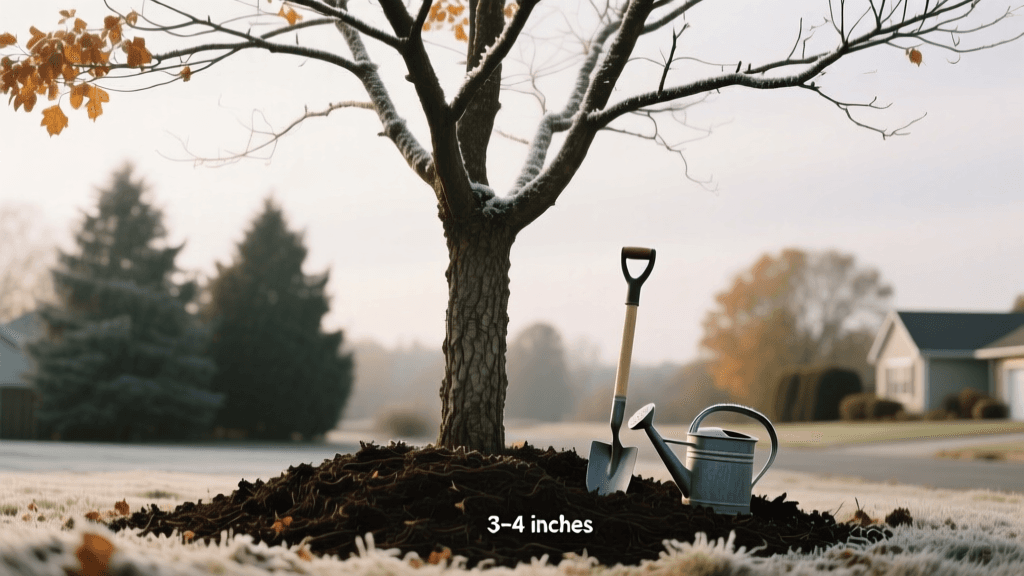
- Proper Mulching: Apply a 2-to-4-inch layer of organic arborist wood chips around the base of the tree, keeping it a few inches away from the trunk flare to prevent rot. Mulch regulates soil temperature, retains the moisture necessary for nematode survival, and breaks down to feed the soil microbiome.
- Avoid Soil Compaction: Heavy foot traffic and machinery compress soil pores, making it physically impossible for nematodes to navigate the soil matrix. Use designated pathways and avoid parking vehicles under the tree canopy.
- Aerate and Amend: If your soil is heavy clay, consider vertical mulching or gentle air-spading to introduce organic matter and improve drainage without severing major structural roots.
- Promote Biodiversity: Plant a diverse understory of native shrubs and groundcovers. A diverse plant palette attracts a wider array of beneficial predatory insects, creating a robust, self-regulating ecosystem that naturally suppresses pest outbreaks.
Conclusion
Transitioning away from synthetic chemicals does not mean surrendering your trees to destructive pests. By harnessing the microscopic power of beneficial nematodes, homeowners and landscape professionals can effectively target soil-borne and wood-boring insects without harming the surrounding environment. When combined with proper watering, organic mulching, and a commitment to soil health, nematodes form the cornerstone of a resilient, eco-friendly tree care strategy. Embrace the power of the soil microbiome, and your trees will reward you with decades of vibrant, sustainable growth.