Tree Care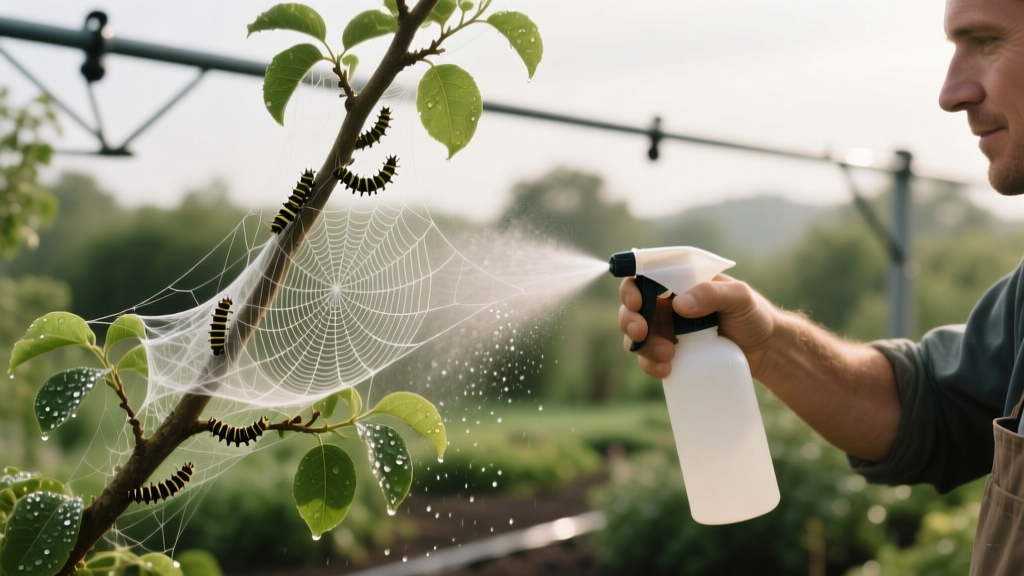
2026 Tent Caterpillar Guide: Web Removal & Spinosad
Anna KowalskiPublished
Managing Tent Caterpillars and Irrigation Conflicts in 2026
Tent caterpillars (Malacosoma species) are a recurring nuisance for homeowners and arborists, notorious for defoliating ornamental and fruit trees in the spring. While the silken tents they build in tree crotches are unsightly, the real danger lies in the severe defoliation that weakens the tree's overall vigor. In 2026, erratic spring weather patterns and warmer overwintering temperatures have led to highly synchronized hatching events, making early intervention more critical than ever.
For homeowners who rely on automated sprinkler and irrigation systems to maintain their landscapes, treating tent caterpillars presents a unique logistical challenge. Overhead irrigation is the natural enemy of foliar pesticide applications. If your sprinkler system runs shortly after you apply a biological insecticide like Spinosad, the water will wash the active ingredient off the foliage before it can be ingested by the caterpillars, rendering your treatment useless and wasting your money.
This comprehensive guide will walk you through the proper mechanical removal of tent caterpillar webs, the precise application of Spinosad, and exactly how to program and adjust your 2026 smart irrigation controllers to prevent wash-off while keeping your stressed trees properly hydrated.
Step 1: Safe and Effective Web Removal
Before applying any chemical or biological treatments, mechanical removal of the tents is highly recommended. According to the University of California Integrated Pest Management (UC IPM), physically removing the webs significantly reduces the local population and exposes the remaining caterpillars to natural predators and environmental stressors.
Proper Removal Techniques
- Timing: The best time to remove webs is in the early morning or late evening when the caterpillars are gathered inside the tent. During the heat of the day, they often venture out to feed on the outer leaves.
- Tools: Use a long-handled pole pruner or a specialized caterpillar rake to twist and pull the silken webs from the tree crotches. For smaller trees, heavy-duty pruning shears can be used to snip off the infested branch tips entirely.
- Disposal: Drop the removed webs into a bucket of soapy water to drown the larvae. Do not leave them on the lawn, as the caterpillars will simply crawl back up the trunk.
What NOT to Do
Never use a propane torch or fire to burn the tents out of the tree. This outdated practice is incredibly dangerous, frequently resulting in severe canopy damage, bark scorching, and uncontrolled landscape fires. Furthermore, as highlighted by Penn State Extension, the tree's vascular system is already under stress from defoliation; adding thermal damage can permanently kill the affected branches.
Step 2: Spinosad Treatment for Caterpillar Control
Spinosad is a highly effective, naturally derived biological insecticide made from the soil-dwelling bacterium Saccharopolyspora spinosa. It is widely considered the gold standard for caterpillar control in residential landscapes because it is highly toxic to leaf-feeding larvae but relatively safe for beneficial insects, mammals, and the surrounding environment once it has dried.
The National Pesticide Information Center (NPIC) notes that Spinosad works through both ingestion and contact, causing neural excitation in the target pests. Caterpillars stop feeding within hours of ingesting treated foliage and die within one to two days.
Top 2026 Spinosad Formulations
- Monterey Garden Insect Spray: A 0.5% liquid concentrate that is ideal for hose-end sprayers and large canopy coverage.
- Bonide Captain Jack's Deadbug Brew: Available in both liquid concentrate and ready-to-spray dust, excellent for targeted spot treatments on smaller ornamental trees.
Application Best Practices
Apply Spinosad in the late afternoon or early evening. This timing serves two purposes: it protects the active ingredient from rapid UV degradation caused by peak midday sunlight, and it coincides with the caterpillars' most active feeding periods. Ensure thorough coverage of the foliage surrounding the web, as the caterpillars must eat the treated leaves for the product to work effectively.
The Irrigation Conflict: Preventing Spinosad Wash-Off
This is where your lawn and garden irrigation system becomes a critical factor in pest management. Spinosad requires a 'drying period' to penetrate the leaf cuticle and become rainfast. This process typically takes 6 to 8 hours. If your overhead sprinkler system activates during this window, the high-velocity water droplets will physically wash the Spinosad off the leaves and into the soil, where it is largely ineffective against canopy-dwelling caterpillars.
Understanding Sprinkler Droplet Impact
Different irrigation heads deliver water with varying levels of kinetic energy, which directly impacts pesticide wash-off. Traditional fixed spray heads deliver a fine, high-velocity mist that acts like a pressure washer on treated foliage. In contrast, modern gear-driven rotors and MP Rotators deliver larger, heavier droplets at a slower precipitation rate, which is slightly less destructive but still capable of washing off wet biological sprays.
| Irrigation Type | Droplet Size & Velocity | Spinosad Wash-Off Risk | 2026 Recommendation |
|---|---|---|---|
| Traditional Fixed Spray Heads | Fine mist, high velocity | Severe (Complete wash-off) | Disable zones for 48 hours post-spray |
| MP Rotators / Multi-Stream | Medium streams, low velocity | Moderate to High | Delay irrigation for 24 hours minimum |
| Gear-Driven Rotors | Large drops, medium velocity | Moderate | Delay irrigation for 12-24 hours |
| Drip Irrigation / Soaker Hoses | Direct to soil, zero canopy impact | None (Zero wash-off) | Ideal for use during treatment windows |
Programming Your Smart Irrigation Controller
In 2026, smart irrigation controllers like the Rachio 3e, Hunter Hydrawise Pro-HC, and Orbit B-hyve XR offer advanced 'pesticide hold' or 'zone skip' features. Immediately after applying Spinosad, use your controller's mobile app to manually suspend the specific tree and lawn zones that overlap with the tree's canopy dripline for at least 24 hours. If your system utilizes soil moisture sensors, ensure the sensor threshold is temporarily adjusted so that a dry surface reading does not trigger an emergency overhead watering cycle while the Spinosad is curing on the leaves.
Post-Treatment Tree Hydration: Deep Root Irrigation
Once the Spinosad has dried and the caterpillar threat is neutralized, the focus must shift to tree recovery. Severe defoliation forces the tree to expend massive amounts of stored carbohydrates to push out a second flush of leaves (known as lammas growth). This secondary growth requires significant water, but the lack of an initial canopy means the tree's natural transpiration rate is temporarily altered.
Relying on standard overhead lawn sprinklers to water a recovering, defoliated tree is a common mistake. Because the sun is now hitting the bare soil directly beneath the tree, surface evaporation increases, leading homeowners to overwater the lawn zone. This results in shallow soil saturation and dramatically increases the risk of Phytophthora root rot, which can kill a stressed tree faster than the caterpillars.
Transitioning to Subsurface and Drip Irrigation
To properly hydrate a recovering tree without washing off future foliar treatments or waterlogging the topsoil, transition to targeted root-zone irrigation:
- Tree Ring Drip Lines: Install a dedicated drip irrigation ring at the tree's dripline (the outer edge of the canopy). Use 1 GPH (gallon per hour) emitters spaced every 18 inches. This delivers water slowly, allowing it to percolate deep into the root zone without surface runoff.
- Deep Root Watering Probes: For established trees with compacted soil, attach a deep-root waterer probe to your garden hose or specialized irrigation manifold. Insert the probe 12 to 18 inches into the soil at multiple points around the dripline to deliver water directly to the active root zone.
- Soaker Hoses: A cost-effective alternative to drip lines, soaker hoses can be coiled around the base of the tree (keeping it 6 inches away from the trunk flare to prevent crown rot) and run on a low-pressure timer for 2-3 hours once a week.
Calculating Water Requirements for Defoliated Trees
A general rule of thumb for tree hydration in 2026 is to provide 10 gallons of water per inch of trunk diameter (measured at knee height) per watering session during the active growing season. For a tree with a 6-inch trunk, this equates to 60 gallons per deep-watering session. Because the tree is currently defoliated and not transpiring heavily, you should reduce this volume by 30% until the new leaf canopy fully expands, at which point you can return to the standard 10-gallon-per-inch formula.
2026 Action Plan: Combining Treatment and Irrigation
To ensure your trees survive the spring caterpillar season and your landscape remains properly irrigated, follow this integrated action plan:
- Inspect and Prune (Early Spring): Identify egg masses on twigs before bud break and prune them out. Monitor for web formation as soon as leaves emerge.
- Mechanical Removal: Twist and remove active webs with a pole pruner in the early morning.
- Irrigation Audit: Check your sprinkler heads. Ensure high-velocity spray heads are not directly blasting the tree canopy. Adjust nozzles or swap to MP Rotators to minimize foliar impact.
- Controller Suspension: Use your smart controller app to pause all overhead zones that intersect with the target tree's dripline.
- Spinosad Application: Apply Monterey or Captain Jack's Spinosad in the late evening, ensuring thorough coverage of the foliage surrounding the removed webs.
- Deep Root Hydration: 24 hours post-application, utilize drip lines or deep-root probes to deliver targeted moisture to the tree's root zone, supporting secondary leaf flush without disturbing the treated canopy.
Conclusion
Effectively managing tent caterpillars requires more than just spraying a product and hoping for the best. By understanding the biological mechanics of Spinosad and how it interacts with your landscape's sprinkler and irrigation systems, you can maximize treatment efficacy and protect your investment in your trees. In 2026, leveraging smart irrigation technology alongside targeted biological controls is the most sustainable, effective way to maintain a healthy, vibrant, and pest-free urban canopy.