Tree Care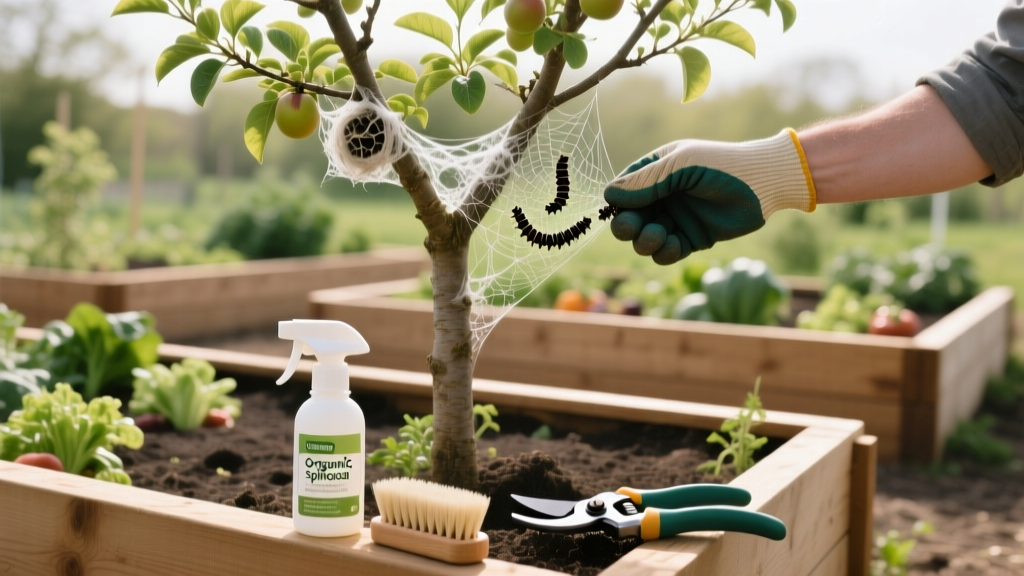
2026 Tent Caterpillar Web Removal & Spinosad Guide
James MillerPublished
The Hidden Threat to Your Raised Bed Garden: Perimeter Tree Pests
When designing a thriving raised bed vegetable garden in 2026, most growers focus intensely on soil health, compost tea recipes, and precise drip irrigation layouts. However, the broader garden ecosystem—specifically the perimeter trees that provide vital windbreaks and dappled shade—plays a critical role in your garden's success. Among the most destructive of these canopy dwellers is the Eastern tent caterpillar (Malacosoma americanum). If left unchecked, these voracious defoliators can strip nearby cherry, apple, and crabapple trees of their leaves, drastically altering the microclimate over your raised beds and raining unsightly frass (insect excrement) down onto your delicate lettuce and spinach crops.
Managing tent caterpillars requires a dual approach that respects the organic integrity of your vegetable garden while effectively saving your shade trees. Tomatoes and peppers in your raised beds require full sun, but cool-season crops like spinach and Swiss chard rely on the dappled shade provided by perimeter fruit trees. When tent caterpillars defoliate these trees in late spring, your cool-weather crops are suddenly exposed to the harsh, unfiltered summer sun, causing them to bolt prematurely. This comprehensive 2026 guide focuses on the two most effective, garden-safe strategies: physical tent caterpillar web removal and targeted spinosad treatment.
Identifying Tent Caterpillars in the Garden Canopy
Before initiating any treatment, proper identification is crucial. According to Penn State Extension, Eastern tent caterpillars construct their distinctive silken webs in the crotches of branches, usually on wild cherry, apple, and crabapple trees. These webs expand as the larvae grow, eventually encompassing entire limb junctions. The caterpillars themselves are easily identifiable by their black bodies, white stripes down the back, and brown and yellow lines along the sides, covered in fine hairs.
Unlike the Forest tent caterpillar, which does not build a web and instead rests in clusters on tree trunks, the Eastern tent caterpillar uses its web as a shield against predators and harsh weather. They venture out of the tent during the day to feed on foliage and return at night or during rain. This predictable behavior is the key to successful physical removal and targeted organic spraying, ensuring your raised beds below remain protected without the need for harsh synthetic chemicals.
Step-by-Step Tent Caterpillar Web Removal (Physical Control)
Physical removal is the most immediate and environmentally benign way to handle an infestation, especially when the webs are overhanging your raised bed vegetable gardens where you want to minimize any spray drift. Here is the most effective protocol for 2026:
- Timing is Everything: Approach the tree at dawn, dusk, or on overcast days. During these times, the vast majority of the caterpillars are resting inside the silken tent. If you prune the web out at midday, you will leave behind the foraging caterpillars, which will simply build a new web the following day.
- Tool Selection: Use a 12-to-15-foot telescoping pruning pole equipped with a wire hook or a specialized web-rolling attachment. Avoid using chainsaws or heavy saws, as you only need to remove the web and the immediate cluster of larvae, not the entire structural limb.
- The Spool Method: Insert the hook into the center of the web and twist the pole continuously. The silk will wrap tightly around the pole like cotton candy, trapping the caterpillars inside. Once the web is fully spooled, pull the pole away from the tree.
- Disposal: Submerge the wrapped web and caterpillars into a bucket of soapy water. Do not burn the webs while they are still attached to the tree, as the heat can severely damage the tree's cambium layer and pose a fire risk to your nearby raised bed mulch and dry soil amendments.
For smaller trees bordering your garden beds, simply wearing heavy rubber gloves and crushing the tents by hand directly on the branch is highly effective and costs nothing.
Spinosad Treatment: The Organic Gold Standard for 2026
When an infestation is too large for manual removal, or when the webs are located high in the canopy where physical extraction is unsafe, organic chemical intervention is necessary. Spinosad has emerged as the premier choice for organic vegetable gardeners managing perimeter tree pests. Derived from the soil-dwelling bacterium Saccharopolyspora spinosa, spinosad is highly toxic to caterpillars but breaks down quickly in the environment, making it ideal for gardens where you are growing food.
The National Pesticide Information Center (NPIC) notes that spinosad causes hyperactivity and paralysis in the nervous systems of target insects. Crucially, it works both on contact and through ingestion. When tent caterpillars crawl over treated foliage or consume treated leaves near their web, they stop feeding almost immediately, halting the defoliation that threatens your garden's microclimate.
Top Spinosad Products and Application Rates
In 2026, the most reliable and widely available spinosad concentrates for home gardeners include Monterey Garden Insect Spray and Bonide Captain Jack's Deadbug Brew. A pint of concentrate typically costs between $18 and $25, which is enough to treat dozens of mature perimeter trees for the entire season.
- Mixing Ratio: For active tent caterpillar infestations, mix 2 fluid ounces of spinosad concentrate per 1 gallon of water. Use a pump-action backpack sprayer or a hose-end sprayer to ensure you reach the upper canopy.
- Targeting the Web: While spinosad is effective, the dense silk of the tent caterpillar web can repel water. Aim your spray at the foliage immediately surrounding the web and the branches leading to it. As the caterpillars leave the tent to forage, they will track the spinosad back inside or ingest it while feeding.
- Repeat Applications: Spinosad breaks down in sunlight within a few days. Apply a second treatment 5 to 7 days after the first to catch any newly hatched larvae that were protected inside the egg masses during the initial spray.
Application Timing to Protect Pollinators
While spinosad is an organic staple for raised bed gardening, it carries a critical caveat: it is highly toxic to bees and other pollinators when wet. However, once the spray has completely dried on the leaves (usually within 2 to 3 hours), it is virtually harmless to beneficial insects. To protect the native bees and honeybees that are essential for pollinating your raised bed squash, cucumbers, and tomatoes, you must strictly apply spinosad in the late evening, well after sunset. Never spray during the heat of the day or when trees are in active bloom.
Comparison Chart: Web Removal vs. Spinosad vs. Bt
Choosing the right intervention depends on the severity of the infestation, the height of your perimeter trees, and your specific garden ecosystem needs. Below is a comparison of the top organic treatment methods available in 2026.
| Treatment Method | Best Application Time | Impact on Raised Bed Pollinators | Cost Estimate (2026) |
|---|---|---|---|
| Manual Web Removal | Dawn or Dusk | Zero Impact | $30-$50 (Telescoping Pole) |
| Spinosad Spray | Late Evening (Post-Sunset) | Safe Once Dry (Toxic When Wet) | $18-$25 (Pint Concentrate) |
| Bt kurstaki (Bacillus thuringiensis) | Early Morning or Evening | Completely Safe for Bees | $12-$18 (Liquid Concentrate) |
| Dormant Horticultural Oil | Late Winter (Before Bud Break) | Safe (Applied before pollinator season) | $15-$22 (Quart Concentrate) |
Note: Bt kurstaki is an excellent alternative to Spinosad if the trees are currently in bloom and you cannot wait until evening to spray. Bt only targets the digestive systems of caterpillars and poses zero risk to bees, though it requires the caterpillars to ingest the treated leaves to be effective.
Integrating Tree Care with Raised Bed Maintenance
When managing perimeter trees, the health of your raised beds must remain a priority. If a severe tent caterpillar infestation has occurred, you will likely notice an accumulation of frass (caterpillar droppings) and web debris on the soil surface and plant leaves of the raised beds directly beneath the tree. While frass is technically an organic nitrogen source, large deposits can harbor fungal spores or simply be unappetizing on leafy greens like kale and arugula.
After completing your web removal and spinosad treatment, take a walk through your raised beds. Use a gentle hose spray to wash frass off the leaves of your vegetables. If the soil surface is heavily coated, gently rake back the top layer of mulch or compost and replace it with a fresh inch of organic straw or shredded leaves. This not only keeps your harvest clean but also disrupts the life cycle of any caterpillars that may have dropped from the canopy to pupate in the soil.
Winter Prevention: The Ultimate Garden Strategy
The most effective way to protect your raised bed garden from tent caterpillars is to stop them before they hatch. Eastern tent caterpillars overwinter as egg masses on the twigs of host trees. These masses look like small, dark, varnished foam bands encircling pencil-sized branches. During your winter garden cleanup, while pruning your perimeter trees for structure and airflow, actively scout for and clip off these egg masses. Dropping them into a bucket of soapy water or burning them in a winter fire pit eliminates hundreds of future caterpillars per mass, ensuring your garden's microclimate—and your vegetable harvest—remains secure in the spring of 2026 and beyond.
