Tree Care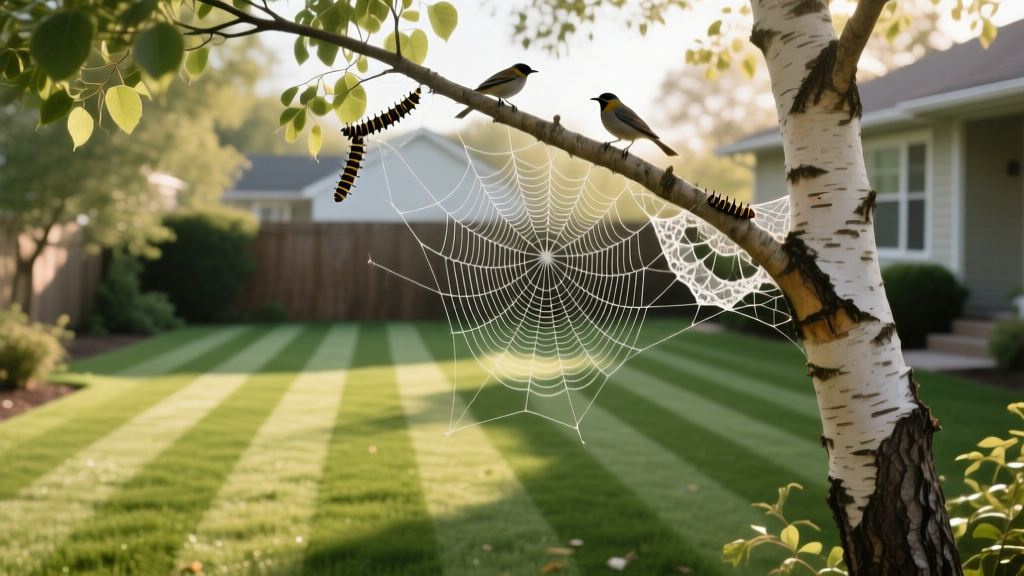
Tent Caterpillar Web Removal & Spinosad Guide 2026
Anna KowalskiPublished
The Intersection of Canopy Health and Lawn Striping Aesthetics
For landscape enthusiasts and turf perfectionists, achieving immaculate lawn stripes is an art form that requires precise mowing, optimal grass health, and perfect lighting. However, the visual harmony of a beautifully striped yard can be instantly compromised by an often-overlooked threat lurking above: the tent caterpillar. In the spring of 2026, Eastern Tent Caterpillars (Malacosoma americanum) and Forest Tent Caterpillars (Malacosoma disstria) are once again emerging in ornamental cherry, crabapple, and plum trees. While tree care might seem disconnected from turf management, the aesthetic impact of these pests on your lawn's visual patterns is profound.
When tent caterpillars infest overhanging branches, they create unsightly silken webs that disrupt the clean sightlines of your landscape. Worse, they produce massive amounts of 'frass' (caterpillar droppings) that rain down onto your carefully striped turf. These tiny pellets settle into the grooves created by your lawn striper, dulling the crisp contrast between light and dark grass blades. Furthermore, severe defoliation alters the dappled shade patterns over your lawn, leading to uneven turf growth rates that make maintaining uniform stripe widths nearly impossible. To preserve the pristine aesthetic of your lawn patterns, proactive tent caterpillar web removal and targeted Spinosad treatments are essential components of your 2026 landscape maintenance schedule.
Identifying the Culprits: Eastern vs. Forest Tent Caterpillars
Before initiating any treatment, it is crucial to identify which species is threatening your canopy and lawn aesthetics. According to UMass Extension, the Eastern Tent Caterpillar is notorious for building large, dense, silken tents in the crotches of tree branches. These tents act as debris traps, catching wind-blown pollen, dust, and dead leaves, creating ugly brown masses that ruin the visual appeal of your flowering trees.
Conversely, the Forest Tent Caterpillar does not build traditional tents. Instead, they create silken mats along the bark and branches. While less visually obtrusive from a distance, Forest Tent Caterpillars are voracious eaters that can strip a mature tree bare in weeks. The sudden loss of canopy cover exposes your striped lawn to harsh, direct midday sun, potentially scorching the grass and fading the deep green color required for high-contrast lawn striping. Both species drop frass heavily, but the Eastern variety's webbing poses a unique mechanical hazard to your landscape's visual flow.
Mechanical Web Removal: Restoring the Sightlines
For immediate aesthetic relief, mechanical removal of Eastern Tent Caterpillar webs is highly effective, especially in early spring 2026 when the colonies are still small. Removing the webs not only improves the look of the tree but also stops the accumulation of debris that would otherwise fall onto your lawn stripes.
- The Pole Pruner Method: Use a modern 14-foot carbon fiber pole saw (such as the 2026 Fiskars or Corona telescoping models, priced around $85-$120) to snip the branch crotch holding the tent. This is best done on overcast mornings when the caterpillars are congregated inside the web.
- The Wrapping Technique: For webs located on the trunk or lower branches where pruning would damage the tree's structural aesthetics, use a long stick or a specialized web-wrapping tool. Insert the stick into the center of the web and twirl it continuously. The silk will spool around the stick, pulling the caterpillars and webbing out of the tree in one clean motion.
- Disposal: Never burn the webs in the tree, as this causes severe bark damage and creates an eyesore. Submerge the removed webs and caterpillars in a bucket of soapy water to neutralize them, ensuring your landscape remains safe and visually pristine.
Spinosad: The 2026 Gold Standard for Biological Control
When mechanical removal is impractical due to tree height or the sheer size of the infestation, biological insecticides are the preferred choice for maintaining a safe, eco-friendly landscape. Spinosad, derived from the soil bacterium Saccharopolyspora spinosa, has become the premier treatment for caterpillar control in 2026. Unlike broad-spectrum synthetic chemicals that can harm beneficial insects and disrupt the local ecosystem, Spinosad specifically targets the nervous system of leaf-eating caterpillars.
According to University of Kentucky Entomology, Spinosad must be ingested by the caterpillar to be fully effective, making it incredibly safe for the surrounding environment once it dries. This is a critical factor for lawn care enthusiasts; you can safely treat your overhanging trees without worrying about toxic residue dripping onto your turf, which could otherwise damage the delicate grass blades you are trying to stripe. Popular 2026 formulations, such as Monterey Garden Insect Spray and Captain Jack's Deadbug Brew, are readily available at garden centers for approximately $18 to $28 per 16-ounce concentrate bottle.
Step-by-Step Spinosad Application Schedule
To protect your lawn's aesthetic integrity while eradicating the caterpillars, follow this precise application protocol:
- Timing is Everything: Apply Spinosad in the late evening or at dusk. This ensures the spray dries overnight, completely eliminating any risk to daytime pollinators like bees and butterflies, which are vital for the blooming ornamental trees that frame your lawn.
- Mixing the Solution: For most liquid concentrates, mix 2 tablespoons of Spinosad per gallon of water. Use a pump sprayer with an adjustable nozzle set to a fine mist to ensure thorough coverage of the foliage and the remaining webbing.
- Targeted Spraying: Focus on the interior canopy and the crotches of the branches where the caterpillars feed and hide. Penetrate the outer edges of any remaining silk tents, as the water tension of the spray will carry the Spinosad into the colony.
- Reapplication: Spinosad breaks down in sunlight over 7 to 14 days. If the infestation is severe, a second application may be required two weeks later to catch any newly hatched larvae before they can defoliate the tree and ruin your landscape shade patterns.
Comparison Chart: Spinosad vs. Traditional Insecticides
Choosing the right treatment is vital for preserving both tree health and the pristine condition of your striped lawn. Below is a comparison of the top caterpillar control options available in 2026:
| Treatment Type | Active Ingredient | Efficacy on Tent Caterpillars | Impact on Lawn & Aesthetics | Pollinator Safety (Once Dry) |
|---|---|---|---|---|
| Spinosad | Spinosyn A & D | Excellent (Ingestion/Contact) | Safe for turf; no residue staining | High |
| Bt (Kurstaki) | Bacillus thuringiensis | Good (Must be ingested early) | Safe; but washes off easily in rain | Very High |
| Permethrin | Synthetic Pyrethroid | Excellent (Contact kill) | Can cause turf burn if over-applied | Low (Highly toxic to bees/aquatic life) |
| Azadirachtin | Neem Oil Extract | Moderate (Growth regulator) | Can leave oily residue on leaves | Moderate |
As the chart illustrates, EPA-recognized biopesticides like Spinosad offer the best balance of high efficacy and aesthetic safety, ensuring your lawn and garden remain a cohesive, beautiful environment.
Restoring Your Lawn Stripes Post-Treatment
Once the tent caterpillars have been eliminated and the webs removed, your final task is to restore the visual perfection of your striped lawn. Begin by using a leaf blower or a stiff-tined lawn rake to remove any lingering frass and dead leaf matter from the turf. Frass left on the lawn can promote fungal diseases like dollar spot, which creates unsightly brown patches that completely destroy the illusion of a striped pattern.
Next, evaluate the shade distribution. If the tree was heavily defoliated before treatment, your lawn may have experienced stress from sudden sun exposure. Adjust your mower deck up by half an inch to allow the grass blades to recover and grow uniformly. When you resume your striping routine, ensure your lawn striper kit or roller is clean of any sap or debris that may have fallen during the tree treatment. By integrating canopy management with your turf care regimen, you ensure that every line, diamond, and checkerboard pattern on your lawn remains sharp, vibrant, and visually stunning throughout the 2026 growing season.
