Tree Care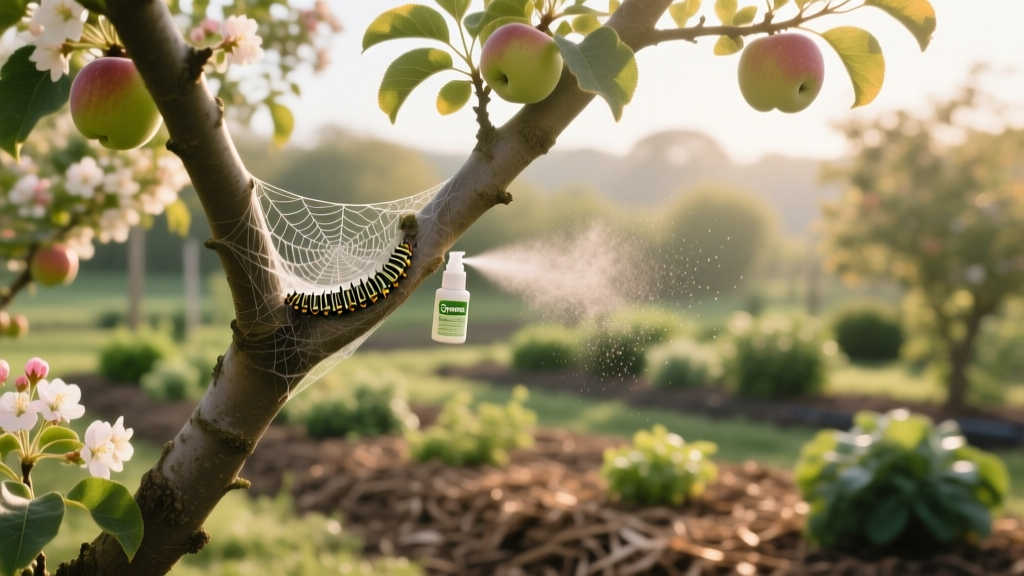
Tent Caterpillar Control 2026: Spinosad & Web Removal for Edibles
David ParkPublished
The Rise of Foodscaping and the Tent Caterpillar Threat in 2026
As we navigate the 2026 growing season, edible landscaping and foodscaping have firmly established themselves as cornerstones of modern, sustainable home gardens. Integrating fruit-bearing trees like cherries, apples, plums, and crabapples into ornamental designs provides both aesthetic beauty and a bountiful harvest. However, this diverse planting strategy also invites a variety of pests, with the tent caterpillar (Malacosoma species) being one of the most voracious and visually alarming threats to your edible landscape.
Tent caterpillars are notorious for defoliating fruit trees in the spring and early summer. In a foodscaping environment, defoliation is not just a cosmetic issue; it directly impacts the tree's ability to photosynthesize, which in turn reduces fruit set, stunts fruit development, and weakens the tree's overall immune system. To protect your 2026 harvest, it is crucial to implement a dual approach: proactive manual web removal and targeted, food-safe biological treatments like Spinosad.
Identifying the Enemy: Eastern vs. Western Tent Caterpillars
Before you can effectively treat an infestation, you must correctly identify the pest. In North American edible landscapes, you will typically encounter two main culprits:
- Eastern Tent Caterpillar (Malacosoma americanum): These caterpillars build dense, silken tents in the crotches of tree branches. They venture out during the day to feed on foliage and return to the tent at night or during inclement weather. They heavily favor Prunus (cherry, plum) and Malus (apple, crabapple) species.
- Western and Fall Webworms: While technically different species, they exhibit similar behavior by enclosing the foliage at the tips of branches in large, messy webs. They feed entirely within the web, expanding it as they consume the leaves.
According to the University of Minnesota Extension, early identification is critical. Catching the tents when they are the size of a golf ball makes manual removal vastly easier and prevents the need for heavier chemical interventions later in the season.
Manual Web Removal: The First Line of Defense
In an edible landscape where you want to minimize any chemical inputs, manual removal is your best first step. Because tent caterpillars congregate in centralized silken nests, you can remove thousands of pests in a single motion without harming the surrounding ecosystem.
Tools and Techniques for Web Extraction
Do not attempt to burn the webs out of the tree. This is a dangerous, outdated practice that frequently results in severe damage to the tree's cambium layer and poses a massive fire hazard. Instead, use mechanical disruption:
- The Stick-and-Twist Method: Take a long bamboo pole and drive a small screw or nail into the tip. Insert the pole into the center of the web and twist. The silken threads will wrap around the nail, allowing you to pull the entire nest out of the branch crotch.
- Pole Pruning: If the tent is located at the very tip of a non-essential, easily replaceable branch, use a sterile pole pruner to snip the branch off entirely.
- Drowning: Drop the removed webs into a bucket of water mixed with a few drops of dish soap. The soap breaks the surface tension, ensuring the caterpillars drown quickly.
Timing is everything: Perform manual removal in the early morning (between 6:00 AM and 8:00 AM) or late in the evening. During these times, the vast majority of the caterpillars are resting inside the tent. If you remove the web at midday, you will leave hundreds of foraging caterpillars on the tree to continue eating your fruit tree's leaves.
Spinosad Treatment: Biological Control for Foodscaping
When manual removal is not enough, or if the infestation has spread to the upper canopy of mature fruit trees where poles cannot reach, you need a treatment that is effective against caterpillars but safe for food-bearing plants. Enter Spinosad.
Spinosad is a naturally derived pesticide made from the soil-dwelling bacterium Saccharopolyspora spinosa. It is widely celebrated in the organic farming and foodscaping communities because it is OMRI-listed (Organic Materials Review Institute) and highly effective against chewing insects like caterpillars, while exhibiting low toxicity to humans, pets, and beneficial predatory insects once it has dried.
According to the National Pesticide Information Center (NPIC), Spinosad works through both ingestion and contact. When tent caterpillars consume foliage treated with Spinosad, it overstimulates their nervous system, causing them to stop feeding almost immediately and die within 24 to 48 hours.
Understanding the Pre-Harvest Interval (PHI)
When treating edible landscapes, the most critical metric on any product label is the Pre-Harvest Interval (PHI). The PHI dictates how many days you must wait between applying the product and harvesting the fruit. For most liquid Spinosad concentrates available in 2026, the PHI for apples, cherries, and plums is remarkably short—often just 1 to 7 days. Always verify the exact PHI on your specific product's 2026 label before spraying.
Step-by-Step Spinosad Application Guide
To maximize efficacy and protect your local pollinator populations, follow this application protocol:
- Mixing: A standard Spinosad concentrate typically requires mixing 2 to 4 fluid ounces per gallon of water. Add the water to your pump sprayer first, then add the Spinosad, and agitate gently to mix.
- Targeting the Spray: Tent caterpillars are protected inside their dense webs. Spraying the top of the web is useless. You must spray the foliage just outside the tent where the caterpillars migrate to feed, as well as the trunk and main scaffold branches where they travel.
- Timing for Pollinator Safety: Spinosad is highly toxic to bees and other pollinators while it is wet. However, once it dries (usually within 2 to 3 hours), it poses minimal risk to foraging bees. Therefore, always apply Spinosad at dusk or late in the evening when bees have returned to their hives. By morning, the spray will be dry and safe.
- Reapplication: Spinosad breaks down in sunlight (photodegradation). If you have a severe infestation, a second application 7 to 10 days later may be necessary to catch newly hatched larvae.
Comparison Chart: Tent Caterpillar Control Methods
Choosing the right method depends on the severity of the infestation and the specific layout of your edible landscape. Below is a comparison of the most common control strategies utilized by foodscaping professionals in 2026.
| Control Method | Efficacy | Edible Safety (PHI) | Pollinator Impact | Best Use Case |
|---|---|---|---|---|
| Manual Web Removal | High (if timed right) | 100% Safe (No PHI) | Zero Impact | Small trees, early morning nests |
| Spinosad Spray | Very High | Very Safe (1-7 Days) | Toxic when wet, safe when dry | Large canopies, heavy infestations |
| Bacillus thuringiensis (Bt) | Moderate to High | 100% Safe (0 Days) | Zero Impact | Preventative, very young larvae |
| Neem Oil | Low to Moderate | Safe (0 Days) | Can smother beneficials if wet | Mild deterrent, dual mite control |
Protecting Pollinators and Beneficial Insects
In an edible landscape, pollinators are just as important as the trees themselves. Without bees, your apple and cherry blossoms will not set fruit. While manual removal and Bt (Bacillus thuringiensis) are completely harmless to bees, Spinosad requires careful management. Never spray Spinosad directly onto open blossoms. If your fruit trees are in full bloom during a tent caterpillar outbreak, rely exclusively on manual web removal and Bt until the petals drop and the fruit begins to set.
Long-Term Tree Health and Soil Care Post-Defoliation
If your fruit trees suffered significant defoliation before you were able to intervene, they will need nutritional support to recover and produce a viable crop. Defoliation forces the tree to expend stored energy to push out a second flush of leaves, depleting its carbohydrate reserves.
2026 Foodscaping Tip: After a caterpillar outbreak, apply a 2-to-3-inch layer of organic compost mulch around the drip line of the tree, keeping it 3 inches away from the trunk. This conserves soil moisture, regulates root zone temperatures, and provides a slow-release nutrient boost to aid in canopy recovery without promoting excessive, pest-attracting vegetative growth.
Ensure your trees receive deep, infrequent watering (about 1 to 1.5 inches per week) during the heat of the summer. A stressed, drought-stricken tree is far more susceptible to secondary borers and fungal pathogens that often follow a tent caterpillar invasion. By combining prompt manual web removal, targeted evening applications of Spinosad, and robust soil care, your edible landscape will remain resilient, productive, and beautiful throughout the 2026 season and beyond.
