Tree Care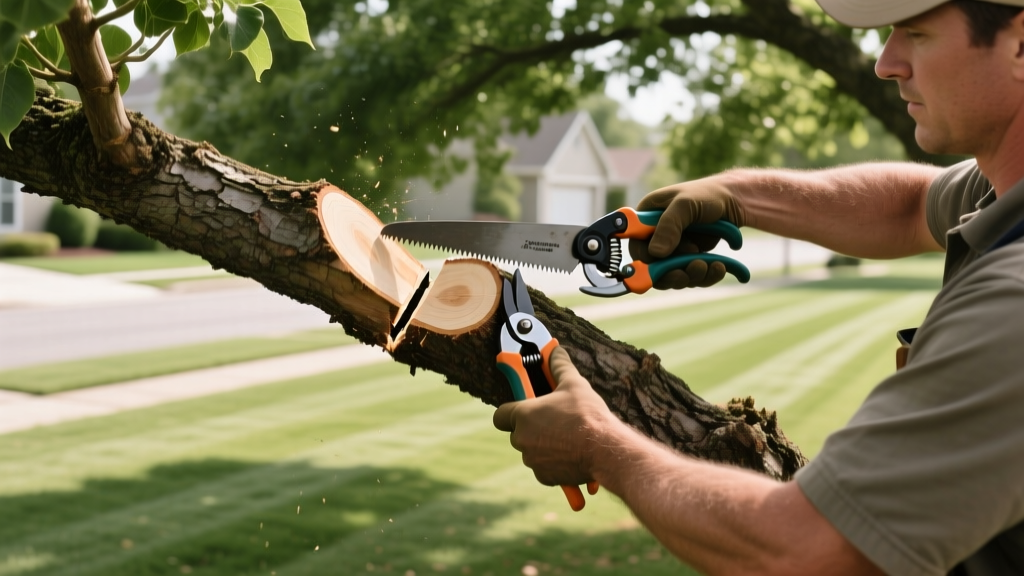
Master The 3-Cut Pruning Pattern For Large Branches (2026)
Lisa ThompsonPublished
Introduction: The Intersection of Tree Pruning and Lawn Care Patterns
When homeowners and landscape professionals think about pristine lawn mowing patterns—such as classic stripes, checkerboards, or concentric diamonds—the focus is almost exclusively on the turf, the mower deck, and the striping kit. However, in 2026, elite lawn care recognizes that the canvas for these intricate mowing patterns is heavily dictated by the tree canopy above. Low-hanging, overgrown branches disrupt sunlight penetration, create uneven microclimates that lead to patchy grass, and physically obstruct the turning radii required for sharp, geometric mowing patterns.
To reclaim your lawn's symmetry and health, you must master the three-cut pruning method for large branch removal. Think of this arboricultural technique as a precise "cutting pattern" that mirrors the intentionality of your mowing routes. By safely removing heavy limbs without damaging the tree's bark or trunk, you open up the landscape, allowing sunlight to reach the turf and giving your zero-turn or push mower the clearance needed to execute flawless mowing patterns. This guide will walk you through the exact three-cut pattern, the best 2026 tools for the job, and how this canopy management directly elevates your lawn's striping potential.
Why the Three-Cut Pattern is Essential for Large Branches
In the world of lawn care, patterns are all about controlling direction and force. When you stripe a lawn, you are bending grass blades in alternating directions to reflect light. When you prune a large branch, you must control the direction of gravitational force to prevent catastrophic bark tearing. If you attempt to remove a heavy, large-diameter branch with a single cut, the weight of the wood will cause the branch to snap and fall before the cut is complete. This downward pressure strips the bark down the trunk, severely damaging the tree's vascular system and creating an unsightly, jagged wound that ruins the aesthetic symmetry of your landscape.
The three-cut pruning method is a systematic pattern designed to relieve this weight incrementally. According to experts at Clemson University Home and Garden Information Center, preventing bark tearing is critical because the cambium layer just beneath the bark is responsible for the tree's healing and nutrient transport. A torn trunk takes years to compartmentalize, leaving the tree vulnerable to pests and diseases that will ultimately kill the canopy, resulting in permanent dead zones in your lawn's mowing pattern below.
Step-by-Step: Executing the Three-Cut Pruning Pattern
Executing this pattern requires the same spatial awareness and precision as mowing a perfect checkerboard pattern on a Bermuda or Kentucky Bluegrass lawn. Here is how to perform the three-cut sequence safely and effectively.
Cut 1: The Undercut (The Relief Pattern)
Your first cut is made on the underside of the branch, approximately 12 to 18 inches away from the trunk. Using a pruning saw or a top-handle chainsaw, cut upward into the wood to a depth of about one-third of the branch's total diameter. This undercut acts as a physical barrier; when the branch eventually falls, the wood will split at this notch rather than tearing down the trunk. This is the foundational step of the pattern, ensuring the structural integrity of the tree trunk remains untouched.
Cut 2: The Top Cut (The Weight Removal)
Move your saw two to three inches further out on the branch (away from the trunk) from your initial undercut. Cut straight down through the top of the branch. Because the weight of the branch is still supported by the uncut wood between your two cuts, the branch will snap cleanly at the undercut notch and fall safely to the lawn below. By removing the bulk of the branch's weight first, you eliminate the gravitational leverage that causes bark tearing. This step clears the physical obstacle from your yard, immediately opening up the space for wider, uninterrupted mower turning radii.
Cut 3: The Collar Cut (The Final Precision Cut)
The final cut is where the artistry of tree care meets the precision of lawn edging. You must now remove the remaining 12-to-18-inch stub without damaging the branch collar. According to Penn State Extension, the branch collar is the swollen, wrinkled area where the branch meets the trunk, and it contains specialized chemicals required for wound compartmentalization. Make your final cut just outside the branch bark ridge (the top angle) and the branch collar (the bottom swelling), angling the saw slightly to match the collar's natural slope. Do not make a flush cut against the trunk, as this removes the healing tissue and invites decay.
Tools of the Trade: 2026 Chainsaw and Handsaw Recommendations
To execute this cutting pattern cleanly, you need equipment that offers precision and power without weighing you down. The 2026 landscaping market has seen a massive shift toward high-torque battery systems that rival gas-powered saws, allowing for cleaner cuts and less vibration fatigue.
- STIHL MS 201 T C-M (Gas): Still the gold standard for professional arborists in 2026, this top-handle chainsaw offers M-Tronic engine management for instant throttle response, crucial for the precision required in the final collar cut.
- Husqvarna 540i XP (Battery): For those integrating tree care into a broader battery-powered lawn maintenance fleet, this 40V brushless saw provides exceptional chain speed and a slim profile for navigating tight canopy spaces without damaging surrounding turf.
- Silky Katanaboy 650 (Handsaw): If you are working near delicate garden beds or intricate lawn patterns where sawdust and gas exhaust are undesirable, this professional-grade folding pull-saw cuts through 4-inch limbs with surgical precision, leaving a smooth surface that heals rapidly.
How Canopy Pruning Impacts Your Lawn Mowing Patterns
Why does a tree care technique matter to a lawn mowing enthusiast? The answer lies in sunlight, airflow, and spatial geometry. Intricate mowing patterns, like the highly sought-after "diamond" or "wave" patterns, require dense, healthy turf. Grass blades must be robust enough to bend and hold their shape when pushed over by a roller or striping kit. Weak, shade-stressed grass (often found beneath low-hanging, unpruned branches) is thin, pale, and will simply mat down or tear when striped, ruining the visual contrast of the pattern.
By using the three-cut method to elevate the canopy and remove lower, heavy limbs, you achieve three things that directly benefit your mowing patterns:
- Increased Sunlight Penetration: Removing large, shading branches allows morning and afternoon sun to reach the turf, thickening the grass sward and providing the rigid blade structure necessary for high-contrast striping.
- Unobstructed Mowing Routes: Low-hanging branches force you to alter your mowing lines, breaking the continuity of your stripes. Elevating the canopy allows the operator to maintain a steady, straight line without ducking or adjusting the mower deck height.
- Improved Airflow and Disease Reduction: Better canopy airflow reduces the humidity at the soil level, mitigating fungal diseases like brown patch or dollar spot that create unsightly dead patches and disrupt the uniformity of your mowing canvas.
Research from the University of Florida IFAS Extension highlights that proper canopy management and structural pruning are essential for maintaining the long-term health of shade trees, which in turn stabilizes the microclimate for the underlying turfgrass ecosystems.
Cleanup and Lawn Recovery Post-Pruning
Once the three-cut pattern is complete and the large branches are on the ground, the cleanup process must be handled with care to protect your lawn. Dragging heavy, jagged branches across the turf will tear up the grass roots, leaving muddy scars that will ruin your mowing patterns for weeks. Instead, use a "grid-cutting" cleanup pattern: process the fallen branches into manageable 18-inch logs right where they fell, and carry them out in buckets or a wheelbarrow. This prevents turf compaction and tearing, ensuring your lawn is immediately ready for its next scheduled mowing and striping session.
Summary Table: Pruning Cuts vs. Lawn Mowing Adjustments
| Pruning Step | Target Area | Lawn Pattern Impact |
|---|---|---|
| Cut 1: Undercut | Underside, 12-18" from trunk | Prevents trunk damage, preserving the tree's aesthetic base for circular mowing patterns. |
| Cut 2: Top Cut | Top side, 2-3" past undercut | Removes heavy canopy weight, instantly opening up sunlight for turf recovery and striping. |
| Cut 3: Collar Cut | Just outside branch collar | Ensures rapid healing, preventing unsightly decay that detracts from the overall landscape design. |
| Cleanup Grid | Fallen debris on turf | Prevents turf tearing, maintaining a smooth, unblemished canvas for complex mower routes. |
Conclusion
Mastering the three-cut pruning method is not just about tree health; it is an essential landscape management strategy for anyone serious about lawn mowing patterns. By treating the chainsaw and the pruning saw with the same respect for geometry and lines as you do your zero-turn mower, you create a harmonious outdoor space. In 2026, the best landscapes are those where the health of the canopy and the perfection of the turf are managed as a single, unified pattern. Grab your Silky saw or Husqvarna chainsaw, execute the three-cut pattern, and watch your lawn's striping potential reach new heights.