Tree Care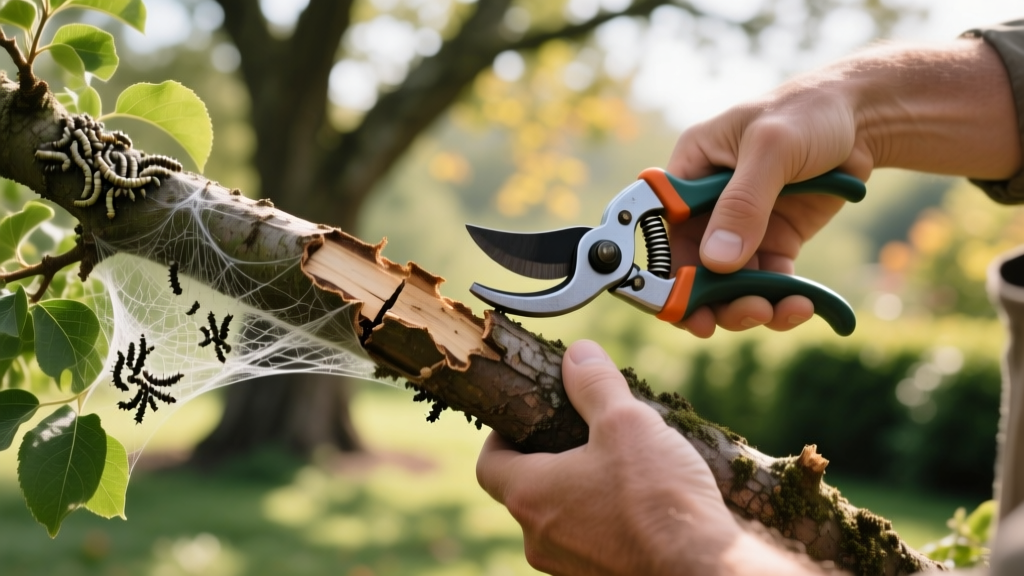
Three-Cut Pruning for Webworm Nest Removal: 2026 Guide
Emily WatsonPublished
Understanding Webworms and the Case for Pruning
When managing destructive defoliators like the Fall Webworm (Hyphantria cunea) or the Eastern Tent Caterpillar (Malacosoma americanum), homeowners and arborists often rely on biological controls like Bacillus thuringiensis (Bt) or horticultural oils. However, when a webworm colony has established a massive, entrenched nest on a large, heavy scaffold branch, chemical and biological sprays often fail to penetrate the dense silken webbing. In these severe cases, mechanical removal via pruning is the most effective and immediate solution for tree web worm control.
According to entomologists at Penn State Extension, fall webworms can enclose entire branch tips and crotches in their unsightly webs, causing significant localized dieback and stress. While small nests on slender twigs can simply be snipped off with hand pruners, removing large, heavy limbs (those exceeding 2 inches in diameter) requires a specialized technique. Yanking or sawing directly through a heavy, web-infested limb will inevitably cause the branch to split and tear down the trunk, stripping the bark and creating a massive, jagged wound. This type of damage invites secondary fungal pathogens and wood-boring insects, compounding the stress already caused by the webworms.
Why the Three-Cut Method is Non-Negotiable
The three-cut pruning method is the gold standard in modern arboriculture for removing heavy limbs. As outlined by the University of Minnesota Extension, this technique isolates the weight of the branch before making the final, precise cut at the branch collar. When dealing with webworm-infested wood, the branch is often already weakened by defoliation and the physical weight of the silken nest, which can trap moisture and debris. The three-cut method ensures that the tree's natural defense mechanisms—specifically the branch bark ridge and the branch collar—remain entirely intact, allowing the tree to compartmentalize the wound and heal rapidly before winter.
Essential Arborist Tools for 2026
Before approaching a webworm nest, ensure you have the correct, sanitized equipment. The 2026 arborist standards emphasize ergonomics and clean-cutting mechanics to reduce tree stress.
- Pole Pruning Saw (10 to 14 feet): Essential for reaching high canopy nests without using unstable ladders. Look for models with impulse-hardened teeth that resist sap buildup from the sticky webworm silk.
- Curved Hand Pruning Saw: For lower, accessible branches. A curved blade bites into the wood on the pull stroke, offering greater control when cutting near the trunk.
- Bypass Loppers: Only for secondary cleanup of smaller, infested twigs under 1.5 inches.
- Sanitization Spray: A 70% isopropyl alcohol solution in a pressurized pump sprayer.
The Three-Cut Pruning Method: Step-by-Step
To safely remove a large branch harboring a webworm nest, follow these three precise cuts. Do not rush, and always wear safety glasses and a hard hat, as falling webworm nests can drop heavy debris and frass (insect waste).
Cut 1: The Undercut (The Safety Notch)
Measure approximately 12 to 18 inches away from the trunk, moving outward toward the webworm nest. From the underside of the branch, use your pruning saw to cut upward, penetrating about one-third of the way through the branch's diameter. This undercut acts as a physical stop. When the heavy, web-filled branch eventually snaps under its own weight in the next step, the bark will only tear as far as this undercut, protecting the trunk from being stripped.
Cut 2: The Top Cut (Removing the Webworm Nest)
Move about 1 to 2 inches further out toward the webworm nest from your undercut. From the top of the branch, saw straight down. As you cut through, the weight of the branch and the heavy webworm nest will cause it to snap and fall cleanly. The bark tearing will stop exactly at the undercut you made in Step 1. You have now safely removed the bulk of the infested wood and the heavy webworm colony without damaging the tree's main trunk.
Cut 3: The Final Collar Cut (The Healing Cut)
You are now left with a 12 to 18-inch stub. Locate the branch collar—the swollen, wrinkled area at the very base of the branch where it meets the trunk. Also identify the branch bark ridge on the top of the crotch. Your final cut must be made just outside (on the distal side) of the branch collar, angling slightly to match the natural ridge. Never cut flush against the trunk. Flush cutting removes the tree's natural chemical defense zone, leading to decay that will hollow out the trunk over time. A proper collar cut will be slightly oval and will allow the tree's callus tissue to roll over the wound efficiently.
Tool Sanitization: A Critical 2026 Protocol
Webworm nests harbor not only the insects themselves but also a micro-environment of fungal spores and bacteria trapped in the damp webbing. In 2026, arboricultural best practices strongly advise against using household bleach (sodium hypochlorite) for tool sanitization, as it severely corrodes high-carbon steel saw blades and lopper hinges. Instead, thoroughly spray your saw blades and pruning tools with 70% isopropyl alcohol or a commercial quaternary ammonium arborist disinfectant between every single tree, and ideally between major cuts on heavily infected specimens. Allow the alcohol to air dry for 30 seconds before making the next cut.
Webworm Control Strategies: Pruning vs. Biological
Deciding when to use the three-cut pruning method versus biological sprays depends on the size of the nest, the time of year, and the overall health of the tree. Review the comparison table below to determine the best approach for your specific scenario.
| Control Method | Best Use Case | Pros | Cons |
|---|---|---|---|
| Three-Cut Pruning | Large, heavy branches (2+ inches); late-season entrenched nests; localized, severe infestations. | Immediate removal of pests and webbing; no chemical runoff; highly effective for canopy crotches. | Creates a wound that requires compartmentalization; requires physical labor and safety gear. |
| Bt (Bacillus thuringiensis) | Early-stage caterpillars; small, newly formed webs on branch tips; widespread, light infestations. | Targets only caterpillars; safe for pollinators and beneficial insects; no wounding to the tree. | Ineffective if sprayed on the outside of mature, dense webs; requires precise timing in early spring/summer. |
| Horticultural Oils | Dormant season (late winter) to smother overwintering egg masses on twigs before spring hatch. | Prevents the infestation before it begins; excellent for dormant tree care schedules. | Cannot be used during active growing season without risking phytotoxicity (leaf burn); does not remove existing webs. |
| Manual Web Disruption | Small, reachable webs on young trees where pruning would remove too much total canopy. | Preserves the branch structure; exposes caterpillars to natural predators like birds and wasps. | Labor-intensive; caterpillars may simply rebuild the web if not physically removed or killed. |
Proper Disposal of Infested Wood
Once the webworm-infested branch is on the ground, your job is not finished. Do not leave the nest near the base of the tree, and never add webworm-infested wood or silk to your home compost pile. The heat generated by standard residential compost bins is rarely sufficient to kill the resilient pupae or the fungal pathogens associated with the damp webbing. For optimal tree web worm control, immediately place the severed branches and nests into heavy-duty contractor bags, seal them tightly, and dispose of them with your municipal yard waste, or burn them if local 2026 fire ordinances and burn bans permit.
Post-Pruning Tree Care and Recovery
Removing a large scaffold branch to eliminate a webworm colony is a significant stress event for the tree. To support rapid wound compartmentalization and overall vigor, focus on the tree's root zone. Apply a 2-to-3-inch layer of organic wood chip mulch in a wide ring around the tree's drip line, ensuring the mulch is kept at least 3 inches away from the trunk flare to prevent collar rot. Avoid the temptation to apply high-nitrogen synthetic fertilizers immediately after pruning; this forces rapid, weak, and succulent new growth that is highly attractive to the next generation of pests. Instead, rely on deep, infrequent watering during dry spells and let the tree's natural biology heal the pruning wound. By combining the precision of the three-cut pruning method with diligent sanitation and proper aftercare, you can effectively eradicate webworm nests while preserving the structural integrity and long-term health of your landscape trees.