Tree Care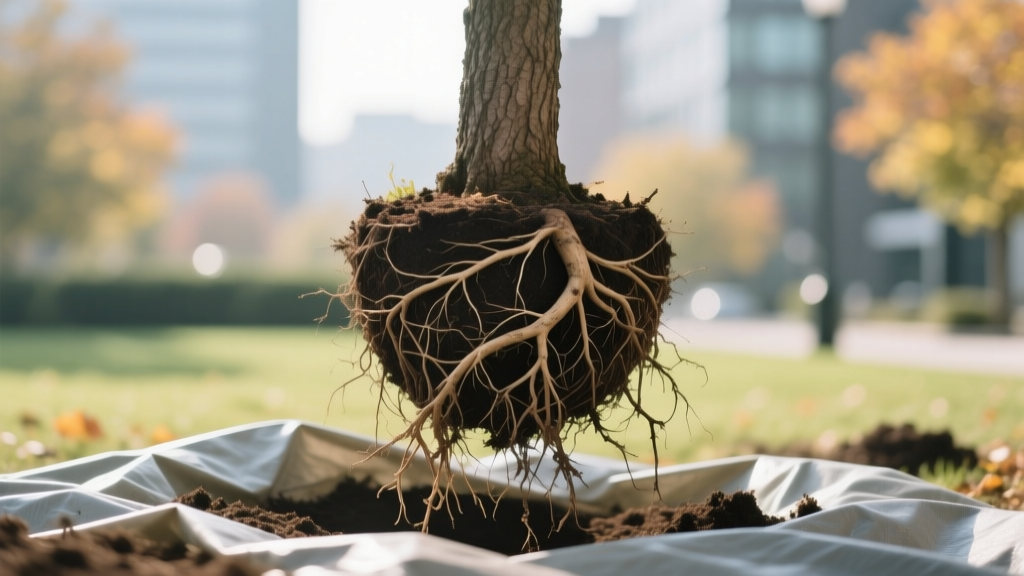
Transplanting Mature Trees: Root Ball Ratios & Web Worm Control 2026
Lisa ThompsonPublished
The Hidden Link Between Transplant Shock and Web Worm Outbreaks
Transplanting a mature tree is a significant investment in your landscape, but the process inherently subjects the tree to severe physiological stress. In 2026, arborists and landscape professionals are increasingly recognizing a critical secondary threat associated with this stress: catastrophic fall web worm (Hyphantria cunea) infestations. When a mature tree is moved with an inadequate root ball or improper root pruning techniques, it enters a state of prolonged transplant shock. During this vulnerable window, the tree's ability to synthesize defensive chemical compounds—such as tannins and alkaloids—is drastically reduced.
Fall web worms are notorious for targeting stressed, weakened trees. The female moths can detect the volatile organic compounds (VOCs) emitted by struggling trees, deliberately selecting them as oviposition sites. Once the larvae hatch in late summer, they construct expansive, unsightly silk webs over the canopy, defoliating branches and further starving a root system that is already struggling to re-establish. Understanding the precise root ball size ratios and advanced root pruning protocols is no longer just about tree survival; it is your primary biological defense against web worm devastation.
2026 Standards for Root Ball Size Ratios
The foundation of a successful transplant—and the first step in pest prevention—is adhering to the current ANSI A300 standards for root ball sizing. A common mistake among amateur landscapers is digging a root ball that is too deep but not wide enough. In reality, the vast majority of a mature tree's absorbing roots are located in the top 12 to 18 inches of soil, extending well beyond the trunk.
The golden rule for 2026 is the caliper-to-ball ratio: for every 1 inch of trunk caliper (measured 6 inches above the soil line for trees up to 4 inches in caliper, or 12 inches above for larger trees), the root ball diameter must be a minimum of 10 to 12 inches. Undersizing this ball guarantees transplant shock, which directly invites web worm colonization.
| Trunk Caliper (inches) | Minimum Root Ball Diameter | Root Ball Depth | Estimated Soil Weight (lbs) |
|---|---|---|---|
| 2.0 | 24 inches | 18 inches | 850 |
| 3.0 | 36 inches | 22 inches | 1,900 |
| 4.0 | 48 inches | 28 inches | 3,800 |
| 5.0 | 60 inches | 32 inches | 6,200 |
| 6.0 | 72 inches | 36 inches | 9,500 |
As noted by the University of Minnesota Extension, ensuring the correct width-to-depth ratio prevents the tree from toppling and preserves the fine, fibrous roots necessary for immediate water uptake. A well-hydrated, turgid tree can naturally fend off minor web worm pressure through vigorous sap flow and rapid wound compartmentalization.
Strategic Root Pruning Before the Move
To minimize the shock that triggers pest susceptibility, root pruning must be executed 6 to 12 months prior to the actual transplant. This technique forces the tree to generate a dense network of fibrous feeder roots inside the future root ball perimeter, rather than relying on long, structural roots that will inevitably be severed during the move.
The Trenching Protocol
- Mark the Perimeter: Using the caliper-to-ball ratio table above, mark a circle around the trunk representing the exact edge of the future root ball.
- Sever Cleanly: Use modern, battery-powered reciprocating saws equipped with specialized root-cutting blades or sharp, manual trenching spades. Crushed or torn roots are highly susceptible to Phytophthora root rot, which compounds stress and makes the canopy even more attractive to web worms.
- Backfill with Bio-Active Media: Fill the trench with a mix of native soil and high-quality compost inoculated with mycorrhizal fungi. This encourages rapid root regeneration within the ball.
By pre-pruning the roots, the tree undergoes its stress response while still firmly anchored in its original location, allowing it to recover and build chemical defenses before the physical trauma of being lifted and transported.
Web Worm Control Strategies for Newly Transplanted Trees
Despite perfect root ball ratios and meticulous pruning, newly transplanted mature trees may still face fall web worm pressure, especially during the extended, unusually warm autumns we are experiencing in 2026, which allow for multiple overlapping generations of the pest. Managing web worms on a stressed, transplanted tree requires a delicate balance: you must eliminate the pest without causing further physiological harm to the tree.
The Dilemma of Mechanical Pruning
The standard advice for web worm control is to simply prune out and destroy the webbed branches. However, do not aggressively prune a newly transplanted tree. A tree that has just lost 70% of its root mass relies on every remaining leaf to photosynthesize and generate the energy required to grow new roots. Removing large sections of the canopy to extract web worm nests will starve the root system, potentially killing the tree or forcing it into a fatal dormancy. According to entomologists at the University of Kentucky, preserving the canopy's photosynthetic capacity is paramount for stressed specimens.
Biological and Targeted Chemical Controls
Instead of mechanical removal, rely on targeted biological sprays that eradicate the larvae while leaving the tree's foliage intact to support root recovery.
- Bacillus thuringiensis var. kurstaki (Bt-k): This remains the gold standard for early-instar web worm control. Bt-k is a naturally occurring soil bacterium that, when ingested by the caterpillars, disrupts their digestive tract. It is entirely safe for the stressed tree, beneficial insects, and soil microbiology. Apply in the late evening to prevent UV degradation.
- Spinosad: For older, more resilient larvae that have built thick, protective webs, 2026 formulations of Spinosad offer excellent penetration and efficacy. Derived from a soil-dwelling actinomycete, it targets the insect's nervous system. Caution: Apply only after dusk to avoid harming foraging pollinators, as Spinosad is toxic to bees when wet, though safe once dried.
- Chlorantraniliprole (Acelepryn): For severe infestations on high-value mature transplants, this anthranilic diamide provides long-lasting residual control. It is highly effective against lepidopteran pests and has an excellent environmental safety profile, ensuring that the soil ecology around the recovering root ball remains undisturbed.
Disrupting the Web Structure
If the webs are exceptionally dense and blocking sunlight from reaching the inner canopy, you can use a high-pressure water nozzle or a long bamboo pole to physically tear open the silk tents. This does not remove the leaves but exposes the larvae to natural predators like parasitic wasps, birds, and predatory stink bugs, while allowing sunlight to penetrate the canopy to aid photosynthesis. The University of Minnesota Extension frequently recommends this mechanical disruption as a highly effective, non-damaging alternative to pruning.
Post-Transplant Care to Maintain Pest Resistance
Controlling the web worms is only half the battle; restoring the tree's vigor is the ultimate cure. A vigorous tree will naturally outgrow minor defoliation and produce the secondary metabolites required to deter future pests.
Hydration and Mulching
Newly transplanted mature trees require deep, infrequent watering to encourage roots to push outward into the surrounding native soil. Utilize slow-release drip irrigation bags or soaker hoses positioned over the root ball and the immediate surrounding soil. Follow this with a 2-to-3-inch layer of coarse arborist wood chips. Never volcano mulch against the trunk flare, as this induces stem girdling roots and bark decay, creating a secondary stress vector that will invite borers and further compromise the tree's anti-pest defenses.
Fertilization Restraint
Avoid high-nitrogen synthetic fertilizers in the first year after transplanting. Excessive nitrogen forces rapid, succulent top growth that the compromised root system cannot support. Furthermore, high nitrogen levels dilute the tree's cellular defenses, making the new foliage incredibly palatable to any lingering web worm populations. Instead, rely on the slow-release nutrients provided by your compost backfill and a light application of kelp extract to stimulate root hormone production.
Conclusion
Successfully transplanting a mature tree in 2026 requires a holistic understanding of both below-ground mechanics and above-ground pest pressures. By strictly adhering to the 10-to-12-inch per caliper root ball ratio, executing precise pre-transplant root pruning, and utilizing canopy-preserving biological controls for fall web worms, you can ensure your transplanted specimen thrives for decades. Remember, the best pest control strategy is a robust, unstressed root system.
