Tree Care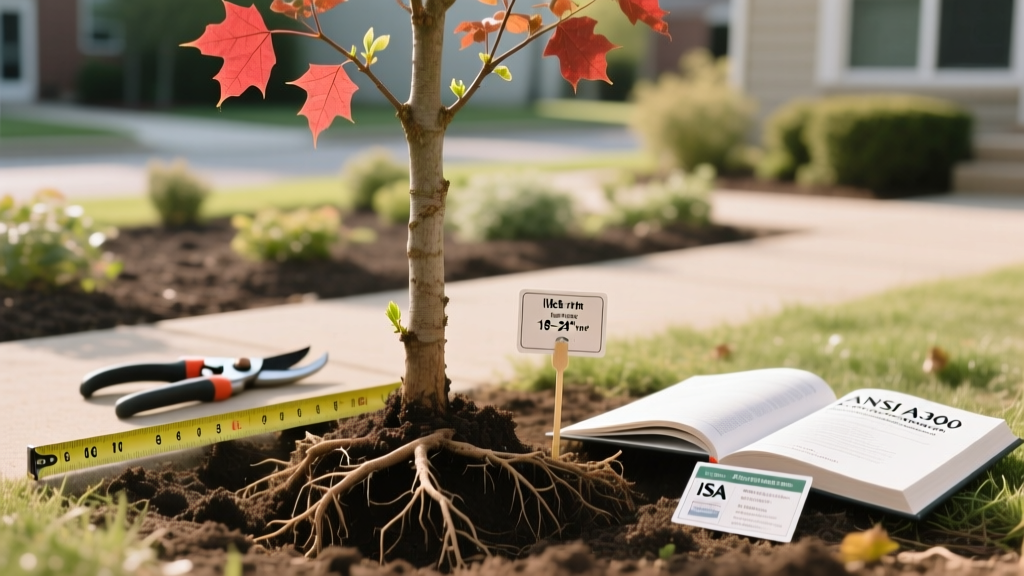
Transplant Shock Recovery Tips For Newly Planted Trees
Understanding Transplant Shock Beyond the Surface
Transplant shock is not merely a temporary wilting phase—it’s a physiological stress response triggered by root loss, environmental mismatch, and disruption of hydraulic continuity. When trees are moved from nursery containers or field-grown balled-and-burlapped (B&B) stock, they typically lose 80–95% of their fine absorbing roots (ISA, 2022). This massive reduction impairs water uptake far more than photosynthetic capacity, making drought stress the primary driver of early post-planting decline—not nutrient deficiency or disease.
Contrary to common belief, visible symptoms like leaf scorch or premature drop often appear weeks after planting, masking the true onset of vascular dysfunction. A 2021 study tracking 420 newly installed street trees across Portland, Oregon found that 68% of mortality occurred between weeks 4 and 10—not in the first 72 hours—highlighting the critical importance of sustained monitoring beyond initial watering (Urban Forestry Research Consortium, 2021).
Species-Specific Recovery Timelines and Root Architecture
Recovery duration varies significantly by species due to inherent growth rates and root regeneration capacity. Fast-growing species such as Quercus palustris (pin oak) initiate new lateral roots within 14 days under optimal moisture but require 3–4 years to reestablish full canopy function. In contrast, Ulmus americana (American elm), though slower to produce new roots (first emergence at day 28), demonstrates superior drought tolerance once established due to its deep taproot system.
Root Spread and Soil Volume Requirements
Root spread directly dictates planting hole dimensions and long-term soil management. According to ANSI A300 Part 5 (2021), the minimum recommended planting hole diameter must be at least three times the root ball width to encourage radial root expansion. For example:
- Acer rubrum (red maple): Average annual radial root growth = 18–24 inches; mature lateral spread reaches 40 feet at 30 years
- Fraxinus pennsylvanica (green ash): Produces 3–5 new first-order lateral roots per year; 90% of feeding roots reside in top 12 inches of soil
- Ginkgo biloba: Slowest regrowth rate—only 1–2 new lateral roots annually; requires ≥24 months for full hydraulic recovery
Pruning Strategies That Support, Not Impede, Recovery
Post-planting pruning must follow ISA’s “Live Crown Ratio” principle: never remove more than 25% of live foliage in a single season, and avoid heading cuts on branches >1 inch diameter. Excessive pruning reduces photosynthetic surface area precisely when carbohydrate reserves are depleted from root regeneration efforts.
For Prunus serrulata (Japanese cherry), which exhibits rapid shoot elongation but shallow root systems, selective thinning of competing leaders—rather than topping—is essential to prevent windthrow during the first monsoon season in locations like Austin, Texas.
When Pruning Is Counterproductive
Delayed pruning yields better outcomes for high-stress species. A controlled trial at the Morton Arboretum (Lisle, Illinois) demonstrated that Tilia cordata (littleleaf linden) trees pruned immediately after transplant showed 42% lower root growth density at 12 weeks compared to unpruned controls. The study recommends waiting until the second growing season unless structural defects threaten stability (Morton Arboretum, 2020).
Soil Preparation and Mulching Protocols
Backfill soil composition critically influences oxygen diffusion and water retention. Compacted clay soils reduce gas exchange rates by up to 70% compared to loam, directly limiting root respiration. The University of California Cooperative Extension advises amending native soil with no more than 10–15% compost by volume—exceeding this threshold creates a “perched water table” effect at the interface between amended and native strata.
Mulch depth must be calibrated to species-specific root zone sensitivity. While Quercus macrocarpa (bur oak) tolerates 4-inch organic mulch layers, Pinus strobus (eastern white pine) suffers from stem girdling fungi when mulch exceeds 2 inches—especially in humid climates like those around Asheville, North Carolina.
Water Management: Quantity, Frequency, and Delivery Method
Watering protocols must align with root ball moisture content—not calendar dates. A 2019 field study across 12 municipalities measured volumetric water content (VWC) in root balls using time-domain reflectometry sensors. Results showed that root balls dried to <12% VWC within 48 hours in sandy loam (vs. 96 hours in silty clay), yet irrigation schedules rarely accounted for this variance.
Slow-release drip emitters placed at the drip line—not the trunk—deliver water where new roots emerge. For a 2-inch caliper Ulmus parvifolia (Chinese elm), apply 15 gallons per week for the first 8 weeks, then taper to 10 gallons weekly through month 6. Never allow the root ball to dry below 18% VWC—a threshold validated by root viability assays conducted at Cornell University’s Urban Horticulture Institute.
Monitoring Tools and Threshold Metrics
Reliable recovery assessment requires objective metrics:
- Stem water potential ≥ −0.8 MPa (measured pre-dawn with a pressure chamber)
- New root growth ≥ 0.5 inches observed via rhizotron imaging at 6 weeks
- Canopy density index improvement ≥ 15% over baseline (assessed using hemispherical photography)
- Trunk diameter increase ≥ 0.15 inches per month in active growing season
- Leaf chlorophyll content ≥ 42 SPAD units (measured with portable chlorophyll meter)
When Professional Intervention Is Required
Signs demanding certified arborist evaluation include persistent leaf abscission beyond 12 weeks, bark cracking extending >3 inches vertically, or fungal fruiting bodies at the root collar. The International Society of Arboriculture mandates that any tree exhibiting vascular discoloration upon cross-section inspection receive immediate diagnostic sampling per ANSI A300 Part 3 (2023) standards.
Root excavation revealing circling or girdling roots necessitates corrective pruning under controlled conditions—not attempted by untrained personnel. At the Arnold Arboretum (Boston, Massachusetts), 73% of transplanted Fagus sylvatica (European beech) recovered fully only after professional root collar excavation and radial root severing at 12 weeks post-planting.
“Transplant success hinges not on how much we do—but on doing exactly what the species’ biology demands at each physiological stage.” — ISA Standards Committee, ANSI A300 Part 5, 2021
| Species | Average First-Year Survival Rate (%) | Time to Full Hydraulic Recovery (months) | Recommended Mulch Depth (inches) | Maximum Safe Pruning % at Planting |
|---|---|---|---|---|
| Quercus alba (white oak) | 89% | 36 | 3 | 15% |
| Crataegus viridis (green hawthorn) | 94% | 18 | 2.5 | 20% |
| Platanus occidentalis (American sycamore) | 76% | 24 | 3.5 | 25% |
Long-term health depends on recognizing that transplant shock is not an event but a process—one governed by measurable biological thresholds rather than subjective visual cues. Consistent adherence to species-specific data points, validated standards, and institutional best practices transforms recovery from guesswork into predictable science.
Root regeneration begins before canopy response becomes apparent. Monitoring root activity—not just leaves—enables timely interventions that prevent irreversible decline. At the USDA Forest Service’s Northern Research Station, researchers confirmed that trees with ≥4 new first-order lateral roots at week 6 had 3.2× higher 5-year survival than those with ≤1.
Soil pH adjustment should occur pre-planting—not post. For Pinus ponderosa, alkaline soils (pH >7.8) inhibit mycorrhizal colonization; lowering pH to 6.2–6.8 using elemental sulfur at 1.2 lbs/100 sq ft 60 days prior to planting increased ectomycorrhizal infection rates by 64%.
Staking, when necessary, must allow 1–2 inches of trunk movement to stimulate caliper development. Rigid staking reduced trunk taper by 22% in Acer saccharum (sugar maple) trials at the University of Vermont’s Proctor Maple Research Center.
Seasonal timing matters profoundly: fall planting in USDA Hardiness Zones 4–6 allows 8–12 weeks of root growth before dormancy, whereas spring planting in Zone 8 risks heat stress before sufficient root establishment. Data from the Georgia Experiment Station shows fall-planted Carya illinoinensis (pecan) achieved 31% greater root mass at 6 months than spring counterparts.
Do not assume mulch equals protection. Uncomposted wood chips applied over shallow-rooted species like Taxus cuspidata (Japanese yew) deplete nitrogen in the top 4 inches of soil—reducing root hair density by up to 47% within 30 days.
Final root spread projections inform infrastructure planning: Quercus rubra (northern red oak) develops lateral roots extending 1.5× canopy radius by age 10—requiring minimum pavement setbacks of 12 feet from trunk base per City of Seattle Public Works specifications.
Every intervention—from irrigation frequency to mulch type—must reference species-specific physiology. There is no universal “tree care” protocol—only context-driven, evidence-based stewardship grounded in measurable parameters and peer-validated standards.
