Pest Control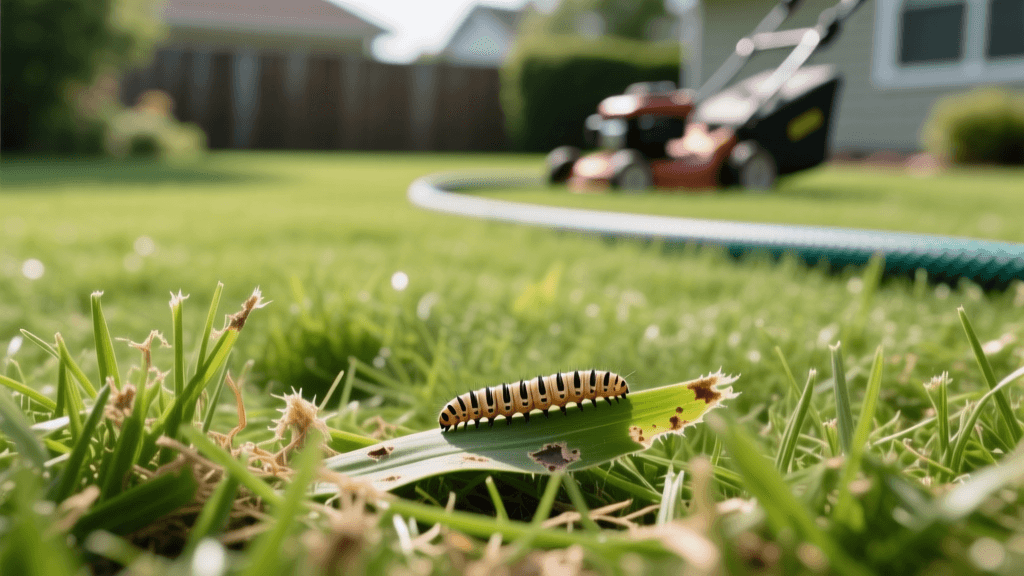
How to Identify and Treat Lawn Armyworms Effectively
What Are Armyworms and Why Are They Dangerous?
Fall armyworms (Spodoptera frugiperda) are among the most destructive turfgrass pests in North America. Despite their name, these caterpillars do not actually march in organized armies, but their sheer numbers and insatiable appetites can strip a healthy lawn down to bare soil in as little as 48 hours. They primarily target warm-season grasses like Bermuda, St. Augustine, and Zoysia, but they will also feast on cool-season fescues and ryegrass during late summer and early fall.
Understanding their lifecycle is crucial for effective integrated pest management (IPM). Adult moths migrate northward from the southern United States each spring, laying clusters of 100 to 200 eggs on grass blades. These eggs hatch in just two to three days, and the resulting larvae go through six instars (growth stages). It is during the final two instars that armyworms consume up to 90% of their total food intake, making early detection and rapid treatment absolutely essential.
Step 1: How to Identify an Armyworm Infestation
Before you reach for a pesticide, you must confirm that armyworms are the culprits. Damage often mimics drought stress or disease, appearing as irregular brown patches that rapidly expand. The grass blades will look ragged, chewed, or completely sheared off at the soil line.
The Soap Flush Test
To confirm their presence, perform a simple soap flush test. This is a highly effective, non-destructive way to force hidden caterpillars to the surface.
- Mix 2 tablespoons of liquid dish soap (like Dawn or Palmolive) into 1 gallon of water.
- Mark off a 1-square-yard section of your lawn at the border of the damaged and healthy grass.
- Pour the soapy water evenly over the marked area.
- Wait 3 to 5 minutes. If armyworms are present, they will emerge from the thatch and soil to writhe on the surface.
According to the Texas A&M AgriLife Extension, finding three or more armyworms per square foot justifies immediate chemical or biological intervention. If you find fewer than three, continue monitoring, as natural predators may keep the population in check.
Visual Identification
Mature armyworms are 1.5 to 2 inches long and vary in color from green to mottled brown or almost black. Look for the distinctive inverted white "Y" suture on the front of their head capsule, as well as alternating dark and light stripes running down the length of their bodies.
Step 2: Choose Your Treatment Method
Once you have confirmed an infestation, select a treatment based on your lawn care philosophy, budget, and the severity of the outbreak. Below is a comparison of the most effective active ingredients for armyworm control.
| Active Ingredient | Product Example | Type | Application Rate | Speed of Control |
|---|---|---|---|---|
| Bacillus thuringiensis (Bt) | Monterey Bt | Organic / Biological | 2 oz per 3 gallons of water (per 1,000 sq ft) | Slow (2-3 days) |
| Spinosad | Naturalyte Insect Control | Organic / Biological | 4 tbsp per 1,000 sq ft (liquid concentrate) | Moderate (1-2 days) |
| Bifenthrin | Talstar P Professional | Synthetic Pyrethroid | 0.5 to 1 oz per 1,000 sq ft | Fast (Hours) |
| Chlorantraniliprole | Acelepryn | Synthetic Anthranilic Diamide | 0.15 to 0.2 oz per 1,000 sq ft | Moderate (1-3 days) |
Organic vs. Synthetic Controls
If you are managing a minor infestation or prefer organic lawn care, Bt (Bacillus thuringiensis var. kurstaki) is an excellent choice. Bt is a naturally occurring soil bacterium that produces proteins toxic only to caterpillars. It is completely safe for bees, earthworms, pets, and humans. However, Bt must be ingested by the larvae to work, and it breaks down rapidly in sunlight, meaning it is only effective on young, early-instar armyworms.
For severe, late-stage infestations where the lawn is disappearing by the hour, synthetic pyrethroids like Bifenthrin provide rapid knockdown. Bifenthrin acts on the nervous system of the insect, offering immediate contact kill. While highly effective, pyrethroids are toxic to aquatic life and beneficial insects, so avoid applying them near ponds, streams, or storm drains.
Step 3: How to Apply Treatments for Maximum Efficacy
Proper application technique is just as important as choosing the right product. Armyworms are nocturnal feeders, hiding in the thatch and soil during the heat of the day. If you spray at noon, the pesticide will degrade in the sun before the pests emerge to feed.
Timing Your Application
- Time of Day: Always apply treatments in the late afternoon or early evening (between 5:00 PM and 8:00 PM). This ensures the product is fresh and active when the armyworms emerge to feed at dusk.
- Weather Conditions: Check the forecast. Do not apply if rain is expected within 24 hours, as this will wash the product off the grass blades before it can be ingested or absorbed.
- Mowing: Mow your lawn immediately before application. Removing the top third of the grass blade forces the armyworms lower into the canopy and removes some of the egg masses, while also allowing the spray to penetrate deeper into the thatch layer.
Calibrating Your Sprayer
Most liquid insecticides require 1 to 2 gallons of finished spray mixture per 1,000 square feet to ensure adequate coverage. If you are using a standard 2-gallon pump sprayer to treat a 2,000-square-foot section of lawn, you will need to mix the appropriate amount of concentrate for 2,000 square feet into 4 gallons of water (or apply two full 2-gallon tanks evenly over the area).
"Fall armyworm outbreaks can be explosive. Because the larvae feed voraciously in their final stages, waiting to treat until you see massive browning often means the damage is already done. Scout weekly during late summer using a soap flush, and treat at the first sign of threshold-level populations."
— Dr. Becky Grubbs, Turfgrass Specialist, Texas A&M AgriLife Extension
Step 4: Post-Treatment Lawn Recovery
Once the armyworms have been eradicated, your lawn will need help to bounce back. Armyworms typically only eat the leaf tissue, leaving the crown and root system intact. This means your grass can recover fully if you provide the right conditions.
- Water Deeply: Provide 1 to 1.5 inches of water per week to encourage new shoot growth. Water deeply and infrequently rather than giving the lawn a light daily sprinkle.
- Apply Nitrogen: About one week after treatment, apply a quick-release nitrogen fertilizer (such as urea or ammonium sulfate) at a rate of 0.5 to 1 lb of actual nitrogen per 1,000 square feet. This will fuel rapid vegetative growth and help the grass fill in the brown patches.
- Avoid Pre-Emergents: Do not apply pre-emergent herbicides during the recovery phase, as some active ingredients can inhibit the rooting and lateral spread of recovering turfgrass stolons and rhizomes.
Prevention Strategies for Next Season
While you cannot stop the moths from migrating, you can make your lawn less hospitable to egg-laying females and support natural predators.
- Encourage Beneficial Insects: Ground beetles, rove beetles, and parasitic wasps are natural enemies of the armyworm. Planting diverse flowering borders around your property provides nectar for these beneficial predators.
- Manage Thatch: A thatch layer thicker than 0.5 inches provides an ideal hiding spot for larvae and prevents insecticides from reaching the soil surface. Core aerate and dethatch your lawn annually to maintain a healthy turf profile.
- Turn Off Exterior Lights: Adult armyworm moths are highly attracted to bright white lights at night. Turning off unnecessary exterior lighting during peak migration months (August and September) can reduce the number of egg-laying females drawn to your property.
By combining vigilant scouting with targeted, timely treatments, you can successfully defend your turfgrass against armyworms and maintain a lush, healthy landscape year after year.