Lawn Care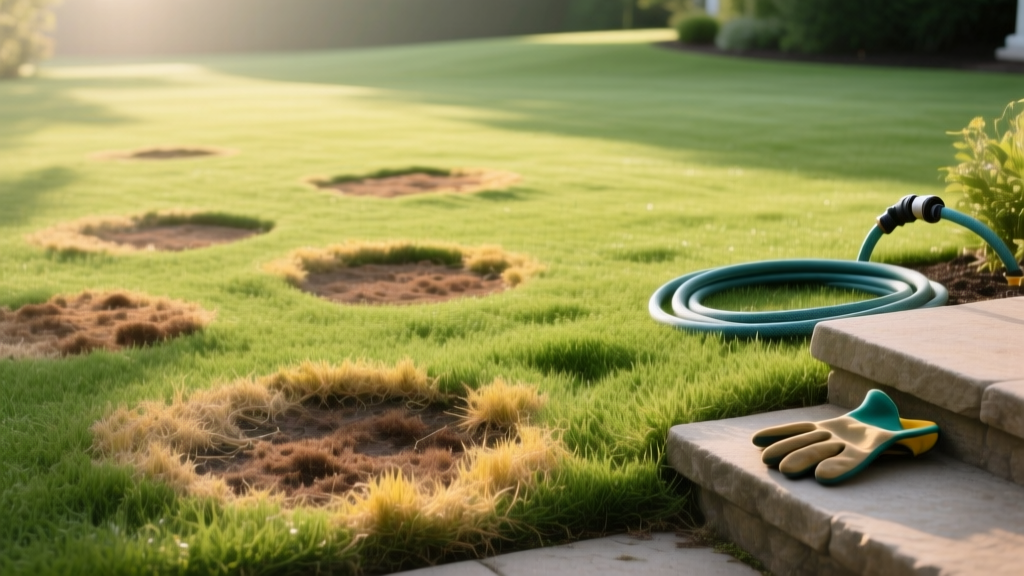
Identifying and Treating Brown Patch Disease in Your Lawn
James MillerPublished
Understanding Brown Patch Disease
Brown patch, caused by the soil-borne fungal pathogen Rhizoctonia solani, is arguably the most common and destructive turfgrass disease affecting residential lawns across the United States. Unlike some lawn diseases that merely cause cosmetic blemishes, brown patch can rapidly decimate large sections of your turf, leaving behind dead, sunken, and unsightly rings. According to turfgrass pathology experts at Penn State Extension, this disease is particularly aggressive in warm, humid climates and can strike both cool-season and warm-season grasses when environmental conditions align perfectly for fungal sporulation.
The fungus survives the winter in the soil as sclerotia (compact masses of fungal hyphae) or as mycelium in infected plant debris and thatch. When temperatures rise and moisture levels remain consistently high, the pathogen becomes active, infecting the leaf blades and sheaths of your grass. If left untreated, the infection will sever the leaf from the crown, leading to widespread turf death that requires extensive and costly renovation.
How to Identify Brown Patch in Your Lawn
Accurate identification is the first and most critical step in lawn disease treatment. Misdiagnosing brown patch as drought stress or insect damage can lead to incorrect treatments that exacerbate the problem, such as increasing irrigation or applying unnecessary pesticides.
Symptoms in Cool-Season Grasses
In cool-season grasses like Tall Fescue, Kentucky Bluegrass, and Perennial Ryegrass, brown patch typically appears during the peak heat and humidity of mid-summer. You will notice circular or irregular patches of blighted grass ranging from 6 inches to several feet in diameter. The affected grass initially takes on a purplish-green hue before rapidly turning dark brown and withering. A hallmark identifier of active brown patch in the early morning, when dew is present, is the 'smoke ring'—a distinct, dark, wilted border at the outer edge of the patch where the fungus is actively advancing.
Symptoms in Warm-Season Grasses
For warm-season grasses such as Bermuda, Zoysia, and St. Augustine, brown patch (often referred to as large patch in these species) tends to be most problematic during the cooler, wetter periods of spring and fall when the grass is entering or exiting dormancy. The patches can grow massive, sometimes exceeding 20 feet in diameter. According to the Clemson University Home & Garden Information Center, the center of these large patches may recover and green up while the outer margins continue to expand and die, creating a frog-eye or donut appearance.
Upon closer inspection of individual grass blades, you will see distinct lesions. These lesions typically feature a tan or bleached center surrounded by a dark brown or reddish-brown border. In Tall Fescue, the lesions often span the entire width of the leaf blade, causing the leaf to girdle and collapse.
Environmental Conditions That Trigger Brown Patch
Rhizoctonia solani is an opportunistic pathogen. It requires a specific microclimate to infect your lawn. The primary triggers include:
- Temperature: Daytime temperatures consistently above 80°F (27°C) and, more importantly, nighttime temperatures remaining above 68°F (20°C).
- Moisture: Prolonged leaf wetness is the biggest catalyst. If grass blades remain wet for 10 to 12 continuous hours, infection is highly likely.
- Humidity: High relative humidity creates a stagnant, moisture-heavy canopy that allows the fungus to thrive.
- Poor Airflow: Lawns surrounded by dense shrubs, fences, or trees that block morning sun and wind dry out much slower, prolonging the leaf wetness period.
Chemical Treatment: Choosing the Right Fungicide
When cultural practices are not enough to halt an active outbreak, chemical intervention is necessary. Fungicides for brown patch fall into two main categories: preventative and curative. Preventative applications are applied before symptoms appear (usually in late spring or early summer), while curative applications are used at the first sign of disease to stop its spread.
To manage the disease effectively and prevent the fungus from developing chemical resistance, it is vital to rotate fungicides with different FRAC (Fungicide Resistance Action Committee) codes. Strobilurins (FRAC 11) are excellent for preventative control, while DMI Triazoles (FRAC 3) are highly effective for curative treatment.
| Active Ingredient | Chemical Class (FRAC Code) | Preventative Rate (per 1,000 sq ft) | Curative Rate (per 1,000 sq ft) | Re-entry Interval |
|---|---|---|---|---|
| Azoxystrobin | Strobilurin (FRAC 11) | 0.38 - 0.77 fl oz | 0.77 - 1.5 fl oz | Until dry |
| Propiconazole | Triazole (FRAC 3) | 1.0 - 2.0 fl oz | 2.0 - 4.0 fl oz | Until dry |
| Fluoxastrobin | Strobilurin (FRAC 11) | 0.3 - 0.36 fl oz | 0.36 - 0.5 fl oz | Until dry |
| Myclobutanil | Triazole (FRAC 3) | 1.5 - 3.0 fl oz | 3.0 - 6.0 fl oz | Until dry |
Note: Always read and follow the manufacturer's label instructions. Product concentrations vary between consumer-ready-to-spray bottles and professional-grade liquid concentrates.
Cultural Practices for Prevention and Recovery
Fungicides will only provide a temporary shield if the underlying environmental conditions favor the disease. Implementing strict cultural practices is the most sustainable way to manage brown patch long-term.
Watering Best Practices
Never water your lawn in the evening or at night. Doing so guarantees that the grass blades will remain wet throughout the night, creating the perfect incubator for Rhizoctonia solani. Instead, water deeply and infrequently between the hours of 4:00 AM and 7:00 AM. This timing allows the soil to absorb the moisture while the morning sun and wind quickly dry the grass canopy. Aim for 1 to 1.5 inches of water per week, including rainfall, applied in one or two deep sessions rather than daily light sprinklings.
Expert Tip: If you notice heavy morning dew on your lawn during a brown patch outbreak, take a bamboo pole or a garden hose and gently drag it across the turf to knock the dew off. This simple mechanical action breaks the surface tension and significantly reduces the leaf wetness duration, slowing the spread of the fungus.
Mowing and Maintenance
Mow your lawn at the recommended height for your specific grass type. For Tall Fescue, maintain a height of 3 to 4 inches during the summer heat. Scalping the lawn stresses the root system and opens the plant's vascular tissue to fungal invasion. Furthermore, ensure your mower blades are razor-sharp. Dull blades tear and shred the grass tips, creating jagged wounds that lose excessive moisture and provide easy entry points for fungal spores. Always remove clippings from the lawn during an active brown patch outbreak to physically remove fungal sclerotia and prevent them from being redistributed across the turf.
Soil Health, Nitrogen, and Aeration
Avoid applying fast-release nitrogen fertilizers in the late spring and early summer. High levels of nitrogen promote rapid, succulent top-growth that is highly susceptible to fungal infection. If your lawn needs feeding during the summer, use a slow-release, organic nitrogen source. Additionally, heavy thatch layers (greater than 0.5 inches) act like a sponge, holding moisture against the soil surface and harboring fungal pathogens. Schedule core aeration and dethatching for the fall (for cool-season grasses) or late spring (for warm-season grasses) to improve soil drainage, reduce compaction, and increase airflow to the root zone.
Post-Treatment Recovery
Once the brown patch is controlled and the environmental conditions have shifted to cooler, drier weather, your lawn will need help recovering. The dead patches left behind will not magically turn green again; the grass in those specific circles is dead. To restore your lawn's uniform appearance, lightly rake out the dead debris, loosen the topsoil, and overseed the bare spots with a disease-resistant cultivar of your existing grass type. Topdress the seeded areas with a thin layer of compost to retain moisture and provide a nutrient-rich environment for the new seedlings to establish before the next growing season.