Tree Care
Diagnosing and Treating Iron Chlorosis in Shade Trees
Understanding Iron Chlorosis in Landscape Trees
Iron chlorosis is a widespread and potentially fatal nutritional disorder affecting many popular shade trees, particularly pin oaks (Quercus palustris) and red maples (Acer rubrum). Iron is an essential micronutrient required for the synthesis of chlorophyll, the pigment responsible for photosynthesis and the green coloration of leaves. However, the problem is rarely a lack of iron in the soil itself. In most cases, the soil contains abundant iron, but it is locked in an insoluble form that tree roots cannot absorb.
This nutrient lockout typically occurs in alkaline soils with a pH above 7.0. In high-pH environments, iron oxidizes and binds tightly to soil particles. Additionally, compacted soils, poor drainage, and excessive phosphorus levels can exacerbate the problem by restricting root growth and interfering with iron uptake. If left untreated, iron chlorosis weakens the tree's immune system, making it highly susceptible to secondary pests, fungal diseases, and environmental stress, eventually leading to canopy dieback and tree mortality.
Recognizing the Symptoms: A Stage-by-Stage Guide
Accurate diagnosis is the first step in any effective tree care regimen. Iron chlorosis presents a distinct visual progression that arborists use to gauge the severity of the decline. It is crucial to distinguish iron deficiency from manganese deficiency, which presents similarly but requires different soil management strategies.
- Stage 1: Interveinal Chlorosis. In early spring or early summer, new foliage emerges pale yellow or lime-green, while the leaf veins remain distinctly dark green. This is the hallmark symptom of early-stage iron deficiency.
- Stage 2: Leaf Scorch and Marginal Necrosis. As the summer progresses and photosynthesis slows, the yellowed leaf tissue begins to die. Brown, scorched margins appear on the leaves, starting at the edges and moving inward.
- Stage 3: Premature Defoliation. Severely affected leaves will drop prematurely in mid-to-late summer, depriving the tree of essential energy reserves needed for winter dormancy.
- Stage 4: Twig and Branch Dieback. In subsequent years, the tree will fail to produce new growth on affected branches. The canopy thins out, starting at the top and outer edges, eventually leading to the death of major scaffold limbs.
Confirming the Diagnosis: Soil and Tissue Testing
Before investing in expensive treatments, you must confirm the diagnosis through professional testing. Guessing can lead to misapplication of chemicals and further tree stress. Collect soil samples from the root zone (the drip line) at a depth of 6 to 12 inches. Send the samples to a local university extension laboratory for a comprehensive analysis that includes soil pH, organic matter, phosphorus levels, and extractable micronutrients.
Simultaneously, foliar tissue testing can confirm whether the tree is actively deficient in iron or manganese. According to the University of Minnesota Extension, pin oaks are highly susceptible to iron chlorosis when soil pH exceeds 7.2, whereas silver maples may suffer from manganese deficiency under similar alkaline conditions. Differentiating between the two is vital, as applying iron to a manganese-deficient tree will not resolve the underlying physiological issue.
Comparing Treatment Methods and Costs
Once iron chlorosis is confirmed, the treatment strategy depends on the severity of the decline, the size of the tree, and the budget. Below is a comparison of the most common arboricultural interventions.
| Treatment Method | Active Ingredient / Product | Application Timing | Estimated Cost (Per Tree) | Duration of Control |
|---|---|---|---|---|
| Foliar Spray | Ferrous Sulfate (Liquid) | Late Spring / Early Summer | $10 - $25 | 1 Season (Temporary) |
| Soil Drench / Injection | Fe-EDDHA Chelate (e.g., Sequestrene 138) | Early Spring or Late Fall | $20 - $60 | 1 - 2 Years |
| Trunk Injection (Macro) | Ferric Ammonium Citrate / Imidacloprid blends | Early Spring (Post-Bud Break) | $150 - $350 | 2 - 3 Years |
| Soil Acidification | Elemental Sulfur (90%) | Spring or Fall | $15 - $40 | Permanent (Requires Maintenance) |
Deep Dive: Soil Application of Fe-EDDHA Chelates
For mildly to moderately affected trees, soil application of iron chelates is the most practical and cost-effective DIY solution. Not all chelates are created equal. In alkaline soils (pH > 7.0), standard chelates like Fe-DTPA or Fe-EDTA will quickly break down and become unavailable to the roots. You must use Fe-EDDHA (commonly sold under brand names like Sequestrene 138 or Miller's Ferriplus), which remains stable in soils with a pH up to 9.0.
Step-by-Step Application Guide:
- Measure the Trunk: Calculate the Diameter at Breast Height (DBH), measured 4.5 feet above the ground.
- Calculate Dosage: Apply approximately 1 to 2 ounces of Fe-EDDHA product per inch of DBH. For a 10-inch DBH oak, you will need 10 to 20 ounces.
- Mix the Solution: Dissolve the chelate powder in 5 to 10 gallons of water. Adding a non-ionic surfactant can help the solution penetrate dense clay soils.
- Apply to the Root Zone: Using a soil probe or a root feeder attachment on your hose, inject the solution into the top 6 to 12 inches of soil. Focus on the drip line (the outer edge of the canopy) where the most active feeder roots are located. Avoid applying directly against the trunk flare to prevent root collar rot.
- Water Thoroughly: Follow up with a deep watering cycle to move the chelate into the active root zone.
Trunk Injections for Severe Canopy Decline
When a tree exhibits severe Stage 3 or Stage 4 symptoms, or when the soil is heavily compacted and impermeable to drenches, trunk injections are the gold standard. This method bypasses the soil entirely, delivering concentrated iron directly into the tree's xylem (vascular system). Because this process involves wounding the tree, it should only be performed by an ISA Certified Arborist using specialized equipment like the Arborjet or Mauget systems.
The arborist will drill small holes (typically 1/4 to 3/8 inch wide and 1 to 2 inches deep) spaced 4 to 6 inches apart around the base of the trunk. Specialized plugs or capsules containing ferric ammonium citrate or proprietary iron formulations are then pressurized into the xylem. The tree rapidly translocates the iron to the canopy, often resulting in visible greening within 14 to 21 days. While highly effective, repeated drilling every 2 to 3 years can cause cumulative internal decay if not managed properly, making it a treatment of last resort for high-value specimen trees.
Long-Term Soil Management and Prevention
Treating the symptoms with chelates or injections is only a temporary bandage. True, long-term tree health requires altering the soil chemistry and environment to make native iron available to the roots.
Lowering Soil pH with Elemental Sulfur
Elemental sulfur (90% dusting or prilled sulfur) is the safest and most effective way to lower soil pH. Soil bacteria convert the sulfur into sulfuric acid, gradually neutralizing alkalinity. Apply 1 to 2 pounds of elemental sulfur per 100 square feet of root zone area. Broadcast it evenly over the soil surface and water it in heavily. Because sulfur relies on microbial activity, it works slowly, often taking 12 to 24 months to see a significant shift in soil pH. Retest your soil annually to monitor progress.
Proper Mulching Techniques
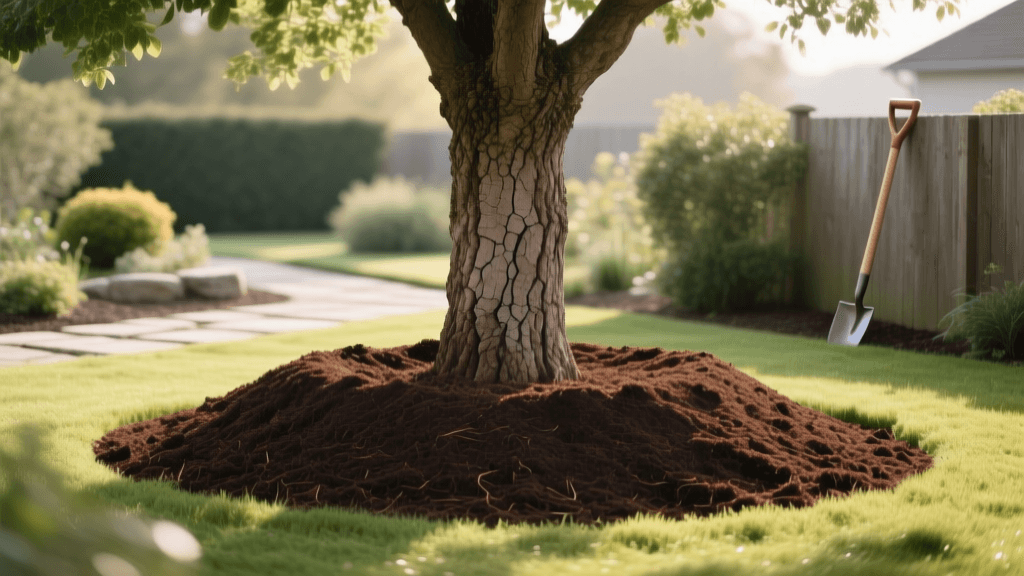
Replace turfgrass under the tree's drip line with a 2 to 3-inch layer of organic mulch. Pine bark or oak leaf compost are excellent choices, as they naturally acidify the soil as they decompose. Keep the mulch at least 3 inches away from the trunk flare to prevent moisture buildup and fungal pathogens. Avoid using limestone-based mulches or wood ash near susceptible trees, as these will rapidly raise the soil pH and induce chlorosis.
Common Mistakes to Avoid
- Over-fertilizing with Phosphorus: High-phosphorus lawn fertilizers can bind with iron in the soil, creating insoluble iron phosphate. Use low-phosphorus or phosphorus-free fertilizers in the root zones of susceptible trees.
- Relying Solely on Foliar Sprays: Spraying liquid iron directly on the leaves will turn them green temporarily, but it does not address the root cause and must be repeated constantly throughout the growing season. It also risks burning the foliage in high heat.
- Planting Susceptible Species in Alkaline Soils: The best cure is prevention. If your soil pH is naturally above 7.5, avoid planting pin oaks, red maples, or river birches. Instead, opt for alkaline-tolerant species like bur oaks, swamp white oaks, or ginkgo.
"Foliar applications of iron provide only a temporary and partial solution to iron chlorosis. For long-term management, homeowners must focus on soil acidification and the selection of tree species adapted to the native soil pH."
— University of Minnesota Extension, 'Iron Chlorosis in Trees'
Frequently Asked Questions
How long does it take for a chlorotic tree to recover?
Recovery time depends on the treatment method and the severity of the decline. Trunk injections can produce visible results in 3 weeks. Soil drenches with Fe-EDDHA typically take 4 to 8 weeks to show improvement. Long-term soil acidification with sulfur can take 1 to 2 years to fully correct the underlying pH imbalance.
Can I use iron nails or scrap metal in the soil to cure chlorosis?
No. This is a common gardening myth. Rust (iron oxide) from nails is highly insoluble and completely unavailable to tree roots. Trees require iron in specific ionic forms (Fe2+ or Fe3+) or bound to organic chelates to absorb it effectively.
Does overwatering cause iron chlorosis?
Yes, indirectly. Poorly drained or waterlogged soils lack oxygen, which causes the roots to suffocate and reduces their ability to absorb nutrients, including iron. Additionally, waterlogged conditions can alter the redox potential of the soil, temporarily locking up micronutrients. Ensure your trees are planted in well-draining soil or install French drains to manage excess surface water.