Tree Care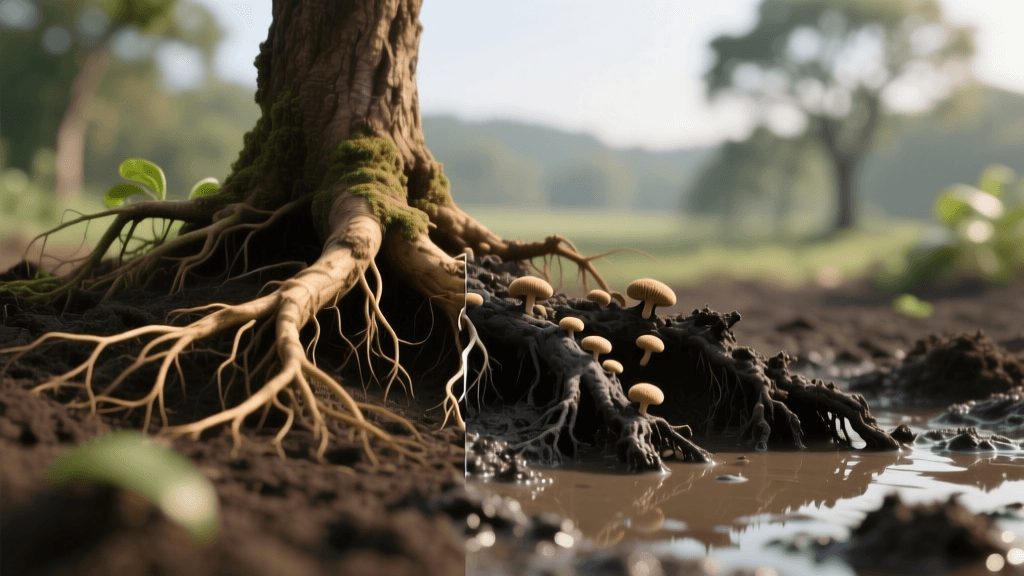
Diagnosing and Treating Phytophthora Root Rot in Trees
Understanding Phytophthora: The Plant Destroyer
Phytophthora, a name derived from Greek meaning "plant destroyer," is not a true fungus but a water mold (oomycete). It is one of the most devastating pathogens in landscape and agricultural settings, responsible for widespread tree decline and death. Species such as Phytophthora cinnamomi, Phytophthora ramorum, and Phytophthora nicotianae thrive in wet, poorly drained soils. Unlike true fungi, Phytophthora produces motile spores called zoospores that literally swim through water films in the soil to infect vulnerable root tips and the root collar. Once established, the pathogen girdles the root system and the lower trunk, effectively choking off the tree's ability to uptake water and essential nutrients.
Identifying the Symptoms: Above and Below Ground
Diagnosing Phytophthora root rot can be challenging because above-ground symptoms often mimic drought stress, nutrient deficiencies, or other vascular diseases. By the time the canopy shows severe distress, the root system is usually heavily compromised.
Above-Ground Symptoms
- Canopy Thinning and Chlorosis: Leaves often turn pale green or yellow (chlorotic) and may be smaller than normal. The canopy thins out, particularly at the top and outer edges.
- Wilting and Dieback: Branches die back from the tips inward. Leaves may wilt and turn brown but remain attached to the branches, a phenomenon known as "flagging."
- Bleeding Cankers: In many tree species, particularly oaks and fruit trees, Phytophthora causes dark, sunken cankers at the root flare and lower trunk. These cankers often exude a dark reddish-brown sap, commonly referred to as "bleeding."
Below-Ground Symptoms
- Root Necrosis: Healthy fine feeder roots are firm and white or light tan. Infected roots become brittle, dark brown to black, and the outer tissue sloughs off easily when pulled.
- Lack of Fine Roots: A severe reduction in the fine, hair-like feeder roots that are responsible for water absorption.
Diagnostic Comparison: Phytophthora vs. Other Root Diseases
Because root diseases share similar canopy symptoms, it is vital to differentiate Phytophthora from other common landscape pathogens. The table below outlines the key diagnostic differences.
| Feature | Phytophthora Root Rot | Armillaria Root Rot | Verticillium Wilt |
|---|---|---|---|
| Pathogen Type | Water Mold (Oomycete) | Basidiomycete Fungus | Ascomycete Fungus |
| Root Symptoms | Dark, necrotic, lacks white tips, outer tissue sloughs | White, fan-like mycelial mats under bark | Vascular discoloration (streaking), roots mostly intact early on |
| Trunk Symptoms | Bleeding cankers at root flare, dark sap oozing | Honey-colored mushrooms at base in fall, black shoestrings (rhizomorphs) | No external trunk cankers or oozing |
| Canopy Symptoms | General decline, gradual wilting, chlorosis | Sudden collapse, dead branches with leaves attached | One-sided wilting, rapid branch flagging |
| Primary Catalyst | Poor drainage, overwatering, heavy clay soils | Stressed trees, decaying wood, mulch volcanoes | Soil-borne, enters through root wounds |
The Trowel Test: Confirming Your Diagnosis
If you suspect Phytophthora, you must inspect the root system. Conduct a "trowel test" by carefully excavating a small area (about 1 foot by 1 foot) near the tree's drip line, as well as a small inspection hole at the root flare.
- Use a hand trowel to gently remove the top 6 to 8 inches of soil.
- Locate the fine feeder roots. If they are black, mushy, and lack white growing tips, root rot is highly likely.
- Inspect the root collar (where the trunk meets the roots). If the bark is dark, sunken, and the inner cambium layer is brown or reddish-brown instead of healthy green or white, Phytophthora crown rot is present.
- For a definitive laboratory confirmation, collect a sample of the margin between healthy and diseased tissue, place it in a sealed plastic bag with a slightly damp paper towel, and send it to your local university extension plant diagnostic clinic.
Cultural Solutions: Fixing the Environment
Chemical treatments will fail if the underlying environmental conditions are not corrected. Phytophthora requires water to reproduce and infect. Therefore, moisture management is your primary line of defense.
Improving Soil Drainage
Aerate compacted soils using an air spade or vertical mulching techniques. If the tree is planted in a low-lying area where water pools, consider installing French drains or dry creek beds to divert surface water away from the root zone. Never plant susceptible species in heavy, unamended clay soils without creating a raised planting berm.
Correcting Planting Depth and Mulching
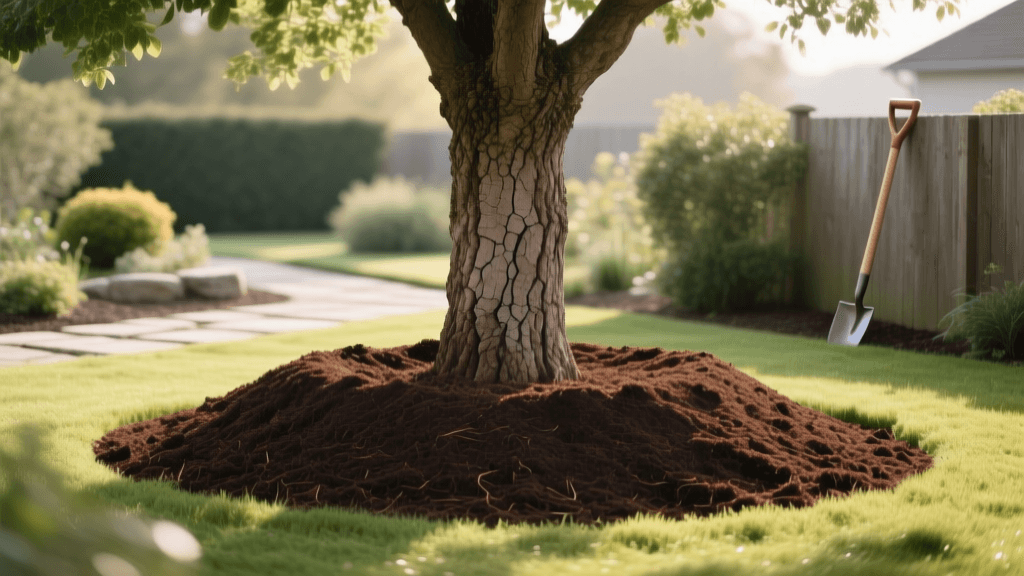
Many trees suffer from "volcano mulching," where mulch is piled against the trunk, keeping the bark constantly wet and inviting infection. Pull back all mulch and soil from the trunk to expose the root flare. Apply a 2- to 4-inch layer of coarse, organic mulch (like pine bark or wood chips) starting 6 inches away from the trunk and extending to the drip line. This regulates soil temperature, retains appropriate moisture, and prevents soil compaction.
Adjusting Irrigation Practices
Transition from frequent, shallow watering to deep, infrequent irrigation. Use a soil moisture meter to check moisture levels 6 to 8 inches below the surface. Only water when the top few inches of soil are dry. Ensure that sprinkler heads are not directly hitting the tree trunk.
Chemical Solutions: Fungicides and Application Rates
When cultural controls are not enough, or when dealing with high-value landscape trees, targeted chemical interventions are necessary. It is important to note that oomycetes do not respond to standard true-fungus fungicides like thiophanate-methyl or propiconazole. You must use products specifically labeled for Oomycetes.
Phosphonates (Phosphorous Acid)
Phosphonates (e.g., Agri-Fos, Alamo) are highly effective systemic treatments. They do not kill the pathogen directly but stimulate the tree's natural defense mechanisms, triggering the production of phytoalexins (antimicrobial compounds) that halt the infection's spread.
- Application Method: Trunk injection or bark spray.
- Trunk Injection: Best for large, mature trees with compromised roots that cannot uptake soil drenches. Requires drilling small holes at the root flare and using specialized injection equipment. Cost: Hiring a certified arborist typically costs $20 to $40 per inch of Diameter at Breast Height (DBH).
- Bark Spray: Mix the phosphonate with a penetrating surfactant and spray the lower 4 feet of the trunk until runoff. Cost: DIY materials cost approximately $40 to $60 per quart.
Mefenoxam and Fluopicolide
Products containing mefenoxam (e.g., Subdue MAXX) or fluopicolide (e.g., Signature XTRA) are true oomyceticides that inhibit the pathogen's cellular processes.
- Application Method: Soil drench.
- Rate: For Subdue MAXX, the standard rate is 1 to 2 fluid ounces per 1,000 square feet of soil area, diluted in at least 2 gallons of water to ensure penetration into the root zone.
- Timing: Apply when the soil is moist but not saturated, ideally in early spring before bud break and again in early fall. Cost: Professional-grade mefenoxam products cost between $150 and $200 per quart, but a little goes a long way for residential drenches.
Step-by-Step Treatment Protocol
To maximize the efficacy of your treatment plan, follow this integrated protocol:
- Excavate and Dry: Expose the root flare and allow the lower trunk to dry out. Remove any diseased bark and necrotic tissue from the root collar using a sterilized pruning knife.
- Correct Watering: Immediately halt overhead irrigation and fix any drainage issues.
- Apply Fungicide: In early spring, apply a soil drench of mefenoxam to the drip line. For severely stressed trees, combine this with a professional trunk injection of phosphonates.
- Mulch Properly: Apply a fresh layer of coarse mulch, keeping it away from the trunk.
- Monitor and Repeat: Re-evaluate the tree's canopy density and root health in 6 months. Phosphonate treatments may need to be repeated annually for 2 to 3 years to keep the pathogen suppressed while the tree regenerates its root system.
Long-Term Prevention and Expert Insights
Preventing Phytophthora is vastly more cost-effective than treating it. When planting new trees, select species that are resistant or tolerant to root rot if your site has heavy clay or poor drainage. Native species adapted to your local hydrology are often the best choice. Avoid planting susceptible species like dogwoods, azaleas, camellias, and certain oaks in known problem areas.
"Phytophthora root and crown rots are favored by heavy, poorly drained soils and prolonged periods of soil saturation. The most effective management strategy is to prevent infection through proper site selection, planting depth, and irrigation management. Fungicides are only a supplement to, not a substitute for, good cultural practices."
— University of California Agriculture and Natural Resources (UC ANR), Statewide Integrated Pest Management Program
By combining vigilant diagnostic practices, environmental modifications, and targeted chemical treatments, you can save valuable landscape trees from the devastating effects of Phytophthora root rot and ensure their long-term health and structural stability.