Tree Care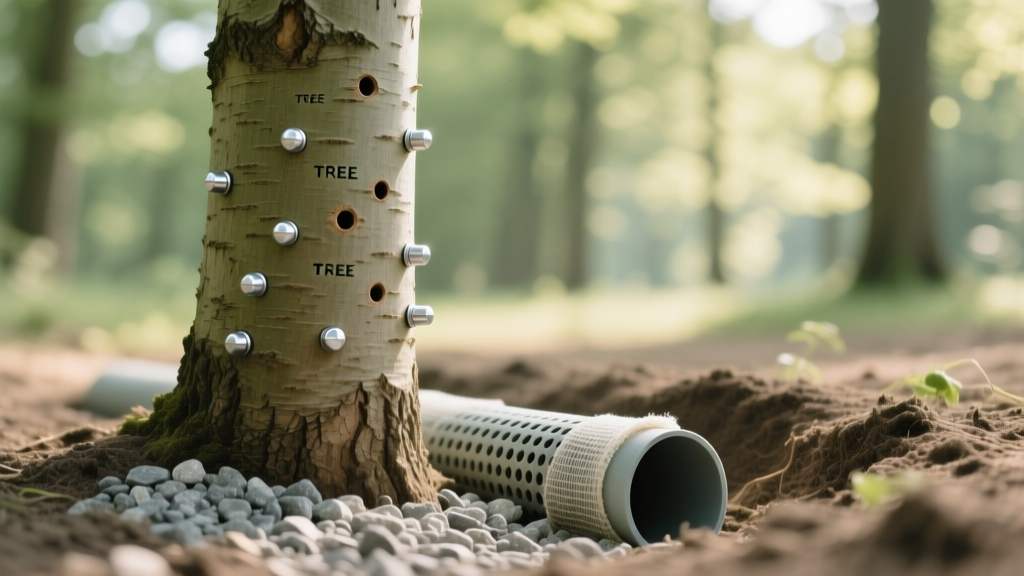
2026 Ash Tree Rescue: TREE-age Injections & French Drain Setup
Robert HayesPublished
The Hidden Link Between Soil Drainage and EAB Treatment in 2026
As we navigate the 2026 landscaping and arboriculture season, preserving mature ash trees from the devastating Emerald Ash Borer (EAB) requires more than just chemical interventions. As a specialist in French drain installation and tree root zone management, I frequently encounter a critical, often overlooked factor in tree health: soil hydrology. Many homeowners invest heavily in emerald ash borer treatment with TREE-age trunk injection, only to see the tree continue to decline. The culprit is rarely the product itself; rather, it is waterlogged soil that stifles the tree's vascular system. In 2026, the most successful ash tree preservation protocols combine precision French drain installation with targeted TREE-age applications to ensure the root environment supports the systemic uptake of the treatment.
The Physiology of TREE-age Uptake and Transpiration
TREE-age (emamectin benzoate 4.4%) remains the gold standard for EAB management in 2026 due to its multi-year residual efficacy and systemic mobility. When applied via trunk injection, the active ingredient must be absorbed into the xylem—the tree's water-conducting tissue—and pulled upward into the canopy. This upward movement is entirely dependent on transpiration, the process by which water evaporates from the leaves, creating a negative pressure that draws water and dissolved chemicals up from the roots.
If an ash tree is planted in heavy clay soil or a low-lying area where water pools after rainfall, the root zone becomes anaerobic. Without oxygen, the fine feeder roots suffocate and die, leading to conditions like Phytophthora root rot. A compromised root system cannot sustain the transpiration rates required to pull the TREE-age injection into the upper canopy. Consequently, the EAB larvae feeding in the upper branches receive a sub-lethal dose, rendering the treatment ineffective. Correcting this soil drainage issue via a specialized French drain is a mandatory precursor to successful chemical therapy.
French Drain Installation Around Mature Ash Trees
Installing a French drain near a mature ash tree requires a delicate balance between moving water away from the root collar and preserving the tree's critical structural roots. Traditional trenching with a backhoe is obsolete in modern arboriculture. In 2026, we utilize advanced pneumatic excavation tools, commonly known as AirSpades, to safely expose and navigate around the root system without severing it.
Step 1: AirSpade Root Collar Excavation
Before any trenching begins, we use compressed air to excavate the soil around the root flare. Ash trees are particularly susceptible to girdling roots and root collar disorders when buried under grade or mulch. Exposing the root flare allows us to map the primary structural roots and plan a drainage pathway that avoids major root amputations.
Step 2: Trenching and Grading
Once the root map is established, we hand-dig or use mini-excavators to dig a trench that intercepts the water table before it reaches the critical root zone. The trench must maintain a minimum slope of 1% (a 1-inch drop per 8 feet of pipe) to ensure gravity moves the water efficiently toward the discharge point or dry well.
Step 3: Aggregate and Geotextile Selection
The materials used in the French drain are critical for long-term soil aeration. We line the trench with a non-woven geotextile fabric to prevent soil infiltration. Next, we lay a perforated PVC or corrugated pipe, surrounding it with washed river rock (typically 1 to 2 inches in diameter). Washed river rock is preferred over crushed gravel because its smooth edges are less likely to damage any fine feeder roots that may eventually grow toward the oxygen-rich environment of the drain.
- Pipe: 4-inch rigid perforated PVC (schedule 40) for durability under soil pressure.
- Aggregate: Washed river rock (1.5-inch grade) to maximize void space for water and oxygen.
- Fabric: 4 oz to 6 oz non-woven geotextile to prevent silt clogging.
- Top Dressing: Coarse arborist wood chips to allow surface water percolation while suppressing weeds.
The 2026 DBH and Drainage Matrix
Determining the correct TREE-age dosage and the safe distance for French drain trenching depends heavily on the tree's Diameter at Breast Height (DBH). The following matrix outlines our 2026 standard operating procedures for integrating these two services:
| Tree DBH (inches) | TREE-age G4 Dosage (mL) | Min. Drain Offset (feet) | Max Trench Depth (inches) |
|---|---|---|---|
| 10 | 40 | 5 | 18 |
| 15 | 60 | 7 | 20 |
| 20 | 80 | 9 | 24 |
| 25 | 100 | 11 | 28 |
| 30+ | 120+ | 14 | 32 |
Timing Your French Drain and TREE-age Application
Timing is everything when coordinating earthwork with chemical applications. The optimal window for emerald ash borer treatment with TREE-age trunk injection is late spring to early summer, when the ash tree is actively transpiring and the vascular system is fully engaged. However, installing a French drain during this same window can stress the tree through root pruning and soil disturbance.
Our recommended 2026 protocol is to install the French drain in the late fall or early winter when the tree is dormant. This allows the soil structure to settle and the root system to adapt to the new oxygen-rich environment over the winter. By the time spring arrives and the canopy begins to leaf out, the improved drainage has revitalized the feeder roots, ensuring maximum transpiration and perfect uptake when the TREE-age injection is administered in May or June.
Cost Analysis for 2026: Drainage vs. Tree Replacement
Homeowners often hesitate at the combined cost of drainage correction and chemical treatment, but the economics heavily favor preservation over replacement. In 2026, professional French drain installation using AirSpade technology and premium materials averages $45 to $65 per linear foot. A typical 50-foot drainage interception system costs between $2,250 and $3,250. The TREE-age trunk injection, administered by a licensed arborist, costs approximately $18 to $22 per inch of DBH. For a 20-inch ash tree, the injection costs around $400 and provides protection for up to two years.
Conversely, removing a mature 20-inch ash tree, grinding the stump, and planting a comparable 4-inch caliper replacement tree can easily exceed $4,500 in 2026, not to mention the decades lost in canopy shade and property value. Investing in root zone drainage ensures that your TREE-age investment actually works, protecting the tree's structural integrity and your property's aesthetic value.
Expert Insights and Authoritative Guidelines
The integration of soil health and pest management is strongly supported by leading arboricultural organizations. According to the USDA APHIS Emerald Ash Borer Guidelines, early detection and systemic treatments are vital, but tree vigor plays a significant role in treatment success. Trees stressed by environmental factors, including poor drainage, are less likely to compartmentalize wounds and distribute systemic insecticides effectively.
Furthermore, the Morton Arboretum EAB Treatment Recommendations emphasize that maintaining overall tree health through proper watering, mulching, and soil management is a critical component of any EAB defense strategy. By installing a French drain, we directly address the soil moisture extremes that the Morton Arboretum warns against, creating an environment where the ash tree can thrive and effectively utilize the TREE-age treatment.
Conclusion
Saving an ash tree from the Emerald Ash Borer in 2026 requires a holistic approach that looks beyond the trunk and into the soil. Emerald ash borer treatment with TREE-age trunk injection is highly effective, but only if the tree's vascular system is functioning optimally. By pairing this advanced chemical defense with strategic French drain installation, we eliminate the hidden stressor of waterlogged soil, ensuring the tree has the oxygen and transpiration capacity required to survive and thrive for decades to come.