Tree Care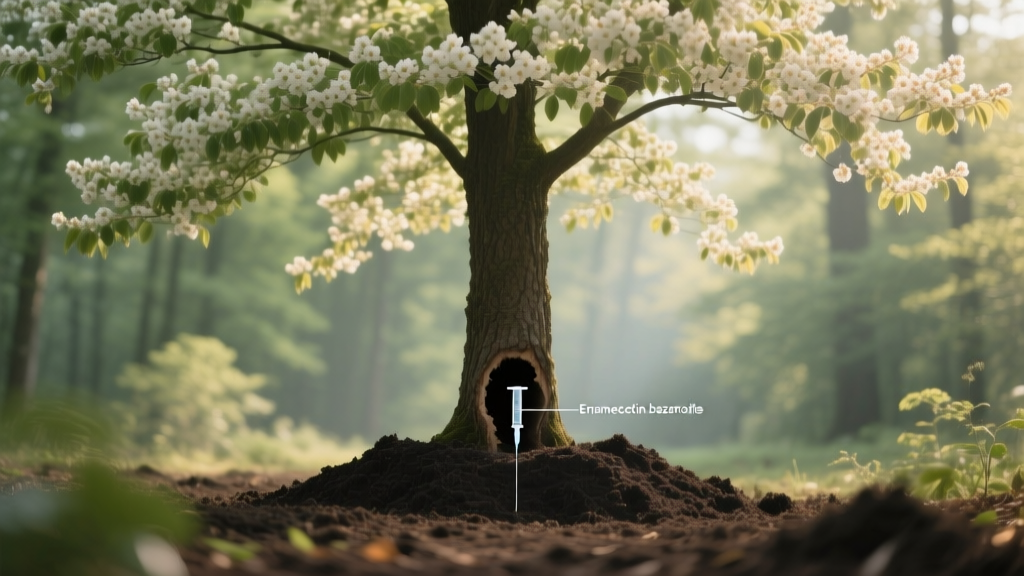
2026 EAB Control: TREE-age Injections & Core Aeration
Robert HayesPublished
The 2026 Emerald Ash Borer Threat Landscape
As we navigate the 2026 growing season, the Emerald Ash Borer (EAB) remains one of the most destructive invasive pests threatening urban and suburban forests across North America. Despite years of quarantine efforts and biological control releases, the beetle continues to spread into new territories. For homeowners and municipal arborists, the decision to treat or remove ash trees is a significant financial and ecological consideration. According to the USDA APHIS, early detection and proactive treatment are the only reliable methods for saving infested ash trees. However, a major oversight in many 2026 treatment plans is ignoring the soil environment. This guide explores the critical synergy between TREE-age (emamectin benzoate) trunk injections and targeted core aeration to maximize systemic uptake and ensure long-term tree survival.
Why TREE-age (Emamectin Benzoate) Remains the Gold Standard
In the realm of systemic insecticides, TREE-age (active ingredient: emamectin benzoate) continues to be the premier choice for EAB management in 2026. Unlike soil drenches that can take weeks to translocate and are subject to soil binding or runoff, TREE-age is applied directly into the tree's vascular system via trunk injection. This method delivers the active ingredient straight to the xylem, where it is carried upward into the canopy. When EAB larvae feed on the cambium and phloem, they ingest the emamectin benzoate, which disrupts their nervous system and halts the infestation. Furthermore, TREE-age provides up to two years of residual control, making it highly cost-effective. However, the efficacy of this trunk injection is entirely dependent on the tree's ability to pull water from the soil and transpire it through the canopy. This is where core aeration becomes an indispensable component of the treatment protocol.
The Missing Link: Core Aeration for Systemic Uptake
Many lawn care and tree care professionals treat the trunk but ignore the roots. Systemic insecticides rely on the transpiration stream—the continuous flow of water from the roots, through the trunk, and out of the leaves. If the soil surrounding the ash tree is heavily compacted, the roots cannot absorb water efficiently. Drought-stressed trees close their stomata to conserve moisture, effectively shutting down the transpiration stream. If you inject TREE-age into a tree with a compromised root zone and compacted soil, the chemical will pool at the injection site, failing to reach the upper canopy where the EAB larvae are actively feeding.
The Science of Soil Compaction and Translocation
Urban soils frequently suffer from a bulk density exceeding 1.5 g/cm³, which severely restricts root growth, oxygen exchange, and water infiltration. By integrating core aeration into your EAB treatment plan, you physically relieve this compaction. Extracting small cores of soil from the critical root zone (the area extending from the trunk to the drip line and slightly beyond) creates macropores. These macropores allow oxygen to reach the root hairs, stimulate new feeder root growth, and dramatically improve water infiltration. A well-aerated root zone ensures that the ash tree maintains a robust transpiration stream, rapidly pulling the TREE-age emamectin benzoate from the trunk injection ports and distributing it evenly throughout the entire canopy.
2026 Step-by-Step Treatment and Aeration Protocol
To achieve the best results this season, follow this integrated protocol combining soil remediation with chemical intervention. For comprehensive regional guidelines, always consult resources like the Purdue Extension Emerald Ash Borer information center.
Step 1: Canopy Assessment and Viability Check
Before investing in aeration and TREE-age, assess the tree's canopy. If the tree has less than 30% canopy dieback, it is a viable candidate for treatment. Trees with severe dieback (greater than 50%) have a compromised vascular system that cannot effectively translocate the insecticide, regardless of aeration efforts. Measure the Diameter at Breast Height (DBH) to calculate the correct TREE-age dosage and aeration radius.
Step 2: Targeted Core Aeration in the Critical Root Zone
Schedule core aeration for early spring, just before bud break. Use a specialized tree-care core aerator or an AirSpade for radial trenching to avoid severing major structural roots. Extract 2-to-3-inch cores at a depth of 4 to 6 inches across the drip line. Backfill the aeration holes with a mixture of coarse sand and organic compost to prevent the holes from collapsing and to provide long-term soil structure improvement. This step is crucial for reactivating the root system ahead of the injection.
Step 3: TREE-age Trunk Injection
Perform the TREE-age injection in late spring or early summer (typically May to June in most temperate zones), when the tree is actively transpiring and leaves are fully expanded. Using a closed-system injection tool (such as an Arborjet QUIK-jet or TREE I.V.), drill staggered injection ports around the base of the trunk, spacing them about 6 inches apart. Ensure the drill bit penetrates just past the bark into the active sapwood (xylem). Inject the precise volume of emamectin benzoate based on the tree's DBH and the manufacturer's 2026 label rates. Seal the ports with a sterile wound dressing or plug to prevent secondary pathogen entry.
Step 4: Post-Treatment Hydration and Mulching
Following the injection, provide deep, slow watering to the aerated root zone to encourage the upward movement of the chemical. Apply a 2-to-3-inch layer of organic mulch over the aerated area, keeping it away from the trunk flare to prevent rot. This preserves the soil moisture and temperature benefits achieved during the aeration process.
EAB Canopy Condition vs. Treatment Viability Chart
Use the following table to determine the appropriate aeration and injection strategy based on your ash tree's current health status.
| Canopy Condition | Core Aeration Strategy | TREE-age Viability (2026) |
|---|---|---|
| Healthy (Less than 10% dieback) | Preventative radial core aeration with compost backfill | Highly Effective (2-year protection) |
| Mild Stress (10-30% dieback) | Deep core aeration plus organic mulch and deep watering | Effective with annual monitoring |
| Severe Stress (Greater than 30% dieback) | AirSpade root collar excavation to check for girdling roots | Not Recommended / Consider Removal |
Cost Analysis: TREE-age and Aeration in 2026
Budgeting for integrated tree care requires understanding current market rates. In 2026, professional TREE-age trunk injections typically cost between $16 and $24 per inch of DBH. For a mature ash tree with a 20-inch DBH, expect to pay roughly $320 to $480 for the chemical and labor. Core aeration services for the critical root zone range from $350 to $600, depending on whether mechanical plug aerators or pneumatic AirSpades are utilized. While the combined upfront cost of $700 to $1,000+ may seem steep, it is significantly cheaper than the $1,500 to $3,000 required for hazardous tree removal, stump grinding, and replanting. Furthermore, because TREE-age offers two years of residual control, the biennial cost of maintaining the tree drops substantially.
Frequently Asked Questions
Can I use a lawn core aerator around my ash trees?
Standard lawn core aerators are designed for shallow turf compaction and typically only penetrate 2 to 3 inches. While they can help the surrounding turf, they are insufficient for deep tree root zones. For ash trees, arborists recommend specialized deep-tine aerators, radial trenching, or pneumatic air tools to safely relieve compaction without damaging structural roots.
Does watering affect the TREE-age injection?
Absolutely. The transpiration stream is the vehicle that carries emamectin benzoate into the canopy. If the soil is dry, the tree will not pull the chemical upward. Watering the aerated root zone deeply a day before and a day after the injection ensures rapid and even distribution of the insecticide.
How long does it take for the aeration to impact the tree's health?
While the physical soil structure is improved immediately, the biological response—such as new feeder root growth and increased water uptake—typically becomes evident within 4 to 6 weeks. This is why aerating in early spring, weeks before the late-spring TREE-age injection, is the ideal timeline for 2026 treatment plans.