Tree Care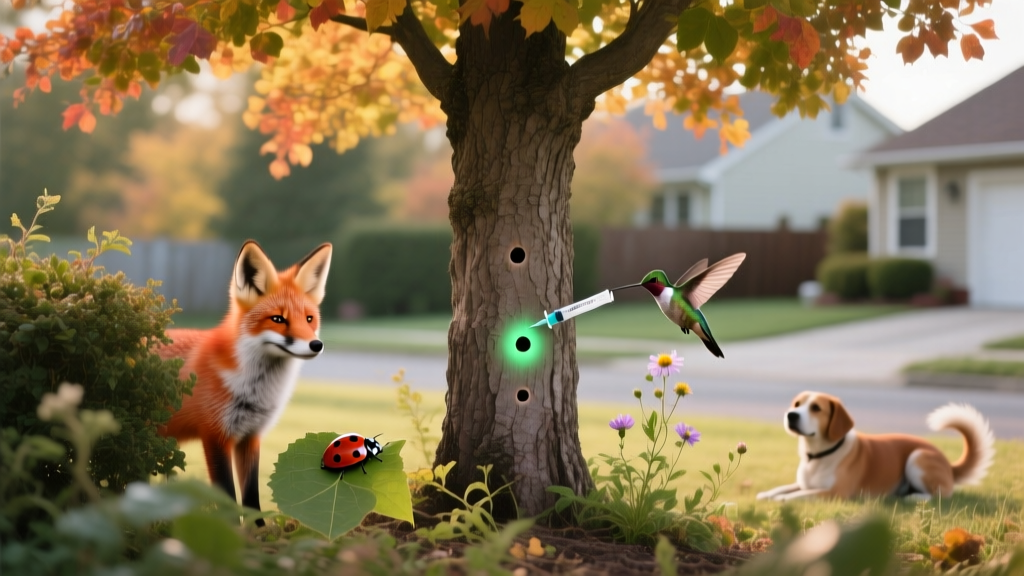
2026 TREE-age EAB Trunk Injection & Yard Wildlife Safety
Sarah ChenPublished
The 2026 Emerald Ash Borer Crisis and Your Yard's Ecosystem
As we navigate the 2026 tree care season, the Emerald Ash Borer (EAB) remains one of the most devastating invasive pests threatening North American urban and suburban forests. According to the USDA APHIS, EAB continues to expand its quarantine zones, pushing further into previously unaffected counties. For homeowners and land managers, the loss of an ash tree is not just a loss of shade or property value; it is a profound disruption to the local micro-ecosystem. Ash trees provide critical nesting cavities for woodpeckers, shelter for squirrels, and a canopy that regulates the microclimate for countless yard animals.
When managing EAB, the instinct is often to reach for the most accessible chemical treatment. However, from a Wildlife & Yard Animal Management perspective, the method of delivery is just as critical as the active ingredient. In 2026, TREE-age (emamectin benzoate) trunk injection has solidified its reputation not only as the most effective EAB treatment on the market but also as the premier choice for eco-conscious homeowners who want to protect their trees without poisoning the wildlife, pets, and beneficial insects that share their yards.
The Hidden Dangers of Soil Drenches to Yard Animals
To understand why TREE-age trunk injections are the gold standard for wildlife safety, we must first examine the traditional alternative: soil drenches containing imidacloprid. Soil drenches are poured directly onto the ground around the base of the tree, where they are absorbed by the root system. While this method can protect smaller trees, it poses severe risks to yard ecology.
- Earthworm and Soil Life Toxicity: Imidacloprid is highly toxic to many soil-dwelling invertebrates. Earthworms, which are vital for soil aeration and serve as a primary food source for robins and other ground-foraging birds, can ingest the chemical and perish.
- Ground-Foraging Birds: Birds that feed on contaminated insects or earthworms can suffer from secondary poisoning or neurological issues.
- Pet Exposure: Dogs and cats that dig near the base of treated ash trees, or roll in the treated soil, risk direct dermal exposure or accidental ingestion of the pesticide.
- Runoff and Leaching: Heavy spring rains can cause soil-applied neonicotinoids to leach into nearby garden beds, storm drains, and local waterways, harming aquatic ecosystems and non-target beneficial insects.
Why TREE-age (Emamectin Benzoate) is the Wildlife-Friendly Standard
TREE-age utilizes the active ingredient emamectin benzoate, which is delivered via a closed-loop trunk injection system. This means the chemical is inserted directly into the xylem and phloem—the tree's internal vascular system. Michigan State University Extension notes that emamectin benzoate provides up to two to three years of systemic protection against EAB, outperforming other treatments in both efficacy and longevity.
From a wildlife management standpoint, the closed-loop delivery is revolutionary. Because the product is injected directly into the tree and the injection ports are immediately sealed, there is zero soil contamination. There is no chemical residue left on the bark, no leaching into the groundwater, and no toxic exposure for the animals living in and around your yard.
Comparison Chart: 2026 EAB Treatments & Wildlife Impact
| Treatment Type | Active Ingredient | Application Method | Wildlife & Pet Safety | EAB Efficacy & Duration |
|---|---|---|---|---|
| TREE-age | Emamectin Benzoate | Trunk Injection | Excellent: No soil/bark residue. Safe for pets, birds, and soil life. | High: Protects for 2-3 years. Best for high-value trees. |
| Basal Trunk Spray | Dinotefuran | Bark Spray | Moderate: Bark residue can harm insects and mammals rubbing against the tree until fully dry/absorbed. | Moderate: Protects for 1 year. Less effective on large trees. |
| Soil Drench | Imidacloprid | Soil Application | Poor: High risk to earthworms, ground-feeding birds, and digging pets. Leaching risk. | Low-Moderate: Protects for 1 year. Struggles in large, infested trees. |
Protecting Woodpeckers and Nesting Habitats
One of the most visible signs of an EAB infestation is the sudden influx of woodpeckers. These birds flock to dying ash trees to feed on the nutrient-dense EAB larvae hiding beneath the bark. A common question among wildlife enthusiasts is whether treating a tree with TREE-age will harm the woodpeckers or the squirrels that use the tree for nesting.
Emamectin benzoate is highly toxic to insects but exhibits remarkably low toxicity to birds and mammals. Furthermore, because the chemical is contained entirely within the tree's vascular tissue, a woodpecker pecking at the outer bark or a squirrel building a drey in the branches will not come into contact with the active ingredient. By treating the tree with TREE-age, you are actually saving the physical structure of the tree. A dead, untreated ash tree will lose its branches within a few years, destroying vital canopy cover and nesting habitats. TREE-age preserves the tree's architecture, ensuring your yard remains a sanctuary for local fauna.
Protecting Pollinators and Beneficial Insects
While ash trees are wind-pollinated and not a primary food source for bees and butterflies, the plants growing beneath your ash trees often are. When soil drenches are used, the chemical can be absorbed by the roots of nearby flowering weeds, garden plants, or cover crops, potentially exposing pollinators to neonicotinoids. Trunk injections completely bypass the soil environment. As highlighted by Purdue University Extension, targeting the pesticide directly into the tree's vascular system eliminates the risk of non-target exposure to the beneficial insects that keep your broader garden ecosystem balanced and thriving.
The TREE-age Injection Process: What to Expect in 2026
TREE-age is a restricted-use pesticide, meaning it must be applied by a licensed, ISA Certified Arborist or a qualified pest management professional. The 2026 application protocol is highly refined and typically follows these steps:
- Assessment and Measurement: The arborist will measure the Diameter at Breast Height (DBH) of your ash tree to calculate the exact dosage required. Trees must generally be at least 8 inches in DBH and show less than 30% canopy decline to be viable candidates for treatment.
- Drilling: Small, shallow holes are drilled into the root flare at the base of the trunk. The number of holes depends on the tree's circumference.
- Port Insertion and Injection: Specialized injection ports are tapped into the holes. The TREE-age solution is then pressurized and pushed directly into the xylem. The tree's natural transpiration process pulls the chemical up into the canopy.
- Sealing: Once the injection is complete, the ports are removed, and the holes are sealed with biodegradable plugs or arborist wax to prevent the entry of secondary fungal pathogens.
The entire process takes between 30 to 60 minutes per tree, and because there are no surface sprays or soil soaks, your yard is immediately safe for children, dogs, cats, and wildlife to enjoy the moment the arborist packs up their gear.
2026 Cost Expectations for Trunk Injection
Investing in TREE-age is an investment in your property's ecological stability. In 2026, homeowners can expect to pay between $12 to $18 per inch of DBH for a professional TREE-age trunk injection. For a mature, 20-inch ash tree, the treatment will cost roughly $240 to $360. While this is more expensive upfront than a DIY soil drench, the 2-to-3-year efficacy of emamectin benzoate makes the annualized cost highly competitive. More importantly, you cannot put a price on the peace of mind that comes from knowing your yard's soil, water, and wildlife are completely insulated from chemical exposure.
Conclusion: Balancing Tree Health and Yard Ecology
Managing the Emerald Ash Borer requires a strategic, long-term approach. As EAB continues to challenge our urban forests in 2026, the choices we make in tree care ripple outward, affecting the soil beneath our feet and the birds in our canopies. By choosing TREE-age trunk injections, you are utilizing the most advanced, scientifically backed EAB defense available, while simultaneously upholding the highest standards of wildlife and yard animal management. You save the tree, you save the habitat, and you keep your outdoor sanctuary safe for every creature that calls it home.