Tree Care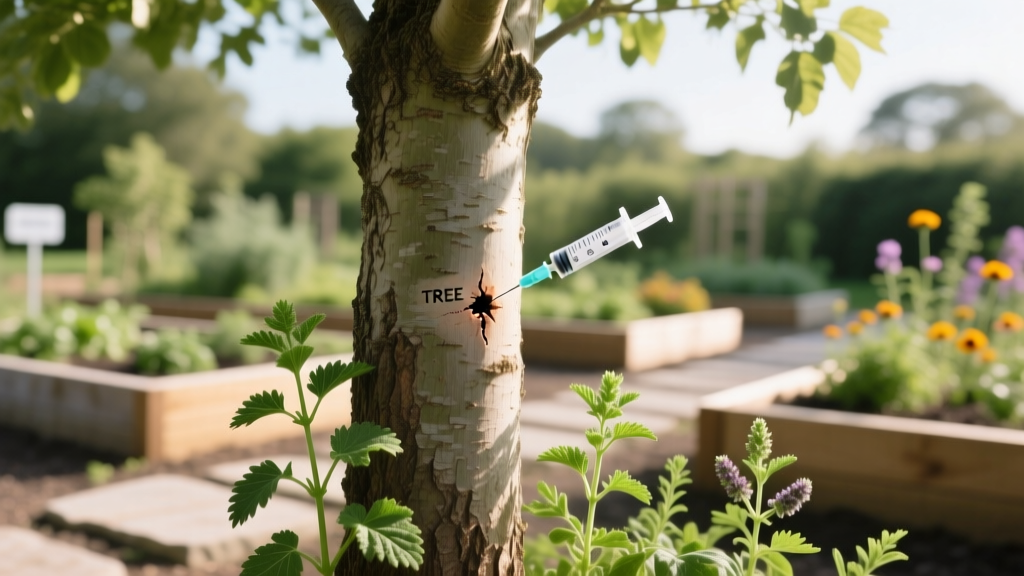
TREE-age EAB Trunk Injection for Foodscapes: 2026 Guide
Sarah ChenPublished
The Role of Ash Trees in Edible Landscaping and Food Forests
When designing an edible landscape or a permaculture food forest, the canopy layer is just as critical as the herbaceous ground cover. While fruit and nut trees often take center stage, native ash trees (Fraxinus americana and Fraxinus pennsylvanica) play a vital, often overlooked role in foodscaping. Ash trees provide excellent dappled shade, creating the perfect microclimate for shade-tolerant understory edibles like currants, gooseberries, alpine strawberries, and culinary herbs such as mint and sweet woodruff. Furthermore, ash leaves are highly valued in permaculture systems for their rapid decomposition, making them an exceptional source of green manure and compost activators.
However, the devastating spread of the Emerald Ash Borer (EAB) threatens to strip food forests of these crucial canopy anchors. As we navigate the 2026 growing season, protecting mature ash trees without introducing harmful chemicals into your edible ecosystem is a top priority for sustainable gardeners and commercial foodscapers alike.
The 2026 Emerald Ash Borer Threat
The Emerald Ash Borer (Agrilus planipennis) is an invasive beetle that has killed hundreds of millions of ash trees across North America. According to the USDA APHIS Emerald Ash Borer Program, the pest continues to expand its range, with new quarantine zones and detections reported throughout 2025 and into 2026. The larvae of the beetle feed on the inner bark (phloem and cambium), effectively girdling the tree and cutting off its ability to transport water and nutrients. Once an ash tree shows visible signs of canopy dieback, it is often too late to save it. Preventative treatment is the only viable strategy for preserving your landscape's canopy architecture.
The Systemic Pesticide Dilemma in Food Forests
Historically, the most common and cost-effective method for treating EAB was the application of imidacloprid via soil drench. For a traditional ornamental lawn, this is standard practice. But in an edible landscape, soil drenches are highly problematic. Imidacloprid is a systemic neonicotinoid that is absorbed by the tree's roots, but it also persists in the soil, leaches into groundwater, and can be inadvertently absorbed by the shallow root systems of nearby edible crops, berries, and root vegetables. Furthermore, soil drenches severely impact beneficial soil microbiology and earthworm populations, which are the lifeblood of any organic foodscape.
Why TREE-age (Emamectin Benzoate) is the Foodscaper's Choice
Enter TREE-age, a trunk-injected formulation of emamectin benzoate. For edible landscapers in 2026, TREE-age represents the gold standard for EAB management. Because it is injected directly into the tree's xylem (the vascular tissue responsible for water transport), the active ingredient remains entirely contained within the ash tree. There is zero soil leaching, no root-zone contamination, and absolutely no risk of your nearby blueberry bushes or garlic patches absorbing the pesticide.
Additionally, emamectin benzoate is highly effective at extremely low concentrations and provides up to two to three years of residual protection, reducing the frequency of interventions required in your food forest. It targets the EAB larvae as they feed on the treated vascular tissue, breaking their life cycle without broadcasting toxins into the surrounding environment.
Step-by-Step TREE-age Trunk Injection Guide
Applying TREE-age requires precision and adherence to safety protocols. While many foodscapers hire certified arborists, those with the appropriate restricted-use pesticide licenses can perform the injection themselves. Here is the standard protocol for the 2026 TREE-age G4 formulation:
- Step 1: Measure the DBH. Measure the Diameter at Breast Height (4.5 feet above the ground). TREE-age dosages are strictly calculated based on the tree's DBH. A tree with a 15-inch DBH will require a different volume than a 25-inch DBH tree.
- Step 2: Calculate and Prepare the Dosage. Follow the 2026 manufacturer label for TREE-age G4. The product is typically mixed with water to achieve the correct volume for the specific tree size.
- Step 3: Drill the Injection Sites. Using a clean, sharp 5/16-inch drill bit, drill holes into the base of the trunk. The holes should be spaced 4 to 6 inches apart around the circumference of the trunk. Drill at a slight upward angle (about 45 degrees) to a depth of roughly 1.5 inches, ensuring you penetrate the sapwood (xylem) without drilling too deep into the heartwood.
- Step 4: Insert Ports and Inject. Tap the specialized injection ports into the drilled holes. Attach the TREE-age injection apparatus and apply the specified pressure. The tree's natural transpiration pull will draw the emamectin benzoate up into the canopy. This process can take anywhere from 15 minutes to a few hours depending on the tree's health and the day's temperature.
- Step 5: Seal and Clean Up. Remove the ports and seal the holes with a tree-wound sealant or biodegradable plugs to prevent secondary fungal infections. Properly dispose of all chemical containers according to local 2026 environmental regulations.
Treatment Comparison Chart for Edible Landscapes
When deciding how to protect your canopy, it is crucial to weigh the environmental impact of each method. The table below compares the primary EAB treatments available in 2026 regarding their suitability for foodscaping.
| Treatment Method | Active Ingredient | Soil Leaching Risk | Edible Landscape Suitability | Protection Duration |
|---|---|---|---|---|
| Trunk Injection | Emamectin Benzoate (TREE-age) | None | Excellent (Safe for understory crops) | 2 to 3 Years |
| Soil Drench | Imidacloprid | High | Poor (Risk of crop contamination) | 1 Year |
| Basal Trunk Spray | Dinotefuran | Moderate (Runoff risk) | Fair (Requires careful application) | 1 Year |
| Canopy Spray | Cyfluthrin / Bifenthrin | Low (but high drift risk) | Poor (Harms pollinators & edibles) | Weeks (Requires repeat apps) |
Pollinator Safety and Understory Protection
A major concern in any edible landscape is the health of native pollinators. Fortunately, ash trees are primarily wind-pollinated and do not produce showy, nectar-rich flowers that attract bees, butterflies, or beneficial predatory wasps. The University of Minnesota Extension notes that because ash trees are not a primary foraging resource for pollinators, the risk of exposing bees to emamectin benzoate via pollen or nectar is virtually non-existent. This makes TREE-age exceptionally safe for food forests that rely heavily on insect pollination for fruit set in nearby apple, plum, and pear trees.
Furthermore, because the injection is contained within the trunk, the root exudates of the ash tree remain free of pesticides. This ensures that symbiotic mycorrhizal fungi networks—which often connect the roots of canopy trees to understory shrubs and crops in a permaculture guild—remain intact and fully functional.
2026 Cost and Longevity Expectations
Investing in TREE-age is a long-term play for your edible landscape. In 2026, professional arborists typically charge between $14 and $20 per inch of DBH for TREE-age injections. For a mature 20-inch ash tree, expect to pay between $280 and $400 per treatment. While this upfront cost is higher than a $40 bottle of imidacloprid soil drench, the 2-to-3-year longevity of emamectin benzoate makes the annualized cost highly competitive. More importantly, you cannot put a price tag on the safety of your soil, the health of your edible understory, and the preservation of your food forest's microclimate. By choosing targeted trunk injections, you ensure that your ash trees continue to shelter your crops and anchor your permaculture design for decades to come.
