Tree Care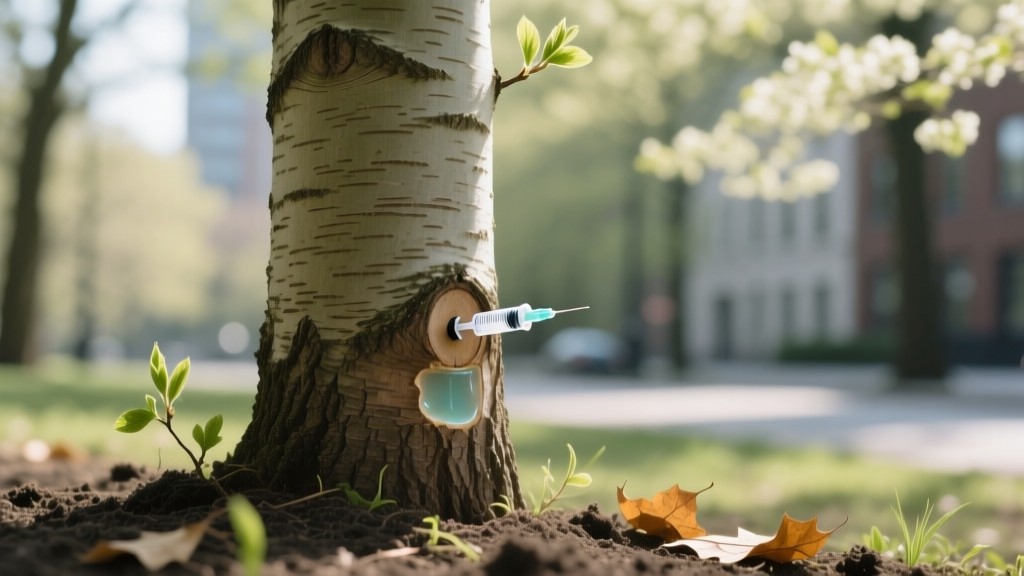
2026 TREE-age EAB Trunk Injection Guide: Save Ash Trees
James MillerPublished
The State of Ash Trees and EAB in 2026
As we navigate the 2026 growing season, the Emerald Ash Borer (EAB) remains one of the most destructive invasive pests threatening North American urban and rural canopies. If you have mature ash trees on your property, proactive management is no longer optional; it is essential for preserving your landscape's ecological and aesthetic value. According to the Emerald Ash Borer Information Network, EAB has now established populations in numerous states and Canadian provinces, making local eradication impossible and shifting the focus entirely toward long-term tree health management and strategic succession planting.
For homeowners and land managers, the decision often comes down to two paths: safe removal and replacement, or aggressive chemical defense. When a tree is deemed a high-value asset worth saving, TREE-age trunk injection (active ingredient: emamectin benzoate) stands out as the premier, scientifically backed treatment protocol available in 2026.
Why TREE-age is the Gold Standard for EAB Control
Unlike soil drenches or bark sprays that can be hindered by drought conditions, poor soil aeration, or environmental runoff, trunk injection delivers the active ingredient directly into the tree's vascular system (the xylem). TREE-age utilizes emamectin benzoate, a highly potent systemic insecticide that disrupts the nervous system of EAB larvae as they feed on the cambium layer.
The primary advantage of TREE-age is its remarkable residual efficacy. While older treatment methods required annual applications, a single trunk injection of TREE-age provides up to two full years of protection. This biennial treatment schedule significantly reduces wounding to the trunk, lowers long-term maintenance costs, and minimizes the environmental footprint of your tree care regimen. The USDA APHIS continues to recognize emamectin benzoate as a critical tool in managing EAB populations and slowing the localized spread of the pest.
Integrating Treatment with Succession Planting
From a tree selection and planting perspective, treating your existing ash trees with TREE-age is only half of a comprehensive 2026 landscape strategy. Because chemical treatments must be maintained indefinitely to keep the tree alive, you must also plan for the future through succession planting.
Treating your mature ash trees buys you a decade or more of time. This allows you to gradually introduce diverse, non-host tree species into your landscape without losing the immediate shade, property value, and habitat provided by your mature ash canopy. While treating the ash, begin planting EAB-resistant alternatives in the same general vicinity. Excellent succession choices for 2026 include:
- Swamp White Oak (Quercus bicolor): Highly adaptable, supports immense biodiversity, and thrives in varied soil conditions.
- Bald Cypress (Taxodium distichum): A resilient, fast-growing conifer that handles both wet and moderately dry urban soils.
- Ginkgo (Ginkgo biloba): Practically immune to all major pests and diseases, offering brilliant fall color.
- New EAB-Resistant Ash Cultivars: University breeding programs have recently introduced Asian and hybrid ash cultivars that exhibit high tolerance to EAB, allowing you to keep the ash genus in your landscape safely.
By pairing TREE-age treatments with strategic underplanting, you ensure that when the treated ash eventually reaches the end of its natural lifespan, a robust, diverse secondary canopy is already established to take its place.
Step-by-Step TREE-age Trunk Injection Guide
Applying TREE-age requires specialized equipment, typically the Arborjet QUIK-jet Air or TREE I.V. system, along with proprietary Arborplugs. Because emamectin benzoate is a restricted-use pesticide in many jurisdictions, this procedure is often best left to certified arborists. However, understanding the process is vital for land managers overseeing the treatment.
1. Assess Tree Health and Measure DBH
Before any drilling occurs, assess the tree's canopy. The golden rule of EAB treatment is the 30% threshold. If more than 30% of the canopy is already dead or dying, the vascular system is too compromised to distribute the chemical effectively, and the tree should be removed. Next, measure the Diameter at Breast Height (DBH) at 4.5 feet above the ground. This measurement dictates the exact dosage and the number of injection sites required.
2. Calculate Dosage and Prepare Sites
For preventative treatments, the standard dosage is 0.2 mL of TREE-age per inch of DBH. For curative treatments (trees showing mild signs of infestation but under the 30% dieback threshold), the dosage increases to 0.4 mL per inch of DBH. Injection sites are spaced evenly around the trunk flare, ideally 2 to 4 inches above the soil line where the roots begin to spread.
3. Drill and Insert Arborplugs
Using a high-torque drill and the correct bit size (usually 11/64-inch or 5/16-inch, depending on the plug system), drill holes at a slight upward angle into the sapwood. The depth must precisely match the length of the Arborplug plus the depth of the outer bark, ensuring the tip of the plug sits securely in the active xylem. After drilling, gently tap the Arborplugs into the holes using a specialized insertion tool until they are flush with the bark.
4. Inject the Product and Seal
Connect the injection apparatus to the Arborplug. The system uses pressure to force the emamectin benzoate solution into the tree's vascular tissue. Uptake times vary based on tree size, transpiration rates, and soil moisture, typically ranging from 5 to 30 minutes per site. Once the dosage is fully absorbed, remove the nozzle. The Arborplug acts as a one-way valve, sealing the chemical inside and preventing leakage while protecting the wound from secondary pathogens.
Dosage and Injection Site Chart
Proper dosing is critical to avoid under-treating the tree or causing phytotoxicity. Below is the standard 2026 reference chart for preventative TREE-age applications (0.2 mL/inch DBH) using standard 4.0% emamectin benzoate formulations.
| Tree DBH (Inches) | Total Volume (mL) | Number of Injection Sites | Volume Per Site (mL) |
|---|---|---|---|
| 10 - 14 | 2 - 2.8 | 4 | 0.5 - 0.7 |
| 15 - 19 | 3 - 3.8 | 6 | 0.5 - 0.63 |
| 20 - 24 | 4 - 4.8 | 8 | 0.5 - 0.6 |
| 25 - 29 | 5 - 5.8 | 10 | 0.5 - 0.58 |
| 30+ | 6+ (0.2 x DBH) | Calculate (approx 1 per 2-3 inches) | Varies by system limits |
Note: Always consult the specific manufacturer's label for the exact product formulation you are using, as concentrations and proprietary delivery systems may require slight adjustments to these baseline metrics.
Post-Treatment Care and Canopy Assessment
Following the injection, the tree requires standard horticultural care to facilitate rapid uptake and wound compartmentalization. Ensure the tree receives adequate water, especially during summer droughts, as transpiration is the engine that pulls the emamectin benzoate up into the canopy. Apply a 2-to-3-inch layer of organic mulch around the drip line, keeping it away from the trunk flare to prevent rot and rodent damage.
Monitor the canopy over the next 12 to 18 months. It is normal to see a slight stabilization or minor improvement in canopy density, but do not expect a severely thinned crown to fully regenerate. The primary goal of the 2026 TREE-age treatment is to halt further larval feeding, preserve the existing vascular tissue, and maintain the tree's structural integrity while your newly planted succession trees mature. For ongoing, region-specific updates on EAB quarantine zones and treatment protocols, regularly consult resources like Michigan State University Extension's Emerald Ash Borer portal and your local university extension office.