Tree Care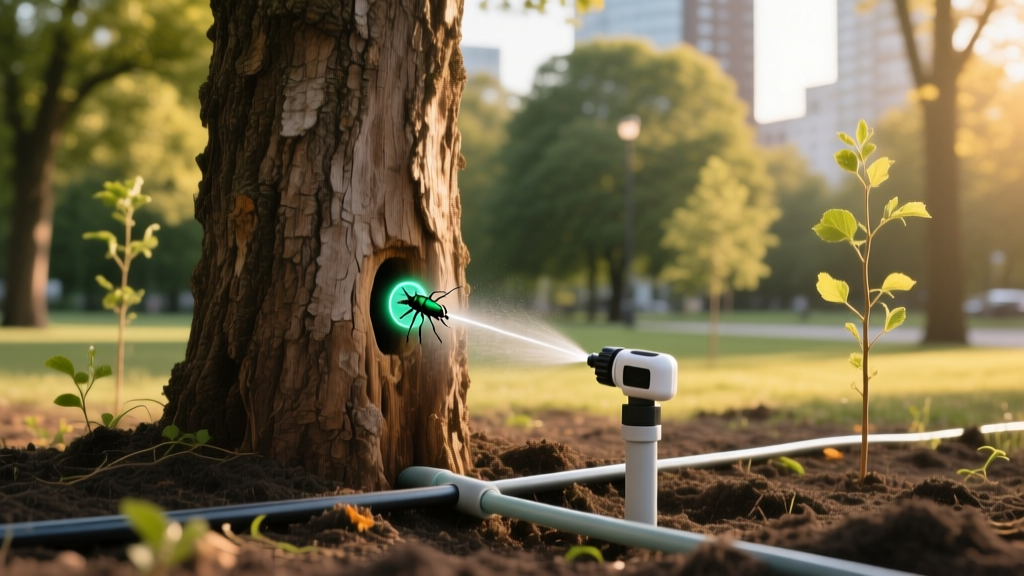
TREE-age EAB Treatment: Sprinkler & Irrigation Tips 2026
Emily WatsonPublished
Protecting Your Ash Trees: TREE-age EAB Treatment and Irrigation Management in 2026
As we navigate the 2026 growing season, the Emerald Ash Borer (EAB) remains a formidable threat to ash tree populations across North America. For homeowners and lawn care professionals, TREE-age (emamectin benzoate) trunk injections continue to be the gold standard for protecting these valuable canopy trees. However, a critical factor that is frequently overlooked in treatment success is the management of your lawn's sprinkler and irrigation systems. While the chemical efficacy of TREE-age is well-documented, its successful distribution throughout the tree's vascular system relies entirely on the tree's natural transpiration pull. If your irrigation system is poorly calibrated, overwatering or underwatering the root zone can severely compromise the uptake of the insecticide. This guide explores how to optimize your sprinkler systems and irrigation schedules to ensure maximum efficacy of TREE-age trunk injections in 2026.
The Transpiration Engine: Why Sprinklers Matter for Trunk Injections
To understand why your sprinkler system plays a pivotal role in EAB treatment, you must understand how TREE-age moves through the tree. Unlike soil drenches that rely on root absorption, trunk injections bypass the soil and introduce the insecticide directly into the xylem—the tree's water-conducting tissue. According to Arborjet's EAB treatment protocols, the chemical is pulled upward into the canopy only when the tree is actively transpiring. Transpiration is driven by soil moisture availability and atmospheric demand. If your sprinkler system fails to provide adequate deep soil moisture, the tree experiences drought stress, stomata close, and the transpiration stream halts. Consequently, the TREE-age solution remains pooled in the lower trunk, leading to poor canopy protection and potential localized phytotoxicity at the injection sites. Conversely, if your irrigation system runs too frequently, saturating the soil and depriving roots of oxygen, the tree's vascular function slows down, yielding the same poor distribution results.
Auditing Your Sprinkler System Around Treated Ash Trees
Before scheduling a TREE-age injection, conduct a thorough audit of the sprinkler heads within the tree's dripline (the area from the trunk to the outer edge of the canopy). Ash trees require deep, infrequent watering, which directly conflicts with the shallow, frequent watering schedules typically used for turfgrass. In 2026, modernizing your irrigation approach around mature trees is essential.
1. Adjusting Sprinkler Head Placement and Spray Patterns
High-pressure rotary sprinkler heads that repeatedly strike the trunk of an ash tree can cause mechanical damage to the bark over time. More importantly, if a trunk injection is performed and the Arborjet caps are sealing the drill holes, constant high-pressure water spray against the trunk can create a perpetually damp microenvironment. This moisture promotes fungal pathogens and bark rot around the injection sites. Adjust your sprinkler nozzles to deflect water away from the trunk, focusing the spray pattern on the critical root zone located 3 to 10 feet from the base of the tree.
2. Converting to Drip Irrigation for the Root Zone
The most effective way to manage soil moisture for treated ash trees is to convert the turf sprinkler heads within the dripline to a subsurface drip irrigation system or use above-ground soaker hoses. Drip irrigation delivers water slowly and deeply into the soil profile, encouraging deep root growth and maintaining consistent soil moisture tension without waterlogging the topsoil. This steady moisture supply keeps the transpiration engine running smoothly, ensuring the TREE-age insecticide is rapidly drawn into the upper canopy.
Irrigation Method Comparison for TREE-age Uptake
Choosing the right irrigation delivery method is vital for maintaining the optimal soil moisture required for trunk injection success. Below is a comparison of common irrigation methods and their impact on TREE-age efficacy.
| Irrigation Method | Soil Moisture Consistency | Impact on TREE-age Uptake | 2026 Recommendation |
|---|---|---|---|
| Traditional Spray Heads | Low (Shallow, frequent wetting) | Poor; causes soil saturation and root hypoxia, slowing transpiration. | Avoid within dripline of treated trees. |
| Rotary Nozzles | Moderate (Slower application) | Fair; better infiltration but still risks trunk wetting and runoff. | Adjust to avoid trunk strike; use for outer root zone. |
| Soaker Hoses | High (Deep, slow渗透) | Excellent; maintains ideal soil moisture tension for steady xylem flow. | Highly recommended for pre- and post-injection watering. |
| Subsurface Drip | Very High (Targeted root zone) | Optimal; zero trunk wetting, maximizes deep soil moisture. | Best long-term investment for 2026 smart landscapes. |
Leveraging Smart Irrigation Controllers and Soil Sensors
The smart irrigation technology available in 2026 makes it easier than ever to balance the needs of your turfgrass and your treated ash trees. Modern Wi-Fi-enabled controllers (such as the latest Rachio and Hunter Hydrawise models) now integrate seamlessly with localized evapotranspiration (ET) data and on-site soil moisture sensors. By placing a wireless soil moisture sensor in the root zone of your ash tree, you can program your smart controller to trigger a dedicated drip irrigation zone only when the soil moisture drops below the optimal threshold for tree health. The EPA WaterSense program highlights that utilizing smart irrigation controllers and soil moisture sensors not only optimizes plant health but can reduce outdoor water use by up to 30%. For TREE-age treatments, setting your soil moisture sensor to maintain a consistent volumetric water content (VWC) ensures the tree never experiences the drought stress that would halt the upward movement of the emamectin benzoate.
Step-by-Step Pre- and Post-Injection Watering Protocol
To guarantee the best results from your TREE-age treatment, follow this irrigation protocol in conjunction with your arborist's injection schedule:
- 7 Days Pre-Injection: Check the soil moisture at a depth of 6 to 8 inches near the dripline. If the soil is dry, initiate a deep watering cycle using a soaker hose or drip system. Run the system for 2 to 4 hours to ensure the entire root zone is adequately hydrated. This primes the tree's vascular system and ensures active transpiration on the day of treatment.
- Day of Injection: Turn off all sprinkler systems. Heavy irrigation on the exact day of injection can sometimes lead to excessive sap pressure, causing the tree to "bleed" or weep from the drill holes before the Arborjet caps can be securely seated. Allow the tree to draw the chemical in naturally.
- 14 Days Post-Injection: Resume your deep, infrequent watering schedule. Monitor the injection sites for any signs of weeping or fungal growth. Ensure your sprinkler heads are still adjusted away from the trunk to keep the bark dry while the internal chemical distribution completes its journey to the canopy.
Understanding the Economics of Treatment and Irrigation Upgrades
In 2026, the cost of professional TREE-age trunk injections typically ranges from $12 to $18 per inch of trunk diameter (measured at breast height). For a mature 20-inch ash tree, this represents a significant investment of $240 to $360 per treatment cycle, which lasts for two years. Losing this investment due to poor chemical uptake caused by improper lawn irrigation is a costly mistake. Reallocating a portion of your landscaping budget to upgrade your sprinkler system—such as installing a dedicated drip zone or purchasing a smart soil moisture sensor kit (averaging $150 to $250 in 2026)—pays for itself by ensuring the longevity and health of your treated ash trees.
Conclusion
Treating Emerald Ash Borer with TREE-age trunk injections is a highly effective, scientifically backed strategy, but it does not exist in a vacuum. The health of your tree and the efficacy of the chemical are inextricably linked to how you manage water in your landscape. By auditing your sprinkler heads, transitioning to deep-watering irrigation methods, and utilizing 2026 smart controller technology, you create the optimal physiological conditions for your ash trees to thrive. For more comprehensive data on EAB spread and management strategies, consult the Michigan State University Emerald Ash Borer Resource. Protect your investment, optimize your irrigation, and keep your ash canopy green and robust for years to come.