Tree Care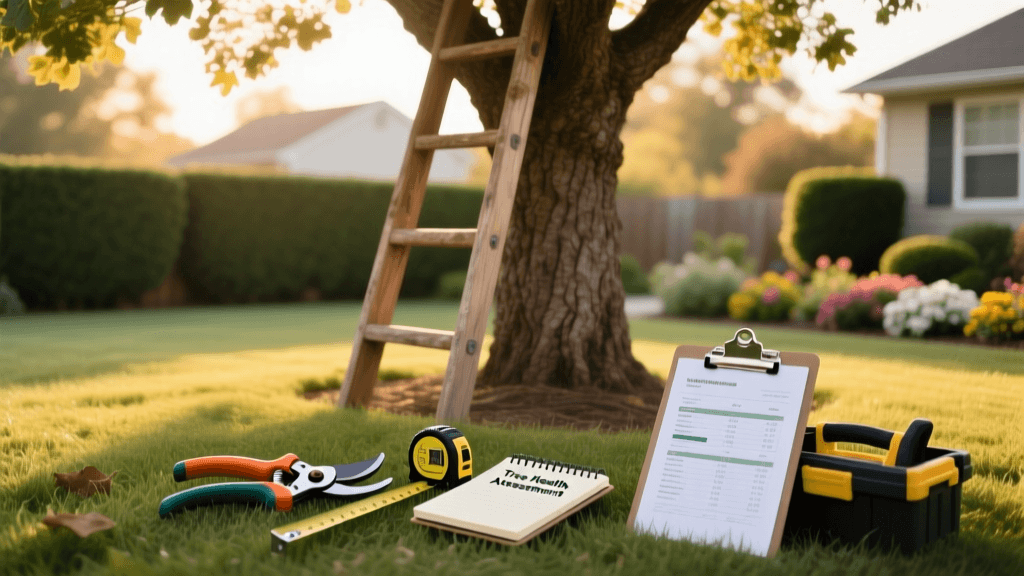
Tree Care Budget Guide: Annual Pruning, Health, and Removal Costs
Homeowners often view trees as static fixtures in their landscaping, assuming that once planted, they will thrive with minimal intervention. However, mature trees are living assets that require consistent, strategic maintenance to remain safe, healthy, and visually appealing. Failing to budget for routine tree care can lead to catastrophic expenses down the line, from emergency storm damage removal to costly property repairs caused by falling limbs. Understanding the financial commitment of tree care is essential for any responsible homeowner.
The Financial ROI of Proper Tree Maintenance
Before diving into the costs, it is crucial to understand the return on investment (ROI) that proper tree care provides. According to the Arbor Day Foundation, healthy, mature trees can increase property values by up to 15 to 20 percent. Furthermore, strategic tree placement and maintenance can reduce summer cooling costs by providing essential shade and lower winter heating costs by acting as windbreaks. When you budget for tree care, you are not merely spending money on yard work; you are actively protecting and appreciating a significant real estate asset. Neglecting this asset can lead to a rapid decline in tree health, turning a valuable asset into an expensive liability.
Routine Pruning: Professional Services vs. DIY Budgeting
Pruning is the most common and vital tree care practice. It removes dead or diseased wood, improves structural integrity, and promotes healthy growth. Homeowners must decide whether to tackle this task themselves or hire certified professionals. This decision heavily impacts your annual landscaping budget.
The Cost of Professional Pruning
Hiring an ISA-certified arborist ensures that your trees are pruned according to industry standards, which prevents long-term damage and disease entry points. Professional tree pruning costs are generally calculated based on the size of the tree, its accessibility, and its proximity to hazards like power lines. On average, homeowners can expect to pay between $150 and $350 for small trees, $350 to $800 for medium trees, and $800 to $1,500 or more for large, mature canopy trees. While this may seem like a steep annual or bi-annual expense, it includes liability insurance, specialized equipment, and expert knowledge that mitigates the risk of personal injury or property damage.
The True Cost of DIY Pruning
Many homeowners attempt to save money by pruning their own trees. While DIY pruning is viable for small, young trees and low-hanging branches, it requires a significant upfront investment in quality tools and safety gear. To do it safely and effectively, you will need bypass loppers ($40 to $80), a high-quality pruning saw ($30 to $60), a telescoping pole pruner ($80 to $150), safety glasses ($15), leather gloves ($25), and a forestry hard hat ($30). Your initial DIY startup cost will range from $220 to $375. Furthermore, as the Penn State Extension notes, improper pruning cuts can introduce decay organisms and permanently ruin the structural integrity of a tree, potentially costing thousands in eventual removal fees. DIY is only cost-effective if you are committed to learning proper arboricultural techniques and limiting your work to safe, ground-level tasks.
Cost Comparison: Professional vs. DIY Tree Pruning
| Tree Size Category | Professional Arborist Cost | DIY Tool Investment Required | Risk Level |
|---|---|---|---|
| Small (Under 25 ft) | $150 - $350 | $80 - $150 (Hand tools) | Low |
| Medium (25 - 50 ft) | $350 - $800 | $150 - $250 (Pole saws) | Moderate to High |
| Large (Over 50 ft) | $800 - $1,500+ | Not Recommended for DIY | Extreme |
Budgeting for Tree Health, Soil Care, and Pest Management
Beyond structural pruning, maintaining the biological health of your trees requires a dedicated budget for soil care and pest management. Trees in urban and suburban environments often suffer from compacted soil, nutrient deficiencies, and invasive pests that do not typically affect trees in natural forest settings.
Soil Testing and Deep Root Fertilization
A comprehensive soil test from a university extension office typically costs between $20 and $50 and should be conducted every three to five years. Based on the results, you may need to invest in deep root fertilization or soil aeration. Professional deep root fertilization, which injects liquid nutrients directly into the root zone to bypass compacted topsoil, costs an average of $150 to $300 per large tree. While this is an added expense, it drastically improves drought tolerance and disease resistance, saving money on emergency treatments later.
Invasive Pest and Disease Treatments
Pest management is one of the most unpredictable variables in a tree care budget. For example, if you have Ash trees on your property, you must budget for Emerald Ash Borer (EAB) preventative treatments. Professional trunk injections using Emamectin benzoate typically cost between $10 and $15 per inch of trunk diameter at breast height (DBH). A mature ash tree with a 20-inch trunk will require a bi-annual investment of $200 to $300 to remain protected. Similarly, treating fungal diseases like Oak Wilt or Anthracnose via systemic fungicides can cost $200 to $500 per application. Homeowners must weigh the cost of these ongoing preventative treatments against the eventual cost of removing a dead tree, which often exceeds $1,500.
The Emergency Fund: Storm Damage and Tree Removal
No matter how meticulously you maintain your trees, extreme weather events can cause unforeseen damage. Every homeowner with mature trees should maintain a landscaping emergency fund specifically earmarked for storm damage mitigation and eventual tree removal.
The International Society of Arboriculture (ISA) strongly recommends hiring a certified arborist for hazard assessments, especially after severe storms or if you notice signs of decay, such as fungal conks or deep trunk cavities. A professional hazard assessment typically costs $200 to $500. If a tree must be removed due to safety concerns, the costs escalate quickly. Standard tree removal ranges from $500 for a small, accessible tree to over $3,000 for a large tree situated near a home or power line. If a tree falls on a structure during a storm, emergency removal crews charge premium rates, often doubling or tripling the standard removal cost. Setting aside $50 to $100 per month into a dedicated tree care and removal sinking fund can prevent financial shock when a tree reaches the end of its natural lifespan.
5 Strategic Ways to Reduce Your Annual Tree Care Costs
While you should never cut corners on safety or essential health treatments, there are several strategic ways to optimize your tree care budget without sacrificing the health of your landscape.
1. Schedule Pruning During the Off-Season
Tree care companies are exceptionally busy during the spring and summer months. By scheduling routine pruning and health assessments during the late fall or winter dormancy period, you can often negotiate a 10 to 20 percent discount. Winter pruning is also highly beneficial for many tree species, as the absence of leaves allows arborists to see the branch structure clearly, and the cold weather prevents the spread of diseases like Oak Wilt.
2. Bundle Services and Coordinate with Neighbors
Arborists charge for mobilization, travel time, and equipment setup. If you have multiple trees that need work, bundle them into a single annual visit rather than calling the company out for separate, smaller jobs. Additionally, if you and your neighbors share property line trees or require similar services, coordinating a neighborhood block day can significantly reduce the per-tree cost, as the crew is already on-site and equipment is already deployed.
3. Master the 3-3-3 Mulching Rule
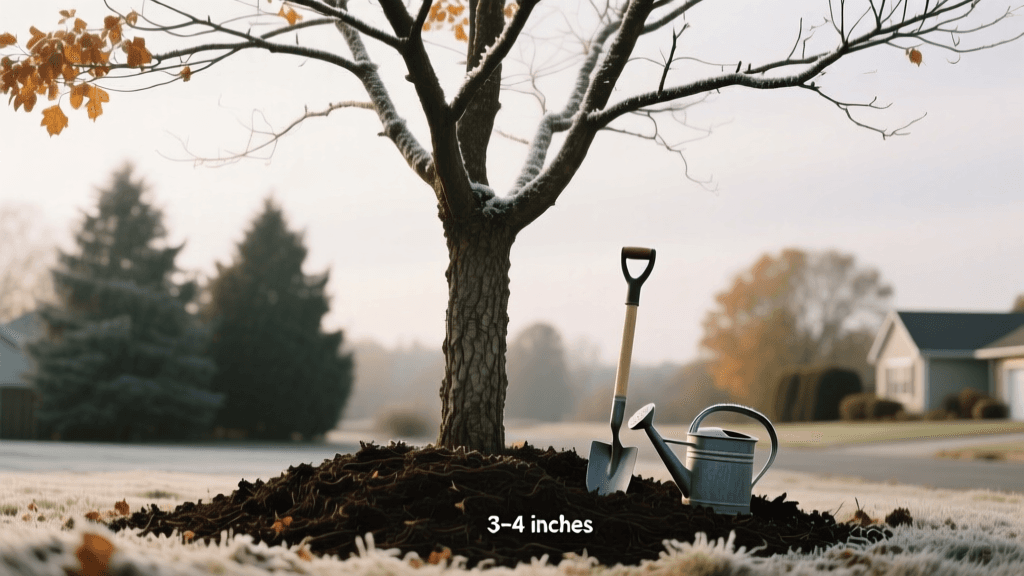
Proper mulching is the most cost-effective preventative health measure available to homeowners. Apply a 3-inch layer of organic wood mulch in a 3-foot radius around the trunk (for young trees, expand this as they grow), ensuring the mulch does not touch the bark (avoiding volcano mulching). This retains soil moisture, regulates soil temperature, and prevents lawnmower damage to the trunk, which is a leading cause of fatal tree infections. A $10 bag of mulch can save hundreds in drought-stress treatments and disease management.
4. Water Deeply and Infrequently
Shallow, daily watering encourages weak, surface-level root systems that are highly susceptible to drought and windthrow. Invest in a $30 soaker hose and water your mature trees deeply once a week during dry spells. Encouraging deep taproots anchors the tree securely, reducing the risk of storm-related uprooting and the subsequent emergency removal costs.
5. Plant the Right Tree in the Right Place
The most effective way to budget for tree care is to minimize future problems at the planting stage. Avoid planting large canopy trees under power lines or too close to your home foundation. Choosing native, disease-resistant species adapted to your local hardiness zone will drastically reduce the need for supplemental watering, soil amendments, and chemical pest treatments over the tree lifetime.
Conclusion
Budgeting for tree care is an exercise in proactive asset management. By understanding the costs associated with professional pruning, preventative health treatments, and emergency removals, homeowners can allocate their landscaping funds wisely. While DIY methods and strategic scheduling can reduce annual expenses, partnering with certified arborists for high-risk and complex health issues ensures that your trees remain safe, beautiful, and financially beneficial for decades to come.