Tree Care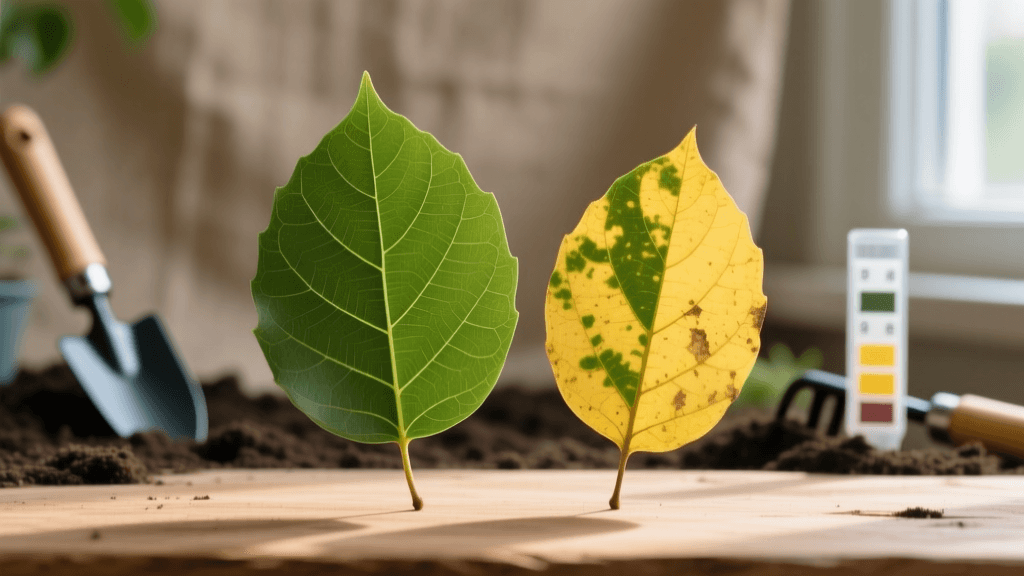
Diagnosing and Treating Tree Chlorosis: A Troubleshooting Guide
Understanding Tree Chlorosis: More Than Just Yellow Leaves
When the vibrant green canopy of your landscape trees begins to fade into a sickly yellow, you are likely witnessing chlorosis. Chlorosis is not a disease itself, but rather a visual symptom of an underlying physiological problem: the inadequate production of chlorophyll. Without sufficient chlorophyll, trees cannot photosynthesize effectively, leading to carbon starvation, stunted growth, and severe vulnerability to secondary pests like the bronze birch borer or opportunistic fungal pathogens.
As a homeowner or landscape manager, diagnosing the exact cause of chlorosis is the critical first step before spending money on treatments. According to the University of Minnesota Extension, applying the wrong fertilizer or treatment will not only waste your budget but can further damage the soil ecology and the tree's root system. This troubleshooting guide will walk you through visual diagnosis, soil testing, and targeted treatment protocols to restore your trees to optimal health.
Step 1: Visual Diagnosis and Symptom Mapping
The pattern of yellowing on the leaves provides the first major clue. Nutrient mobility within the plant dictates where symptoms appear first. Mobile nutrients, like nitrogen and magnesium, are relocated by the tree from older leaves to support new growth when supplies are low. Immobile nutrients, like iron and manganese, cannot be translocated, meaning deficiencies show up on the newest foliage at the branch tips.
Below is a diagnostic troubleshooting table to help you identify the likely culprit based on visual symptoms:
| Symptom Pattern | Likely Deficiency or Cause | Commonly Affected Trees |
|---|---|---|
| Interveinal yellowing (green veins, yellow tissue) on new growth | Iron Chlorosis | Pin Oak, Silver Maple, Birch, Sweetgum |
| Interveinal yellowing on older, inner canopy leaves | Magnesium Deficiency | Apple, Crabapple, Dogwood |
| Uniform yellowing of older leaves, starting at the bottom of the canopy | Nitrogen Deficiency | Most deciduous and evergreen species |
| Yellowing accompanied by scorched, brown leaf margins | Potassium Deficiency or Salt Burn | Maples, Ash, Spruce |
| Uniform yellowing of entire tree with poor drainage or recent heavy rain | Root Hypoxia (Overwatering) | All species, especially shallow-rooted trees |
If your tree exhibits interveinal chlorosis on new growth, iron deficiency is the most probable diagnosis. However, as noted by Colorado State University Extension, the soil usually contains plenty of iron; the problem is that the iron is 'locked up' and unavailable to the roots due to high soil pH (alkalinity) or excessive calcium carbonate.
Step 2: Soil Testing and pH Analysis
Before purchasing any chemical treatments, you must verify your soil's pH and nutrient profile. Iron becomes highly insoluble in soils with a pH above 7.0. In alkaline soils, iron oxidizes into a form that tree roots simply cannot absorb.
How to Collect a Proper Soil Sample
- Tools: Use a clean soil probe or trowel.
- Depth: Extract soil from 6 to 8 inches deep, which represents the active root zone.
- Locations: Take 4 to 5 subsamples from around the tree's dripline (the outer edge of the canopy) and mix them in a clean plastic bucket.
- Testing: Send the composite sample to a local university extension lab or use a high-quality digital meter. Basic lab tests cost between $15 and $30 and provide exact pH levels and buffer pH (which tells you how much sulfur is needed to lower the pH).
If your soil pH is between 7.2 and 8.5, you are dealing with high-alkalinity iron chlorosis, which requires specific chelated iron products to bypass the soil lockout.
Step 3: Troubleshooting Specific Treatment Options
Once you have confirmed iron chlorosis, you have three primary treatment avenues. The best choice depends on the tree's size, the severity of the decline, and your budget.
Option A: Foliar Sprays (The Quick Fix)
Foliar applications of ferrous sulfate provide a rapid cosmetic fix. The leaves absorb the iron directly, greening up within 7 to 14 days.
Application: Mix 1 to 2 tablespoons of ferrous sulfate powder per gallon of water. Add a drop of non-detergent liquid dish soap as a surfactant to help the solution adhere to the waxy leaf cuticle. Spray in the early morning or late evening to prevent leaf burn.
Limitations: This only treats the existing leaves. New growth will still emerge yellow, and the treatment must be repeated every 3 to 4 weeks during the growing season. Cost is low, roughly $10 to $15 per season.
Option B: Soil Drenches (The Long-Term Root Solution)
For a systemic solution, apply chelated iron to the soil. Chelates are organic molecules that bind to iron, keeping it soluble and available to roots even in alkaline soils.
Product Selection: This is critical. Standard Fe-EDTA chelates break down rapidly in soils with a pH above 6.5. For alkaline soils, you must use Fe-EDDHA (often sold under brand names like Sequestrene 138 or Miller's Ferriplus).
Application Rate: Apply 1 to 2 ounces of Fe-EDDHA per inch of trunk diameter. Dissolve the granules in water and drench the soil evenly around the dripline in early spring just before bud break. Expect to spend $30 to $60 per large tree, but the results will last the entire growing season.
Option C: Trunk Injections (For Severe Cases and Large Trees)
Research from Utah State University Extension highlights that trunk injections are the most effective method for large, severely chlorotic trees where soil applications are impractical due to paving or compacted soil.
Process: A certified arborist drills small holes into the xylem (sapwood) at the base of the trunk and inserts pressurized capsules or infusion lines containing ferric ammonium citrate or iron citrate.
Timing and Cost: Injections must be performed in early spring when sap flow is active. The tree greens up in 2 to 4 weeks, and the effect can last 1 to 3 years. Professional application costs between $150 and $350 per tree. Note that drilling creates open wounds, so this method should only be used when necessary to avoid introducing wood-decay fungi.
Step 4: Long-Term Prevention and Soil Management
Treating the symptom is not enough; you must address the soil environment to prevent chronic chlorosis from returning year after year.
Lowering Soil pH with Elemental Sulfur
To permanently unlock native soil iron, you must lower the soil pH. Apply pelletized elemental sulfur to the soil surface. Soil bacteria convert the sulfur into sulfuric acid, slowly dropping the pH. Apply 1 to 2 pounds of sulfur per 100 square feet of canopy area in the fall. This is a slow process and may take 1 to 2 years to see a measurable drop in pH, but it is the most sustainable long-term fix.
Proper Mulching and Watering Practices
Compacted, poorly drained soils deprive roots of oxygen, which is required for the active transport of nutrients into the root system.
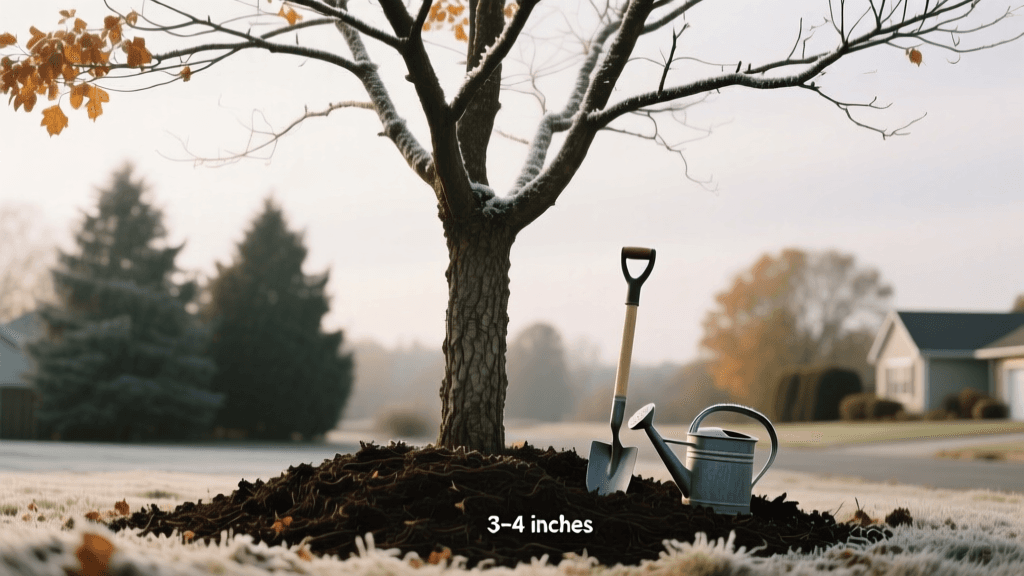
Mulching: Apply a 2 to 4-inch layer of organic wood chip mulch over the root zone, starting 3 inches away from the trunk flare to prevent rot. Mulch moderates soil temperature, retains moisture, and slowly adds organic acids to the soil as it decomposes, naturally lowering the pH.
Watering: Avoid frequent, shallow watering. Water deeply and infrequently (e.g., 1 inch of water every 10 to 14 days) to encourage deep root growth and prevent root hypoxia, which mimics and exacerbates nutrient deficiencies.
Conclusion
Troubleshooting tree chlorosis requires a methodical approach. By correctly identifying the visual symptoms, verifying soil pH through laboratory testing, and selecting the appropriate chelated iron product or injection method, you can rescue declining trees. Combine these targeted treatments with long-term soil acidification and proper mulching to ensure your landscape trees remain vibrant, healthy, and resilient for decades to come.