Tree Care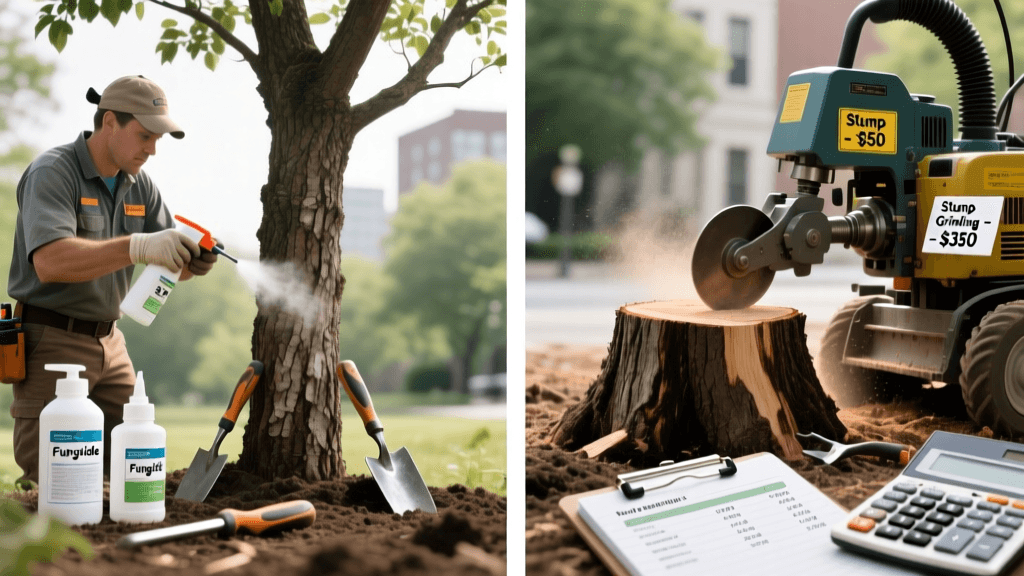
Tree Disease Treatment Vs Removal: Complete Cost Guide
The Homeowner’s Dilemma: Treat or Remove?
When a beloved shade tree or ornamental landscape specimen begins to show signs of decline, homeowners are immediately faced with a difficult and often expensive decision: should you invest in aggressive disease treatment, or is it more cost-effective to remove and replace the tree? This dilemma is incredibly common, especially when dealing with aggressive pathogens like oak wilt, fungal root rots, or devastating pests like the Emerald Ash Borer (EAB). Making the wrong financial choice can result in thousands of dollars wasted on a dying tree, or the premature loss of a valuable, mature canopy that provides immense ecological and aesthetic benefits.
Budgeting for tree care requires a clear understanding of arboricultural pricing models, chemical treatment costs, and the heavy machinery expenses associated with safe tree felling. In this comprehensive cost and budgeting guide, we will break down the exact expenses associated with both tree disease management and complete tree removal, helping you make an informed, financially sound decision for your property.
Evaluating Your Tree’s True Worth
Before opening your wallet to an arborist, you must assess the intrinsic and financial value of the tree in question. According to the International Society of Arboriculture (ISA), healthy, mature trees can increase property values by up to 10%. Furthermore, a large, established oak or maple provides shade that can reduce summer cooling costs by 20% to 30%, a financial benefit that a newly planted sapling simply cannot match for at least two decades.
From an ecological perspective, the USDA Forest Service highlights that mature urban trees are critical for stormwater management, carbon sequestration, and reducing the urban heat island effect. Therefore, if the tree is structurally sound, historically significant, or provides massive canopy coverage, the higher upfront cost of specialized disease treatment is almost always justified from a long-term budgeting perspective.
Breaking Down Tree Disease Treatment Costs
Tree disease treatment is rarely a one-time application. It is usually a multi-year management plan. Costs are generally calculated based on the tree’s Diameter at Breast Height (DBH), which is measured 4.5 feet above the ground. Here is what you can expect to budget for professional treatment options:
1. Arborist Inspection and Diagnosis
Before any treatment begins, you need a certified arborist to accurately diagnose the pathogen or pest. Misdiagnosis leads to wasted money. A comprehensive tree risk assessment and disease diagnosis typically costs between $150 and $350. Some companies waive this fee if you proceed with their treatment plan, but an independent consulting arborist will charge for their unbiased report.
2. Trunk Injections (Macro and Micro)
For vascular diseases and boring insects, trunk injections are the gold standard. Products like TREE-äge (emamectin benzoate) are highly effective against Emerald Ash Borer, while Alamo (propiconazole) is used for oak wilt and certain fungal pathogens.
- Cost: $15 to $25 per inch of DBH.
- Example: A 20-inch DBH ash tree will cost between $300 and $500 per treatment.
- Timing: EAB treatments last up to two years, meaning you budget for this expense bi-annually. Fungal treatments may require annual or semi-annual applications.
3. Soil Drenching and Root Zone Injections
For systemic fungicides or growth regulators like Cambistat (paclobutrazol), which helps trees survive root rot by reducing canopy growth and increasing fine root density, soil drenching is common.
- Cost: $10 to $15 per inch of DBH.
- Example: A 24-inch oak tree might cost $240 to $360 per application.
- Timing: Usually applied in early spring or late fall when soil moisture is optimal for root uptake.
4. Foliar Sprays
Foliar sprays are used for surface-level fungal issues like apple scab, anthracnose, or powdery mildew. Because the chemical only protects the existing foliage, it must be reapplied as new leaves emerge.
- Cost: $150 to $300 per application for an average-sized yard tree.
- Timing: Requires 2 to 3 applications spaced 14 days apart in the spring, meaning a seasonal budget of $450 to $900.
The Financial Reality of Tree Removal and Replacement
If the tree is beyond saving, removal is the only safe option. Tree removal is labor-intensive, dangerous, and requires heavy equipment, making it a significant line item in your landscaping budget.
1. Tree Felling and Hauling
The cost to cut down and remove a tree depends heavily on its size, location, and proximity to structures or power lines.
- Small Trees (Under 30 ft): $300 to $700.
- Medium Trees (30 to 60 ft): $800 to $1,500.
- Large Trees (60 to 100+ ft): $1,500 to $3,500+.
2. Stump Grinding
Leaving a diseased stump in the ground is a bad idea, as pathogens like Armillaria root rot or Oak Wilt can spread through grafted root systems to neighboring healthy trees. Stump grinding is priced by the diameter of the stump.
- Cost: $3 to $5 per inch of stump diameter.
- Example: A 30-inch wide stump will cost $90 to $150 to grind below grade.
3. Replacement Planting
Budgeting for removal must also include the cost of replacement to restore your landscape. A high-quality 15-gallon to 20-gallon nursery tree costs between $150 and $300. Professional planting labor, including soil amendment, proper depth setting, and initial mulching, adds another $150 to $250. For an instant impact, purchasing a large Balled and Burlapped (B&B) tree (e.g., 3-inch caliper) can push your replacement budget well over $1,200.
5-Year Cost Comparison: Treatment vs. Removal
To truly understand the budget impact, let us compare a 5-year financial projection for a moderately diseased 24-inch DBH Oak tree suffering from a manageable fungal pathogen versus removing it and planting a replacement.
| Expense Category | 5-Year Treatment Plan | Removal & Replacement |
|---|---|---|
| Initial Assessment | $250 | $250 |
| Primary Service (Injection/Felling) | $840 (Trunk Injection) | $1,600 (Felling & Hauling) |
| Stump Management | $0 | $360 (Grinding 24" Stump) |
| New Plant Material & Labor | $0 | $550 (20-Gallon Tree) |
| Follow-up Care (Years 2-5) | $1,200 (3 Soil Drenches) | $200 (Watering/Mulch) |
| Total 5-Year Cost | $2,290 | $2,960 |
Note: While the 5-year costs appear somewhat comparable, the removal option leaves you with a tiny sapling that provides zero shade or property value increase, whereas the treatment option preserves a massive, mature canopy.
Hidden Costs and Budgeting Pitfalls
When drafting your tree care budget, beware of hidden costs that can derail your finances:
- Municipal Permits: Many cities and counties have strict tree preservation ordinances. Removing a heritage tree or any tree over a specific DBH without a permit can result in fines ranging from $500 to $5,000. Always check local zoning laws first.
- Hardscape Damage: Heavy stump grinders and log loaders can crack driveways, destroy irrigation lines, and ruin retaining walls. Ensure your arborist’s contract includes a clause about hardscape protection, such as the use of plywood track mats.
- Utility Line Clearance: If the diseased tree is entangled in overhead power lines, your standard arborist cannot legally touch it. You will need to coordinate with the utility company, which may require a specialized line-clearance crew, altering your timeline and budget.
Decision Matrix: When to Invest and When to Cut
How do you know which financial path to take? The Morton Arboretum and leading plant pathologists recommend using a strict set of criteria to determine if a tree is worth the financial investment of treatment.
Invest in Treatment If:
- The tree has lost less than 30% of its canopy. Trees with severe dieback lack the vascular flow necessary to distribute trunk-injected chemicals to the upper branches.
- The trunk is structurally sound, with no deep, weeping cankers or extensive fungal conks (mushrooms) growing from the base, which indicate advanced internal decay.
- The disease is highly responsive to chemical intervention (e.g., EAB, Dutch Elm Disease, Oak Wilt caught early).
Budget for Removal If:
- More than 50% of the canopy is dead or dying. At this stage, the tree’s vascular system is too compromised to recover, and treatment is a waste of money.
- The tree is suffering from advanced Armillaria root rot or Ganoderma butt rot. There are no chemical cures for severe structural root decay, and the tree poses a massive liability risk to your home.
- The tree is an invasive or highly susceptible species (e.g., a green ash in an EAB quarantine zone) where treatment costs will indefinitely outweigh the tree's ecological value.
Conclusion
Budgeting for tree health is an exercise in balancing short-term expenses with long-term property value. While the upfront costs of tree removal and replacement might seem like a clean slate, the decades required for a new tree to reach maturity represent a hidden financial loss in cooling costs, curb appeal, and ecological benefit. By understanding the per-inch pricing of arborist treatments, the heavy machinery costs of removal, and the biological limits of a declining tree, you can allocate your landscaping budget wisely and protect your property's most valuable living assets.