Tree Care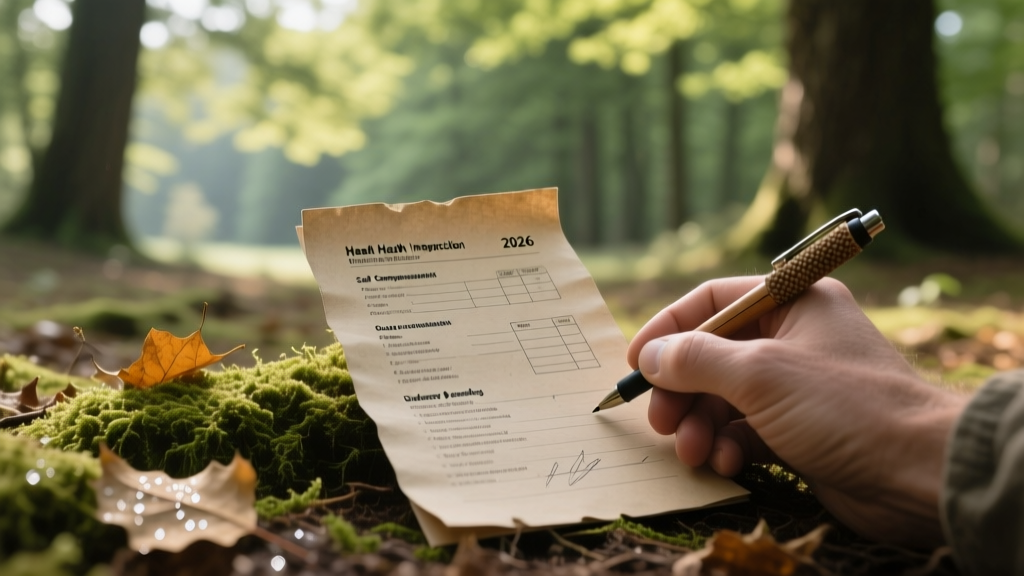
Tree Health Visual Inspection Checklist 2026: Aeration & Seeding
James MillerPublished
The Intersection of Lawn Care and Tree Health in 2026
When homeowners plan their spring and fall lawn care routines, aeration and seeding are often at the top of the list. However, the transition zone between your turfgrass and your landscape trees is a critical battleground for water, nutrients, and oxygen. In 2026, modern arboriculture emphasizes that standard lawn aeration practices can sometimes harm shallow tree roots, while improper seeding against the trunk can invite fatal fungal pathogens. This comprehensive tree health assessment visual inspection checklist is designed specifically for homeowners and landscaping professionals who are integrating lawn aeration and seeding with proactive tree care.
Step 1: The Visual Inspection Checklist
Before firing up a core aerator or spreading grass seed, conduct a thorough visual assessment of the trees in your landscape. This checklist helps you identify stress indicators that dictate whether the soil needs specialized aeration or if the understory should be seeded at all.
Canopy and Foliage Assessment
- Crown Dieback: Look for dead or dying branches at the outer edges of the canopy. In 2026, prolonged drought cycles have made dieback a primary indicator of severe soil compaction restricting water uptake.
- Chlorosis: Yellowing leaves with green veins often signal nutrient lockout caused by high soil pH or compacted, poorly aerated soil.
- Leaf Size and Density: Undersized leaves or a sparse canopy suggest the root system is suffocating and lacks the oxygen necessary for cellular expansion.
Trunk and Bark Inspection
- Fungal Conks and Mushrooms: The presence of bracket fungi on the trunk or mushrooms at the base indicates internal decay, often exacerbated by excess moisture trapped by turfgrass or improper mulching.
- Bark Cracks and Seams: Vertical cracks can indicate structural weakness or rapid fluctuations in soil moisture levels.
- Girdling Roots: Inspect the base for roots wrapping around the trunk. These are often caused by planting too deeply or by soil compaction forcing roots to grow laterally just beneath the surface.
Root Flare and Soil Grade
- Buried Root Flare: The trunk should flare out at the base like a wine glass. If the trunk goes straight into the ground like a fence post, the tree is planted too deep or soil has graded up over time. Never seed grass over a buried root flare.
- Soil Crusting and Water Pooling: If water pools around the tree base after irrigation, the soil is heavily compacted and requires immediate, specialized aeration.
Step 2: Evaluating Soil Compaction and Aeration Needs
Standard lawn core aeration pulls 2-to-3-inch plugs of soil to relieve compaction in turfgrass zones. However, according to The Morton Arboretum, the majority of a tree's fine, water-absorbing roots reside in the top 12 to 18 inches of soil, often extending well beyond the drip line. Running a mechanical core aerator over a tree's root zone can sever these vital feeder roots.
Mechanical vs. Liquid Aeration in Tree Zones
For areas where turfgrass and tree roots overlap, 2026 best practices recommend shifting away from mechanical core aeration near the drip line. Instead, utilize liquid aerators or specialized radial trenching.
- Liquid Aeration (e.g., N-EXT Air-8 2026 Formulation): Liquid aerators use surfactants and humic acids to break surface tension, allowing water and oxygen to penetrate compacted clay without physically tearing tree roots. Apply at a rate of 2 oz per 1,000 sq ft.
- AirSpade Technology: For severely compacted zones where grass refuses to grow, certified arborists use pneumatic excavation tools like the AirSpade 2000 Series to safely fracture compacted soil without damaging delicate root bark.
Step 3: The Seeding Dilemma: Turfgrass vs. Tree Roots
A common mistake during fall lawn renovation is spreading shade-tolerant grass seed directly against the tree trunk. Turfgrass and trees are fierce competitors. Grass roots are dense and fibrous, effectively stealing moisture and fertilizer before they can reach the deeper tree roots. Furthermore, keeping grass alive in the shade requires frequent, shallow watering, which encourages tree roots to grow upward into the turf layer, making them susceptible to mower damage and drought stress.
When to Seed vs. When to Mulch
The Arbor Day Foundation consistently advocates for eliminating turfgrass competition within the tree's drip line. If your visual inspection reveals a struggling tree with a sparse canopy, do not seed the understory. Instead, establish a mulch ring.
- The 3-3-3 Mulch Rule: Apply a 3-inch layer of organic wood chips, in a 3-foot radius (minimum, ideally to the drip line), keeping it 3 inches away from the trunk bark.
- Shade-Tolerant Alternatives: If you must have groundcover, avoid standard Kentucky Bluegrass. Opt for 2026-rated fine fescue blends like Jonathan Green Black Beauty Dense Shade or plant low-competition native sedges that require minimal mowing and fertilization.
Soil Compaction Indicators and Treatment Matrix
| Visual Indicator | Underlying Issue | Recommended 2026 Treatment | Estimated Cost |
|---|---|---|---|
| Water pooling at base | Severe surface crusting | Liquid aeration + top-dressing with compost | $45 - $85 (DIY) |
| Grass thinning under canopy | Shade + root competition | Remove turf, apply 3-inch arborist mulch ring | $150 - $300 (Pro) |
| Trunk straight into soil (no flare) | Buried root flare / deep planting | Pneumatic AirSpade excavation by ISA arborist | $800 - $1,500 |
| Crown dieback & small leaves | Deep soil compaction | Radial trenching and vertical mulching | $600 - $1,200 |
Step 4: Advanced Root Zone Aeration Techniques
If your visual inspection checklist confirms severe compaction and poor tree vitality, standard lawn care products will not suffice. You must implement advanced arboricultural techniques to restore soil porosity.
Radial Trenching
Radial trenching involves digging narrow, shallow trenches radiating outward from the trunk (starting at least 3 feet away to avoid major structural roots) toward the drip line. These trenches are then backfilled with a mix of coarse sand, biochar, and slow-release organic fertilizer. This creates permanent channels for oxygen and water to reach the deeper root profile.
Vertical Mulching
Using a 2-inch auger, drill holes 8 to 12 inches deep in a grid pattern across the root zone. Fill these holes with a porous aggregate like expanded shale or pea gravel. According to research highlighted by Penn State Extension, vertical mulching dramatically improves water infiltration in heavy clay soils without the widespread root disruption caused by rototilling or deep mechanical aeration.
Timing Your Aeration and Seeding Around Trees
Timing is everything when balancing lawn renovation with tree health. In most temperate climates, fall is the ideal window for seeding cool-season grasses and performing soil amendments. However, tree roots are also actively storing carbohydrates for the winter during this period.
- Early Fall (Late August to Mid-September): This is the safest window for liquid aeration and overseeding the outer edges of the lawn, well beyond the tree's drip line. The soil is still warm, promoting rapid seed germination, while the tree is beginning to shift energy to its root system.
- Late Fall (October to November): Avoid heavy mechanical soil disruption near trees during this phase. Fine feeder roots are actively absorbing late-season moisture and nutrients. Disrupting the soil profile now can leave the tree vulnerable to winter desiccation.
- Spring (April to May): If you missed the fall window, spring aeration should be strictly limited to liquid applications or gentle hand-forking in heavily trafficked areas. Spring seeding near trees is generally discouraged, as the emerging tree canopy will quickly shade out young grass seedlings, leading to wasted seed and increased fungal disease pressure due to prolonged moisture retention.
Furthermore, be mindful of pre-emergent herbicides. If you are seeding a new lawn area near a tree, remember that many pre-emergents designed to stop crabgrass will also inhibit the growth of newly planted grass seed and can negatively impact the fine feeder roots of shallow-rooted tree species like maples and beeches. Always read the 2026 product labels carefully and maintain a buffer zone of at least 5 feet from the tree trunk when applying any chemical soil treatments.
Summary: Integrating Lawn and Tree Care
As you plan your 2026 aeration and seeding schedule, remember that trees and turfgrass have fundamentally different environmental needs. By utilizing this visual inspection checklist, you can identify compaction, protect vulnerable root flares, and make informed decisions about where to seed and where to mulch. Prioritizing the soil structure beneath your trees ensures they remain resilient, safe, and vibrant for decades to come.
Ultimately, the health of your landscape relies on a holistic approach. The soil ecosystem beneath your lawn and your trees is deeply interconnected. By adopting the 2026 standards for root zone preservation, utilizing liquid aeration over mechanical cores near the drip line, and making smart decisions about where to plant shade-tolerant seeds versus where to apply organic mulch, you protect your most valuable landscape assets. Keep this visual inspection checklist handy every season, and consult with an ISA-certified arborist if you notice advanced signs of decline, fungal fruiting bodies, or severe soil grade issues that require professional pneumatic excavation.
