Tree Care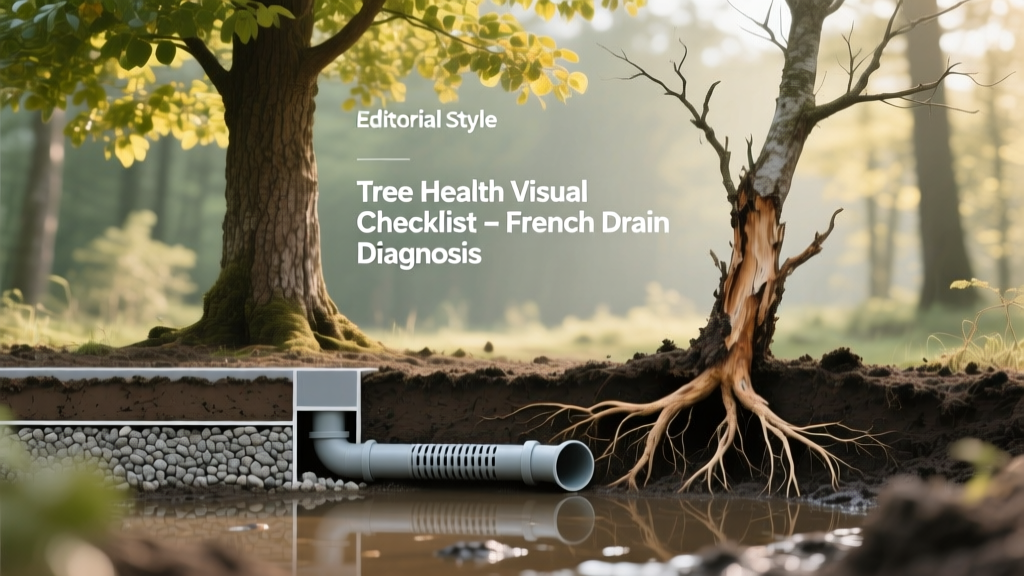
2026 Tree Health Checklist: French Drain Solutions for Root Rot
James MillerPublished
The Silent Killer: Poor Drainage and Tree Health in 2026
As we navigate the shifting climate patterns of 2026, landscape professionals and homeowners alike are witnessing an alarming increase in extreme precipitation events. These micro-bursts and prolonged heavy rains saturate soils far beyond their percolation capacity, leading to one of the most devastating silent killers of mature landscape trees: waterlogging and subsequent root rot. When soil pores remain filled with water for extended periods, oxygen is entirely displaced. Without oxygen, fine feeder roots suffocate and die, creating the perfect entry point for aggressive water-mold pathogens like Phytophthora. According to research highlighted by Penn State Extension, Phytophthora root rot thrives in heavy, poorly drained soils and can rapidly decline a seemingly healthy tree in a single wet season.
However, diagnosing a drainage issue before the tree suffers irreversible structural damage requires a trained eye. As specialists in French drain installation and landscape hydrology, we approach tree health not just from a biological perspective, but from an infrastructural one. Below is our comprehensive 2026 visual tree health inspection checklist, specifically calibrated to identify early signs of waterlogging and determine when a French drain system is required to save your valuable canopy.
The 2026 Visual Tree Health Inspection Checklist (Drainage Focus)
Performing a visual assessment requires a systematic top-to-bottom approach. When poor drainage is suspected, pay special attention to the following indicators during your walkthrough.
1. Canopy and Foliage Assessment
- Chlorosis Patterns: Look for generalized yellowing of the leaves, particularly starting in the lower canopy and moving upward. Unlike nitrogen deficiency, waterlogging-induced chlorosis often presents as a mottled, uneven yellowing.
- Undersized Leaves: Trees suffering from chronic root suffocation will produce abnormally small leaves in the spring of 2026 compared to previous years.
- Premature Defoliation: Sudden leaf drop in late spring or early summer, especially following a heavy rain event, is a primary stress response to anaerobic soil conditions.
- Wilting Despite Moisture: This is the most counterintuitive sign. Because the roots are rotting and cannot uptake water, the canopy will wilt even when the soil is completely saturated.
2. Trunk and Root Flare Inspection
- Buried Root Flare: The root flare (where the trunk widens at the base) must be visible. If the tree looks like a telephone pole planted straight into the ground, water is likely pooling against the sensitive bark, leading to basal rot.
- Weeping Cankers: Inspect the lower trunk for dark, wet, or oozing patches. These cankers indicate that the inner bark and cambium are dying due to prolonged moisture exposure and secondary pathogens.
- Fungal Fruiting Bodies: The presence of mushrooms, conks, or bracket fungi at the base of the tree or on the lower trunk is a definitive sign of advanced internal decay and root rot. The University of Minnesota Extension notes that by the time fruiting bodies appear, the structural integrity of the root system is already severely compromised.
3. Soil and Base Evaluation
- Surface Pooling: Observe the grading around the tree. Does water pool within the dripline for more than 24 hours after a rainstorm? If so, the soil percolation rate is insufficient.
- Soil Texture and Smell: Dig a small test hole 6 to 12 inches deep near the dripline. If the soil smells like sulfur or rotten eggs, it has gone anaerobic. Healthy soil should have an earthy, rich scent.
- Moss and Algae Growth: Persistent moss or algae on the soil surface or the north side of the trunk indicates constant, excessive surface moisture.
Differentiating Waterlogging from Drought Stress
One of the most common mistakes homeowners make in 2026 is treating a waterlogged tree for drought. Both conditions cause wilting, leaf scorch, and premature leaf drop. However, applying more water to a tree suffering from poor drainage will accelerate its demise. Always perform a physical soil moisture test using a soil probe or a simple trowel before initiating any irrigation schedule. If the soil is wet but the tree is wilting, you are dealing with a drainage failure, not a water deficit.
French Drain Installation: The Ultimate Remediation Strategy
When the visual checklist confirms chronic waterlogging, surface grading alone is rarely enough to save a mature tree. Subsurface water must be intercepted and redirected. This is where a professionally designed French drain system becomes critical. However, installing a French drain near a mature tree requires extreme precision to avoid severing the very roots you are trying to save.
Mapping the Critical Root Zone (CRZ)
Before any trenching begins, map the tree's Critical Root Zone. The CRZ is typically calculated as a radius of 1 to 1.5 feet for every inch of trunk diameter measured at 4.5 feet above the ground. Trenching inside the inner 25% of the CRZ should be strictly avoided. French drain lines should be routed along the periphery of the dripline or strategically threaded through secondary root zones using air-spade excavation to safely expose and tunnel under major structural roots without cutting them.
Selecting 2026 Drainage Materials
Modern French drain installations have evolved. In 2026, we prioritize high-flow, clog-resistant materials that ensure longevity without requiring frequent maintenance. Below is a comparison of the top materials used in tree-rescue drainage projects.
| Material Component | Traditional Option | 2026 Recommended Upgrade | Benefit for Tree Health |
|---|---|---|---|
| Drain Pipe | Corrugated flexible pipe (slotted) | SDR 35 Rigid PVC (perforated) | Smooth interior prevents root intrusion and silt buildup; maintains structural integrity under heavy soil loads. |
| Aggregate | Washed river gravel (3/4 inch) | Expanded Shale or Recycled Glass Aggregate | Lighter weight reduces soil compaction over roots; highly porous for superior water retention and aeration. |
| Geotextile Fabric | Woven slit-film fabric | Non-woven needle-punched geotextile (4 oz) | Allows water to pass through while blocking fine clay particles; prevents the drain field from blinding over time. |
| Root Barrier | None / Plastic sheeting | Copper-infused HDPE Root Barrier | Deflects aggressive feeder roots away from the perforations without girdling the tree's main structural roots. |
Trenching Safely and Establishing Grade
A French drain must maintain a minimum slope of 1% (a 1-inch drop for every 8 feet of run) to ensure gravity moves the water effectively toward the daylight point or dry well. When trenching near the tree, limit trench width to 12 inches to minimize root disturbance. Any roots smaller than 2 inches in diameter that must be crossed should be cleanly severed with a sterilized pruning saw, while larger roots must be tunneled under. The trench floor should be lined with the non-woven geotextile fabric, followed by a 2-inch base of expanded shale, the perforated PVC pipe (holes facing down), and then filled to within 3 inches of the surface with more aggregate. The fabric is then folded over the top to create a wrap, preventing soil infiltration.
Post-Installation Monitoring and Care
Installing the French drain is only half the battle. Following the remediation, the tree will need time to regenerate its fine feeder root network. Avoid applying high-nitrogen fertilizers in the first year, as this will force top growth that the compromised root system cannot support. Instead, focus on applying a layer of coarse, aged wood chip mulch (no more than 2 inches deep, keeping it away from the trunk) to regulate soil temperature and encourage beneficial mycorrhizal fungi. Monitor the canopy throughout the 2026 growing season; you should see a marked improvement in leaf size, color, and turgor pressure as the soil oxygen levels stabilize.
Pro Tip for 2026: Consider installing a smart soil moisture sensor network connected to your home automation system. These modern probes can alert you via smartphone if the soil moisture near the tree's root flare exceeds safe thresholds, allowing you to verify that your French drain is performing optimally during heavy storm events.
Conclusion
Tree health assessment is deeply intertwined with landscape hydrology. By utilizing this visual inspection checklist, you can catch the early, subtle signs of waterlogging and root rot before they become fatal. When poor drainage is identified as the culprit, a meticulously planned and carefully installed French drain system remains the most effective, long-term solution to restore soil aeration and save your trees. Protect your landscape investment by addressing the water beneath the surface.