Tree Care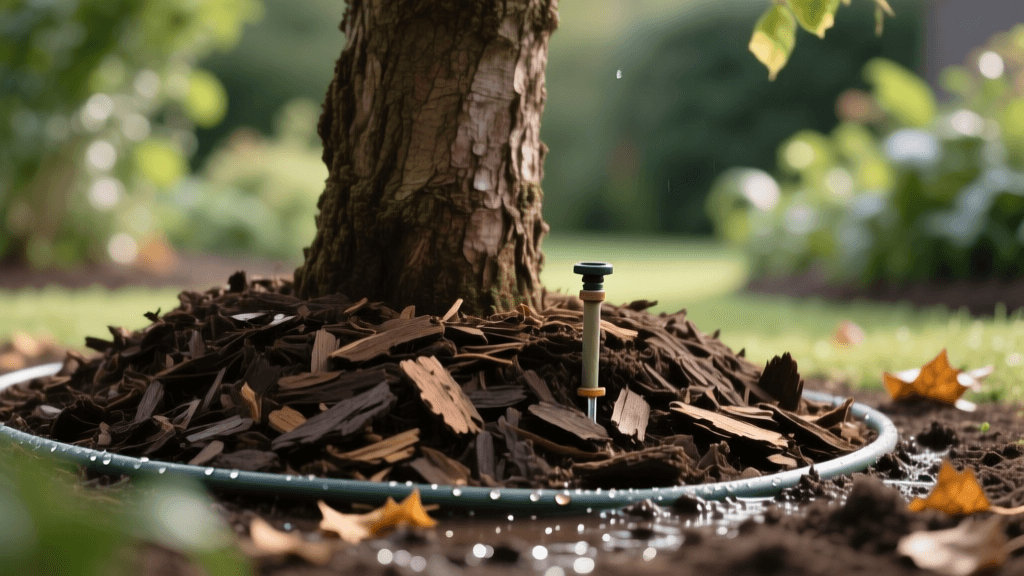
Expert Tree Mulching and Deep Root Watering Best Practices
Introduction: The Critical Link Between Mulch and Moisture
Proper tree care extends far beyond occasional pruning and seasonal fertilization. At the foundation of a thriving, drought-resistant, and structurally sound landscape tree lies a symbiotic relationship between proper mulching and deep root watering. As a senior arborist and lawn care specialist, I frequently encounter mature trees suffering from chronic decline, girdling roots, and fungal infections—all of which can be traced back to improper mulching and shallow irrigation practices. In this comprehensive guide, we will explore expert tips and best practices for mulching and deep root watering, providing you with actionable measurements, product recommendations, and science-backed strategies to ensure your trees thrive for decades.
The Dangers of 'Volcano Mulching' and How to Avoid It
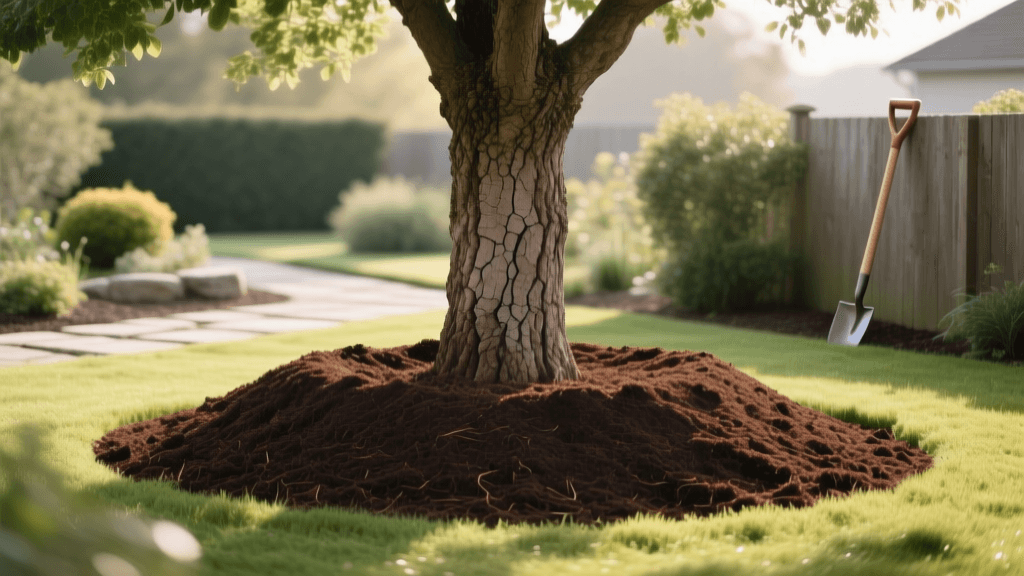
One of the most pervasive and damaging trends in suburban landscaping is 'volcano mulching.' This practice involves piling mulch high against the trunk of the tree, creating a cone-like structure that resembles a volcano. While it may look neat to the untrained eye, it is a death sentence for the tree's vascular system. According to the International Society of Arboriculture (ISA) and Purdue University Extension, piling mulch against the tree bark keeps the trunk excessively moist. Tree bark is designed to be dry and exposed to the air; constant moisture leads to bark maceration, inviting opportunistic fungal pathogens and wood-boring insects.
Furthermore, volcano mulching encourages the development of secondary root systems within the mulch layer. These adventitious roots eventually circle the trunk, leading to girdling roots that strangle the tree's primary vascular tissues, cutting off the flow of water and nutrients. To prevent this, always maintain a strict mulch-free zone around the root flare.
The 3-3-3 Rule for Expert Mulching
To achieve optimal soil moisture retention, temperature regulation, and weed suppression without suffocating the root flare, arborists universally recommend the 3-3-3 Rule:
- 3 Inches Deep: Apply a mulch layer that is no more than 3 inches deep. Excessive mulch depth restricts oxygen exchange to the feeder roots, which primarily reside in the top 12 to 18 inches of the soil profile.
- 3-Foot Radius: Extend the mulch ring to a 3-foot radius from the trunk (or ideally, out to the tree's dripline for mature specimens) to reduce competition from turfgrass.
- 3 Inches from Trunk: Keep the mulch at least 3 inches away from the actual trunk of the tree, exposing the root flare. The root flare is the critical transition zone where the trunk widens and enters the soil.
When applying mulch, use a flat-edged spade to define the outer edge of the mulch ring, but avoid digging a deep trench that severs vital lateral roots.
Choosing the Right Mulch: A Comparative Analysis
Not all mulches are created equal. Organic mulches are vastly superior to inorganic options because they decompose over time, feeding the soil food web and encouraging the growth of beneficial mycorrhizal fungi. These fungi form symbiotic relationships with tree roots, exponentially increasing their ability to absorb water and essential micronutrients. Below is a comparison chart of the most common mulching materials used in professional tree care.
| Mulch Type | Decomposition Rate | Moisture Retention | Est. Cost / Cubic Yard |
|---|---|---|---|
| Shredded Hardwood Bark | Moderate (1-2 Years) | Excellent | $30 - $45 |
| Arborist Wood Chips | Slow (2-4 Years) | Very Good | $15 - $25 (Often Free) |
| Pine Straw | Fast (6-12 Months) | Good (Allows Airflow) | $40 - $60 |
| Rubber Mulch | None (Inorganic) | Poor (Heat Retention) | $80 - $110 |
Deep Root Watering: Science and Strategy
Surface watering with a standard oscillating sprinkler is highly inefficient for established trees. Sprinklers typically only penetrate the top one to two inches of soil, encouraging shallow root growth that is highly susceptible to drought stress and lawn mower damage. Deep root watering, conversely, delivers moisture directly to the tree's primary absorption zone, which lies between 8 and 24 inches below the soil surface.
By watering deeply and infrequently, you train the tree's root system to grow downward, anchoring the tree securely and providing access to deeper soil moisture reserves during summer heatwaves. The goal is to apply enough water to moisten the soil to a depth of at least 12 inches. You can verify this by using a soil probe or a simple 12-inch steel rod; if the rod slides easily into the soil, the moisture penetration is adequate.
Calculating Water Requirements by Trunk Caliper
Determining exactly how much water your tree requires depends on its trunk caliper (the diameter of the trunk measured at 6 inches above the ground for trees up to 4 inches in diameter, or at 12 inches above the ground for larger trees). A general rule of thumb established by university forestry extensions is to provide 10 gallons of water per week for every inch of trunk caliper during the active growing season. For example, a tree with a 3-inch caliper requires approximately 30 gallons of water per week.
However, this baseline must be adjusted based on your local soil composition. Heavy clay soils retain water longer and require less frequent, slower applications to prevent runoff and anaerobic soil conditions. Sandy soils drain rapidly and may require splitting the weekly water volume into two or three separate deep watering sessions to ensure the moisture reaches the root zone before draining past it.
Expert-Recommended Tools and Products
To execute a deep root watering strategy effectively, you need the right equipment. Here are the top tools and products recommended by landscape professionals:
- Tree Watering Bags (e.g., Treegator Original): These zip-up bags hold up to 20 gallons of water and release it slowly through micro-emitters at the base over 5 to 9 hours. They are ideal for newly planted trees and cost approximately $25 to $35 per unit.
- Deep Root Feeder Probes (e.g., Ross Root Feeder): These attach to a standard garden hose and feature a metal spike that injects water directly into the subsoil. They cost around $30 and often include a chamber for injecting liquid fertilizers or mycorrhizal inoculants.
- Soaker Hoses (e.g., Gilmour Flat Soaker): For large, mature trees, arrange a soaker hose in a concentric spiral pattern starting 2 feet from the trunk and extending out to the dripline. Run the hose on low pressure for 4 to 6 hours to achieve deep saturation.
- Soil Moisture Meters: A digital soil moisture probe (costing $20 to $50) takes the guesswork out of irrigation, allowing you to measure volumetric water content at varying depths before deciding to water.
Seasonal Maintenance and Timing
Timing is just as critical as volume. The best time to deep water trees is in the early morning, between 4:00 AM and 8:00 AM. This minimizes evaporative loss and ensures the tree has adequate hydration to open its stomata and begin photosynthesis as the sun rises. Avoid watering late in the evening, as prolonged foliage moisture can encourage fungal diseases like powdery mildew and anthracnose.
In late autumn, continue deep watering deciduous trees until the ground freezes. Evergreens, in particular, require heavy autumn hydration to prevent winter desiccation, a condition where cold winds strip moisture from the needles faster than the frozen soil can replace it. Applying a fresh 2-inch layer of organic mulch in late November acts as an insulating blanket, protecting the shallow feeder roots from extreme freeze-thaw cycles that can cause frost heaving.
Authoritative Guidance and Final Thoughts
'Proper mulching and deep, infrequent watering are the two most cost-effective practices a homeowner can implement to extend the lifespan and vitality of urban trees.' — Texas A&M Forest Service
By abandoning the harmful practice of volcano mulching, adhering to the 3-3-3 rule, and investing in deep root irrigation tools, you transition from reactive lawn maintenance to proactive arboriculture. Your trees will reward your diligence with robust canopy growth, vibrant seasonal color, and an enduring presence in your landscape for generations to come.