Tree Care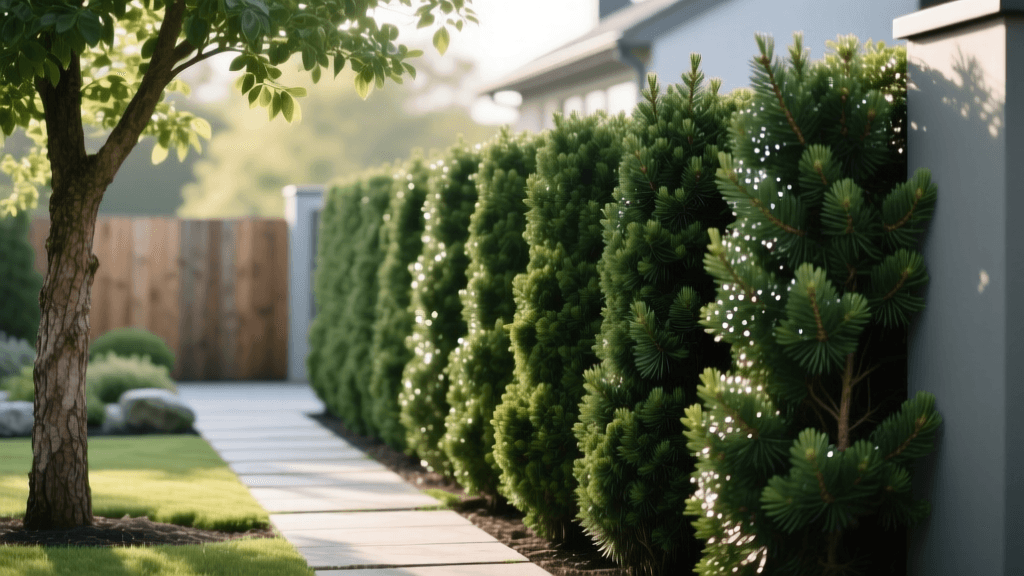
Designing a Tree Privacy Screen: Spacing, Species, and Planning
Strategic Planning for Your Tree Privacy Screen
Designing a tree privacy screen is one of the most rewarding landscape projects a homeowner can undertake. Unlike wooden fences or vinyl barriers, a living privacy screen provides year-round seclusion, acts as a natural windbreak, absorbs neighborhood noise, and enhances local biodiversity. However, a successful privacy screen requires meticulous planning, precise spacing, and the right species selection. Rushing into planting without a cohesive design strategy often leads to overcrowded trees, disease vulnerability, and costly replacements down the line.
At LawnsGuide, we recommend approaching your privacy screen as a long-term infrastructure project. This comprehensive guide will walk you through the essential design ideas, spatial planning, species selection, and planting techniques required to cultivate a lush, impenetrable green barrier.
Phase 1: Site Assessment and Spatial Planning
Before purchasing a single sapling, you must evaluate your planting site. The most common mistake in privacy screen design is ignoring the mature width of the trees and planting too close to property lines or structures.
Property Lines and Setbacks
Always verify your property boundaries with a recent land survey. Most municipal codes require a setback of at least 3 to 5 feet from the property line for large shrubs and trees. Planting directly on the line can lead to legal disputes with neighbors and may violate local ordinances. Furthermore, ensure your design keeps trees at least 10 feet away from septic drain fields and 15 feet away from building foundations to prevent root intrusion.
Call Before You Dig
Never skip this crucial step. Dial 811 (in the United States) at least three business days before digging to have local utility companies mark underground gas, water, and electrical lines. Planting deep-rooted trees over shallow utility lines is a recipe for disaster.
Phase 2: Selecting the Right Evergreen Species
For a true privacy screen, you need dense, evergreen species that retain their foliage through the winter. Monocultures (planting only one species) are highly susceptible to species-specific pests and diseases. We recommend a mixed-species approach or selecting highly resilient cultivars. Below is a comparison chart of the top evergreen trees used in privacy screen designs.
| Species | Mature Width | Growth Rate | USDA Zones | Est. Cost (6ft Sapling) |
|---|---|---|---|---|
| Thuja 'Green Giant' | 12 - 15 ft | 3 - 5 ft / year | 5 - 8 | $35 - $55 |
| Leyland Cypress | 15 - 20 ft | 3 - 4 ft / year | 6 - 10 | $40 - $65 |
| Eastern Redcedar | 8 - 15 ft | 1 - 2 ft / year | 2 - 9 | $25 - $45 |
| Nellie Stevens Holly | 10 - 15 ft | 2 - 3 ft / year | 6 - 9 | $50 - $80 |
| Emerald Green Arborvitae | 3 - 4 ft | 1 - 2 ft / year | 2 - 7 | $30 - $50 |
Design Tip: For narrow side yards, Emerald Green Arborvitae is ideal due to its tight, columnar growth habit. For expansive rural properties needing rapid coverage, the Thuja 'Green Giant' is widely considered the gold standard due to its disease resistance and rapid growth.
Phase 3: Spacing and Staggered Layouts
Proper spacing is the difference between a thriving privacy screen and a tangled, disease-ridden hedge. Trees need adequate airflow to prevent fungal pathogens like Cercospora needle blight or Seiridium canker.
The Single Row Method
If space is limited, plant trees in a single straight line. The general rule of thumb is to space trees at a distance equal to half of their mature width. For example, if a Thuja Green Giant matures at 12 feet wide, space them 6 feet apart, measured from trunk to trunk. This allows the canopies to merge seamlessly within 3 to 4 years without immediately suffocating each other.
The Double Staggered (Zig-Zag) Method
If you have a minimum of 15 to 20 feet of depth, a staggered double-row design is vastly superior. This layout mimics natural forest edges, creates a denser visual barrier, and drastically improves airflow.
- Row Spacing: Space the two rows 8 to 10 feet apart.
- Tree Spacing: Space trees 8 to 10 feet apart within each row.
- Alignment: Ensure each tree in the second row is planted directly in the gap between two trees in the first row, forming a zig-zag pattern.
Phase 4: Soil Preparation and Planting Steps
Timing is critical. The optimal time to plant your privacy screen is in early fall (September to November) or early spring (March to April). Fall planting allows the root system to establish in cool, moist soil before the stress of summer heat.
Step-by-Step Planting Guide
- Dig the Hole: Dig a hole that is 2 to 3 times wider than the root ball, but exactly the same depth. Planting too deep is the number one cause of transplant death. The root flare (where the trunk widens at the base) must sit 1 to 2 inches above the surrounding soil grade.
- Amend the Soil: If you have heavy clay soil, do not create a 'bathtub' effect by filling the hole entirely with loose potting soil. Instead, mix 20% organic compost with 80% native soil to encourage roots to expand outward.
- Apply Root Stimulator: Drench the root ball with a product like Ferti-lome Root Stimulator and Tree Transplant Solution to reduce transplant shock and promote immediate root hair growth.
- Backfill and Water: Backfill the hole, tamping down gently with your hands to remove large air pockets. Water deeply to settle the soil.
- Fertilize: Top-dress the area with Espoma Bio-tone Starter Plus organic fertilizer, which contains beneficial mycorrhizae fungi to aid in nutrient uptake.
Phase 5: Cost Breakdown for a 100-Foot Privacy Screen
Budgeting accurately is a key component of landscape planning. Below is an estimated cost breakdown for installing a 100-foot single-row privacy screen using 6-foot tall Thuja Green Giants, spaced 6 feet apart (requiring approximately 17 trees).
- Trees (17 x $45 avg): $765.00
- Soil Amendments & Compost (10 bags): $50.00
- Espoma Bio-tone Fertilizer (1 large bag): $35.00
- Ferti-lome Root Stimulator (1 gallon): $20.00
- Pine Bark Mulch (3 cubic yards): $120.00
- Drip Irrigation Kit (100 ft soaker hose + timer): $65.00
- Total Estimated Material Cost: $1,055.00
Note: Professional installation labor typically adds $50 to $100 per tree, which would increase a 100-foot screen budget by $850 to $1,700.
Phase 6: Mulching, Watering, and Long-Term Care
Once planted, your privacy screen requires a strict maintenance schedule during its first two years of establishment.
The Donut Mulching Technique
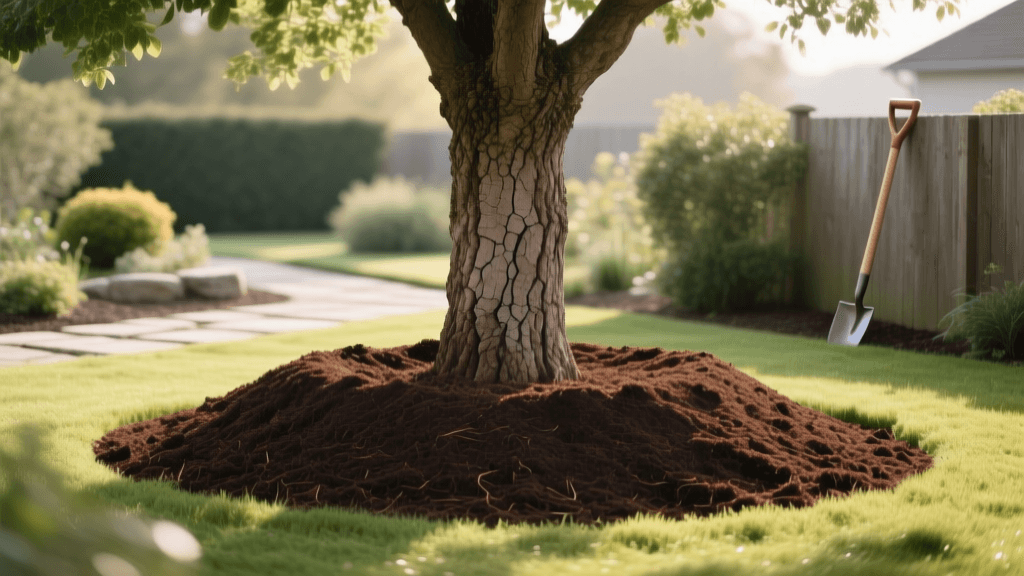
Apply a 3-inch layer of 100% natural pine bark mulch around the base of the trees to retain moisture and suppress weeds. However, never let the mulch touch the trunk. Create a 'donut' shape, leaving a 3-inch gap around the trunk to prevent bark rot and deter rodent damage. Extend the mulch ring at least 3 feet in diameter from the trunk.
Watering Schedule
Newly planted evergreens require 10 to 15 gallons of water per week during their first growing season. Installing a drip irrigation line or soaker hose woven through the privacy screen is the most efficient way to deliver deep, slow watering directly to the root zones without wetting the foliage, which can invite fungal diseases.
Expert Insights on Windbreaks and Privacy
According to the University of Florida IFAS Extension, a well-designed vegetative screen can reduce winter wind speeds by up to 50% and provide significant year-round visual seclusion when utilizing dense, multi-layered evergreen species. They emphasize that mixing species and ensuring proper mature spacing is critical to preventing the catastrophic loss of a screen to single-pathogen outbreaks.
Common Design Mistakes to Avoid
- Ignoring Sun Exposure: Most evergreens, including Arborvitae and Cypress, require full sun (at least 6 hours of direct sunlight) to maintain dense foliage. Planting them in the deep shade of larger established trees will result in sparse, leggy growth that fails to provide privacy.
- Shearing the Leaders: Never 'top' or cut the central leader (the main vertical trunk) of your evergreens in an attempt to keep them short. This ruins their natural pyramidal structure, causes multiple weak leaders to form, and invites snow-load breakage in winter.
- Neglecting Winter Burn: In northern climates, winter winds can desiccate evergreen foliage. Apply an anti-desiccant spray like Wilt-Pruf in late November to seal moisture into the needles during freezing months.
By thoughtfully planning your layout, investing in high-quality soil amendments, and selecting the appropriate species for your USDA hardiness zone, your tree privacy screen will mature into a stunning, functional, and enduring landscape feature that adds immense value to your property.