Tree Care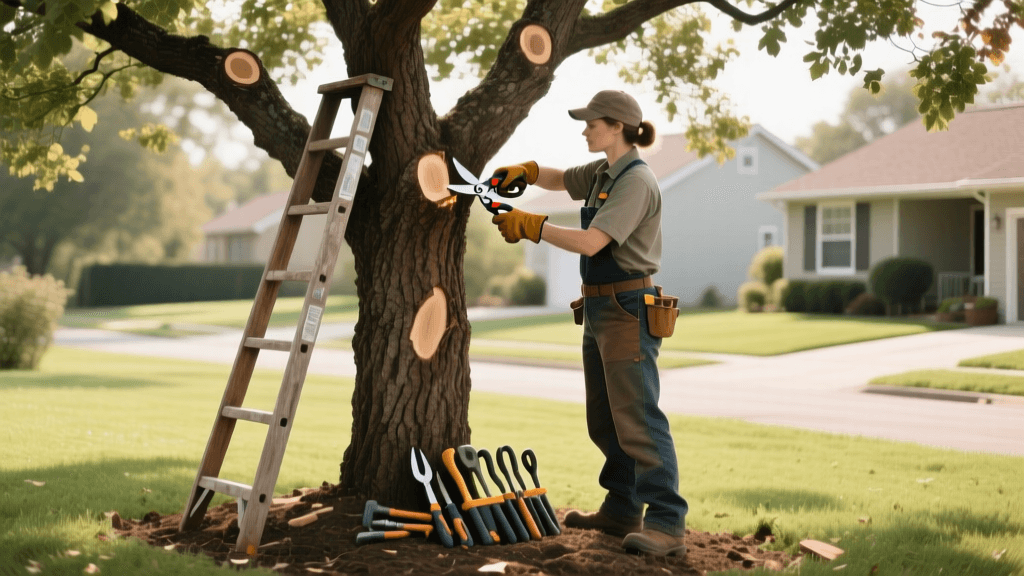
Tree Pruning and Trimming Costs: A Homeowner Budget Guide
The True Value of Professional Tree Pruning
Trees are among the most valuable assets on your property, providing shade, improving air quality, and boosting curb appeal. However, maintaining their structural integrity and aesthetic appeal requires a proactive approach to canopy management. For homeowners, budgeting for routine tree pruning and trimming is not just an aesthetic expense; it is a critical investment in property safety and long-term tree health. According to the Penn State Extension, proper pruning techniques encourage strong branch architecture, reduce the risk of storm damage, and mitigate the spread of fungal pathogens.
Yet, when it comes to hiring professional tree care services, the costs can vary wildly. A simple ornamental tree trim might cost a couple of hundred dollars, while crown reduction on a mature oak can easily exceed a thousand dollars. Understanding the variables that drive these costs is essential for homeowners looking to create an accurate annual landscaping budget without falling victim to predatory pricing or hidden fees.
Average Tree Pruning and Trimming Costs by Size
The most significant determinant of your tree trimming bill is the sheer size of the tree. Larger trees require more labor, specialized climbing equipment, and rigorous safety protocols. Below is a comprehensive breakdown of average national costs for professional pruning services based on tree height.
| Tree Category | Height Range | Average Cost Range | Typical Time Required | Crew Size |
|---|---|---|---|---|
| Small Trees | Under 30 feet | $150 - $400 | 1 - 2 Hours | 1 - 2 Arborists |
| Medium Trees | 30 - 60 feet | $400 - $850 | 2 - 4 Hours | 2 - 3 Arborists |
| Large Trees | 60 - 100 feet | $850 - $1,500+ | 4 - 8 Hours | 3 - 4 Arborists |
| Extra-Large / Hazard | Over 100 feet | $1,500 - $3,000+ | 1 - 2 Days | 4+ Arborists + Crane |
Small trees, such as Crape Myrtles, Dogwoods, or young Maples, can often be pruned using pole saws and hand pruners from the ground. Medium to large trees, like mature Red Maples or White Pines, require aerial lifts or advanced rope-and-saddle climbing techniques, which drastically increases the hourly labor rate.
5 Major Factors That Influence Your Tree Care Quote
Beyond basic height, professional arborists evaluate several site-specific variables before generating a binding estimate. If you are gathering quotes for your annual tree care budget, keep the following factors in mind.
1. Tree Species and Canopy Density
The type of tree dictates the complexity of the job. A sprawling Weeping Willow with dense, flexible branches requires vastly more time to thin and shape than a Ginkgo Biloba with a sparse, predictable canopy. Furthermore, certain species are highly susceptible to diseases if pruned at the wrong time of year. For example, Oaks must be pruned in late fall or winter to prevent the spread of Oak Wilt, which may require arborists to sanitize their tools between every single cut, adding to the labor time.
2. Proximity to Hazards and Infrastructure
Trees growing directly over your roof, wrapped around power lines, or hanging over a fenced pool require meticulous, piece-by-piece rigging. Arborists cannot simply drop large branches to the ground; they must use ropes and pulleys to lower each limb safely. This technical rigging demands highly skilled personnel and specialized gear, inherently raising the price of the service.
3. Tree Health and Structural Defects
A dead, diseased, or structurally compromised tree is a massive liability. As noted by the USDA Forest Service, trees suffering from internal decay or root rot cannot safely support the weight of a climbing arborist. If a tree is deemed too hazardous to climb, the crew must rent and operate a bucket truck or even a mobile crane, which can add $500 to $1,000 to your final invoice.
4. Accessibility and Equipment Requirements
Can a standard wood chipper and bucket truck fit through your driveway gate? If your property has narrow access points, steep slopes, or delicate landscaping that prevents heavy machinery from entering, the crew will have to haul brush manually to the street. Manual debris hauling is incredibly labor-intensive and will be reflected in your quote.
5. Geographic Location and Local Labor Rates
Tree care is a localized industry. Homeowners in high-cost-of-living urban areas or regions with strict municipal permitting requirements will pay a premium compared to those in rural or suburban settings. Additionally, demand surges after major regional storms, which can temporarily inflate local market rates.
DIY Pruning vs. Professional Arborist Services
Many homeowners attempt to offset tree care costs by tackling the pruning themselves. While light maintenance on young trees is a great DIY project, scaling up to mature canopy management carries severe financial and physical risks.
To properly prune a medium-sized tree yourself, you need commercial-grade equipment. A professional-grade bypass pruner like the Felco 2 costs around $60, while a high-quality Japanese pruning saw like the Silky Gomboy costs about $75. If you need to reach higher branches, a gas-powered pole pruner such as the Stihl HT 135 will set you back upwards of $700. Add in the cost of a climbing helmet, safety glasses, cut-resistant chaps, and a heavy-duty ladder, and your initial DIY investment easily exceeds $1,000.
More importantly, the International Society of Arboriculture (ISA) strongly advises against DIY pruning near power lines or at heights requiring ladders. A single mistake with a chainsaw or a falling limb can result in catastrophic property damage, severe personal injury, or even fatal electrocution. When budgeting for tree care, always weigh the cost of a professional crew against the potential tens of thousands of dollars in medical bills or roof repairs.
Hidden Costs to Include in Your Tree Care Budget
When reviewing estimates, ensure you are comparing apples to apples. The base price of pruning often excludes essential ancillary services. Be sure to ask your arborist about the following potential add-ons:
- Debris Haul-Away and Chipping: Some companies offer a discount if you keep the wood chips for mulch, but if you want a pristine yard, full debris removal usually adds 15% to 20% to the total cost.
- Disease Treatment and Fungicides: If the arborist identifies a fungal infection or pest infestation (like Emerald Ash Borer), budget an additional $100 to $300 per tree for trunk injections or soil drenches.
- Cabling and Bracing: For trees with weak, V-shaped branch unions, arborists may recommend installing dynamic support cables. This specialized hardware and installation typically costs $200 to $500 per cable system.
- Emergency and Weekend Surcharges: If a branch falls on your driveway during a weekend storm and requires immediate clearance, expect to pay an emergency call-out fee that can be 1.5 to 2 times the standard hourly rate.
Strategic Budgeting: How to Save Money on Tree Maintenance
You do not have to compromise on tree health to stay within your landscaping budget. By planning ahead and utilizing strategic scheduling, you can significantly reduce your out-of-pocket expenses.
Proactive, cyclical pruning is always cheaper than reactive, corrective pruning. A tree that is structurally trained in its youth will require far less expensive hazard reduction work in its maturity.
First, consider off-season scheduling. The tree care industry experiences a massive lull in late winter and early spring (typically February and March, depending on your hardiness zone). Many reputable tree service companies offer 10% to 20% discounts during these slow months to keep their crews employed. Furthermore, pruning deciduous trees while they are dormant is highly beneficial for the tree, as the lack of leaves provides the arborist with a clear view of the branch structure and reduces the risk of spreading seasonal diseases.
Second, explore neighborhood bundling. If you and your neighbors all have mature street trees that require municipal or private pruning, approach a local tree care company as a group. By guaranteeing a full day of work on a single street, the company saves on travel time, fuel, and equipment mobilization, and they will often pass those savings onto you in the form of a discounted bulk rate.
Finally, implement a three-year rotational pruning schedule. Instead of paying to prune every single tree on your property in one calendar year, divide your trees into three groups based on priority and health. Prune the most critical and hazardous trees in Year 1, the ornamental and fruit trees in Year 2, and the hardy, mature shade trees in Year 3. This rotational approach smooths out your landscaping expenses, making professional tree care a manageable line item in your annual home maintenance budget rather than a sudden, overwhelming financial burden.