Tree Care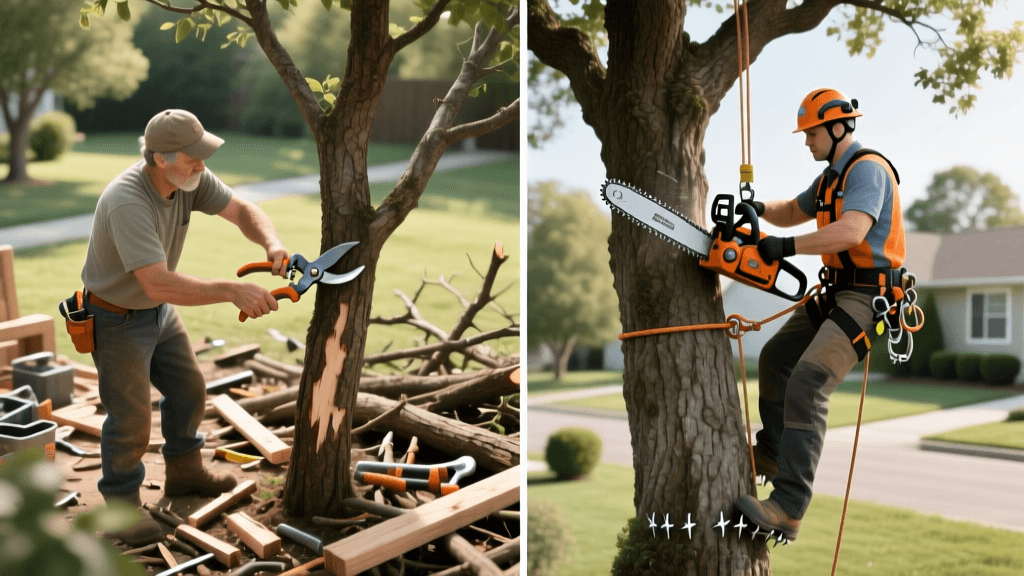
Tree Pruning Costs: DIY vs Hiring a Certified Arborist
Introduction: The Budgeting Dilemma of Tree Care
Trees are the crown jewels of any landscape, providing shade, increasing property values, and improving local air quality. However, maintaining their structural integrity and health requires regular pruning. For homeowners watching their landscaping budgets, a common dilemma arises: should you grab a ladder and a handsaw to tackle the job yourself, or is it more cost-effective to hire a professional? While the upfront cost of hiring a certified arborist might seem steep, the hidden financial risks of DIY tree pruning can quickly erode any perceived savings. In this comprehensive cost and budgeting guide, we will break down the exact expenses of both approaches, helping you make an informed, financially sound decision for your property.
The Financial Reality of DIY Tree Pruning
Many homeowners assume that DIY pruning is virtually free, requiring only a trip to the garage to grab an old pair of shears. In reality, proper tree care requires specialized equipment, safety gear, and a significant investment of your own time. Furthermore, the margin for error is slim, and mistakes can lead to costly property damage or long-term tree decline.
Essential Tool Investments
To prune trees safely and effectively without causing jagged tears to the bark, you need high-quality, sharp tools. Using dull or improper tools crushes the vascular tissue of the tree, inviting disease. Here is a breakdown of the baseline equipment required for a homeowner managing small to medium-sized trees (branches up to 3 inches in diameter):
- Professional Bypass Loppers: Brands like Fiskars Pro or Felco 200 cost between $45 and $85. Anvil loppers should be avoided for live wood as they crush the branch collar.
- Japanese Pull Saw: A high-carbon steel hand saw, such as the Silky Gomboy 240, provides surgical cuts on branches up to 4 inches thick. Expect to pay $40 to $65.
- Pole Pruner: For canopy work without a ladder, a manual or battery-powered pole saw like the Stihl HTA 50 or Husqvarna 120iTK4 is essential. These range from $150 to $350.
- Personal Protective Equipment (PPE):strong> Safety glasses, heavy-duty leather gloves, and a climbing-rated helmet are non-negotiable. Budget $75 to $120 for a basic PPE kit.
- Sanitization Supplies: Isopropyl alcohol or a 10% bleach solution to sterilize blades between trees to prevent spreading pathogens like Fire Blight or Oak Wilt. Cost: $10.
Total Initial DIY Investment: $320 to $630, plus ongoing maintenance, sharpening, and replacement costs.
The Hidden Costs of Bad Cuts and the CODIT Principle
The most expensive part of DIY pruning is not the tools; it is the potential cost of improper technique. The USDA Forest Service extensively documents the Compartmentalization of Decay in Trees (CODIT) principle. Trees do not heal wounds; they seal them. If a homeowner makes a flush cut (removing the branch collar) or leaves a massive stub, the tree cannot compartmentalize the decay. Fungi enter the vascular system, leading to internal rot.
If a prized mature shade tree develops structural rot due to improper DIY pruning, you may face the sudden death of the tree within 3 to 5 years. The cost to safely remove and grind the stump of a 60-foot oak or maple can easily exceed $2,500, entirely wiping out any money saved by skipping a professional arborist years prior.
Hiring an ISA Certified Arborist: Pricing Breakdown
When you hire an arborist certified by the International Society of Arboriculture (ISA), you are paying for expertise, precision, and liability protection. Professional tree care companies carry comprehensive liability insurance and workers' compensation, meaning if a branch falls on your roof or a neighbor's fence during the job, you are not financially responsible.
What Goes Into a Professional Quote?
Arborists do not simply charge by the hour; they calculate quotes based on risk, equipment needs, and biomass disposal. A standard pruning quote includes:
- Mobilization and Crew: A typical crew consists of a lead climbing arborist, a ground specialist, and a CDL-licensed chipper operator. Hourly crew rates average $150 to $250 per hour.
- Equipment Usage: Use of bucket trucks, climbing rigging, and heavy-duty wood chippers.
- Biomass Disposal: Hauling away heavy, wet wood and chipping brush incurs dump fees and fuel costs, which are baked into the estimate.
- Crown Cleaning and Thinning: Professionals follow ANSI A300 pruning standards, selectively removing dead, diseased, and crossing branches while maintaining the tree's natural architecture.
Average Costs by Tree Size
According to industry data and national landscaping averages, here is what you can expect to budget for professional crown cleaning and structural pruning:
- Small Trees (Under 25 feet): $150 to $350. Examples: Dogwood, Redbud, young Maples.
- Medium Trees (25 to 50 feet): $400 to $800. Examples: Birch, Holly, medium Pines.
- Large/Mature Trees (Over 50 feet): $800 to $1,800+. Examples: Mature Oaks, Sycamores, Ash.
Cost Comparison: DIY vs. Professional Arborist
To visualize the financial impact of both routes, consider the following comparison chart for pruning three medium-sized ornamental trees (approx. 30 feet tall) in a suburban yard.
| Cost Factor | DIY Approach | Certified Arborist |
|---|---|---|
| Equipment & PPE | $350 (One-time purchase) | $0 (Included in service) |
| Labor & Time | 12+ hours (Your weekend) | 3 hours (Expert crew) |
| Debris Removal | $75 (Municipal yard waste bags/fees) | $0 (Chipped and hauled) |
| Liability Insurance | $0 (High personal financial risk) | Included (Full coverage) |
| Long-Term Health Risk | High (Risk of CODIT failure) | Minimal (ANSI A300 standards) |
| Estimated Total | $425 + 12 Hours Labor | $650 (Turnkey Service) |
A 5-Year Tree Care Budgeting Timeline
Smart homeowners view tree care as a long-term capital investment in their real estate. Instead of reactive spending, adopt this proactive 5-year budgeting schedule to keep your trees healthy and your annual expenses predictable.
Year 1: Baseline Assessment and Structural Pruning
Budget: $300 - $500
Hire an ISA Certified Arborist for a comprehensive risk assessment and structural pruning of young trees. Correcting co-dominant stems (V-shaped crotches) early in a tree's life prevents catastrophic splitting during storms a decade later. This is the highest ROI spending you can do in tree care.
Year 2: Root Zone Management and Mulching
Budget: $100 - $200
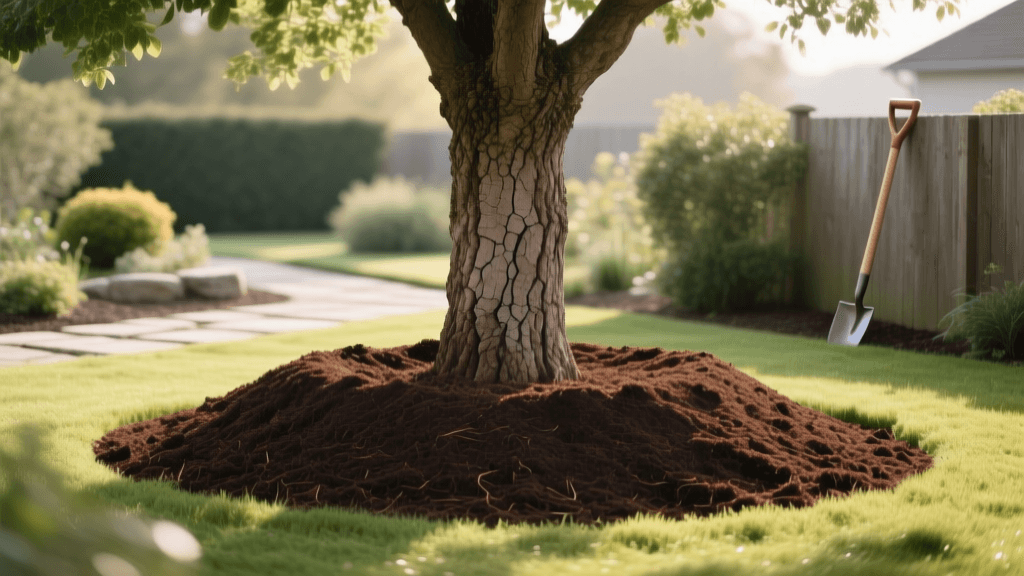
Skip the pruning and focus on the soil. Purchase high-quality, double-shredded hardwood mulch. Apply a 2 to 3-inch layer in a wide ring around the drip line, keeping it strictly away from the trunk flare to prevent rot. Avoid 'volcano mulching' at all costs.
Year 3: Crown Cleaning and Deadwood Removal
Budget: $400 - $700
By year three, interior deadwood may begin to accumulate in mature canopies. Hire a professional crew to perform a crown cleaning, removing dead, diseased, and rubbing branches. This allows wind to pass through the canopy safely and reduces the weight on heavy lateral limbs.
Year 4: Deep Root Fertilization (If Needed)
Budget: $200 - $400
Based on a soil test from your local university extension office, budget for targeted deep root fertilization or mycorrhizal inoculations if your trees are showing signs of chlorosis or stunted growth. Do not use generic surface lawn fertilizers, as they often lack the specific micronutrients trees require and can burn surface roots.
Year 5: Clearance Pruning and Infrastructure Protection
Budget: $500 - $900
Prune branches that are encroaching on your roof, gutters, or power lines. Never attempt to prune branches within 10 feet of utility lines yourself; the risk of fatal electrocution is severe. Utilities will often trim for free, but they use brutal 'directional pruning' methods that ruin the tree's aesthetics. Paying a pro ensures the tree is cleared safely while maintaining its visual appeal.
When DIY is a Liability: Red Flags to Watch For
While you can safely manage the pruning of small, young ornamental trees and shrubs under 15 feet tall, certain scenarios demand professional intervention. Budget for an arborist immediately if you encounter any of the following:
- Proximity to Power Lines: The Occupational Safety and Health Administration (OSHA) mandates strict clearance distances for working near energized lines. Only line-clearance certified arborists should handle these branches.
- Storm Damage and Hanging Limbs: 'Widowmakers' (broken branches caught in the canopy) are under immense, unpredictable tension. A single wrong cut can cause the branch to snap back with lethal force.
- Species-Specific Disease Timing: Trees like Oaks are highly susceptible to Oak Wilt. Pruning must be strictly timed for late fall or winter dormancy. An arborist knows the exact phenological timing to prevent beetle-borne infections.
- Large Limb Removal: Any branch thicker than 4 inches requires a precise three-cut method and rigging ropes to lower it safely. Dropping heavy wood can shatter your patio, damage your lawn's soil structure, or cause severe injury.
Conclusion: Investing in Canopy Longevity
When evaluating the cost of tree pruning, it is crucial to look beyond the initial invoice. DIY pruning offers minor upfront savings for small, low-risk trees, provided you invest in the correct tools and educate yourself on the CODIT principle. However, for mature trees, complex canopies, and long-term landscape preservation, hiring an ISA Certified Arborist is a budgeting necessity. By allocating a dedicated annual fund for professional tree care, you protect your property from storm damage, avoid catastrophic tree removal bills, and ensure your landscape remains a thriving, valuable asset for decades to come.