Tree Care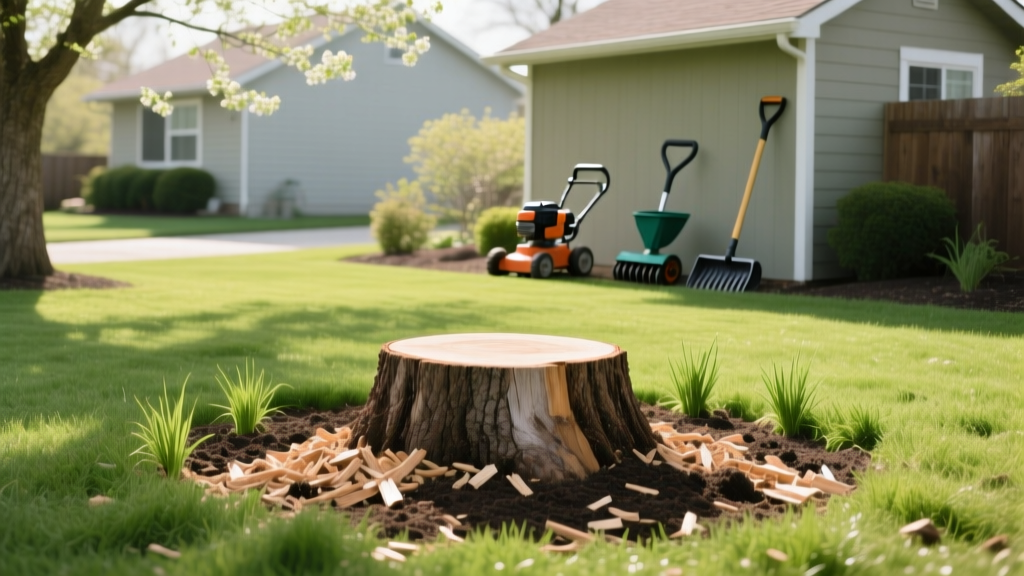
2026 Tree Removal Cost Factors and Stump Grinding Guide
Sarah ChenPublished
Introduction: The True Cost of Tree Removal and Lawn Recovery
When a hazardous or dying tree finally needs to come down, most homeowners focus entirely on the arborist's invoice. However, from a lawn care perspective, tree removal is a massive soil-disturbance event. In 2026, understanding the complete tree removal cost estimate—including stump grinding and the subsequent lawn restoration—is critical for protecting your landscape investment. Heavy machinery compacts the soil, and stump grinding leaves behind a cellulose-heavy debris field that can ruin your turf if not managed properly. This guide breaks down the exact cost factors for tree and stump removal in 2026 and explains why a strategic aeration and seeding plan is the mandatory next step for your lawn.
2026 Tree Removal Cost Factors
The national average for tree removal in 2026 ranges from $600 to $1,800, but your specific estimate depends on several vital variables. According to the International Society of Arboriculture (ISA), hiring a certified professional ensures the job is done safely, but their pricing reflects specialized equipment, insurance, and labor. Here are the primary factors that dictate your removal estimate:
- Tree Height and Canopy Spread: Taller trees require more complex rigging, sectional dismantling, and time.
- Trunk Diameter (DBH): Diameter at breast height directly impacts the cutting time and the size of the woodchips produced.
- Location and Access: Trees near power lines, roofs, or fences require meticulous rigging. If a crane is needed due to poor access, expect a 20% to 30% premium.
- Tree Health and Lean: Dead, brittle trees or those with a severe lean toward structures are highly unpredictable, increasing the hazard pay and overall cost.
Estimated Tree Removal Costs by Size (2026 Pricing)
| Tree Size Category | Height Range | Average 2026 Cost |
|---|---|---|
| Small | Under 30 feet | $250 - $550 |
| Medium | 30 to 60 feet | $600 - $1,200 |
| Large | 60 to 90 feet | $1,300 - $2,400 |
| Extra Large | Over 90 feet | $2,500 - $5,500+ |
Stump Grinding: Is It Included in the Estimate?
One of the most common misunderstandings in tree care is assuming stump grinding is part of the standard removal package. In almost all 2026 contracts, stump grinding is an add-on service. Leaving a stump invites pests, fungal diseases, and unwanted sucker growth. As noted by University of Minnesota Extension, removing the stump and root flare is essential for reclaiming the space for future landscaping or turf.
Stump grinding costs are typically calculated by the inch of diameter. In 2026, expect to pay between $3.50 and $5.50 per inch of stump diameter. A standard 24-inch stump will add roughly $85 to $135 to your bill. However, the hidden cost of stump grinding lies in what it does to your soil. The grinder pulverizes the wood and mixes it deeply with the native topsoil, creating a massive void filled with a high-carbon woodchip and dirt mixture.
The Aftermath: Why Your Soil Demands Aeration and Seeding
Once the arborists leave, you are left with a severely impacted landscape zone. From an aeration and seeding perspective, the removal site is a disaster zone that requires immediate intervention for three reasons:
- Severe Soil Compaction: The weight of chippers, stump grinders, and foot traffic compresses the soil pores, suffocating the surrounding grass roots and preventing water infiltration.
- Nitrogen Tie-Up: The woodchips left behind by the stump grinder are extremely high in carbon. As soil microbes break down this carbon, they consume all available nitrogen in the soil, starving any existing or new grass.
- Canopy Shock: The surrounding turf was likely adapted to shade. With the tree gone, the area is suddenly exposed to full, direct sunlight, requiring a transition to a sun-tolerant grass variety.
Step-by-Step Lawn Recovery: Aeration and Seeding Strategies
To restore the lawn where the tree once stood, you must follow a precise renovation protocol. Skipping these steps will result in a sunken, yellow, weed-infested patch of dirt.
1. Debris Management and Void Filling
Do not simply rake the stump grindings flat and throw seed on top. The woodchips will decompose and cause the ground to sink627sink over the next two years. Dig out the top 4 to 6 inches of the woodchip-heavy soil. Replace it with a high-quality, screened topsoil blended with compost. Mound the new soil slightly above grade to account for natural settling.
2. Core Aeration for the Surrounding Zone
The heavy equipment used during removal compacts the soil in a 15-foot radius around the stump. According to Penn State Extension, core aeration is the most effective way to relieve this compaction. Rent a walk-behind core aerator or hire a local lawn service to pull 3-inch deep soil plugs across the entire work zone. This allows oxygen, water, and nutrients to reach the stressed roots of the surviving turf.
3. Counteracting Nitrogen Depletion
Because any remaining woodchips will cause nitrogen tie-up, you must apply a high-nitrogen starter fertilizer before seeding. Look for a 2026 formulation with a high first number, such as a 24-25-4 NPK ratio, preferably with a portion of slow-release nitrogen. This feeds both the new grass seedlings and the soil microbes breaking down the residual wood debris.
4. Overseeding with Sun-Tolerant Blends
The microclimate has changed from shade to full sun. You must overseed the bare soil and the aerated surrounding area with a drought-tolerant, full-sun grass blend. Turf-Type Tall Fescue (TTTF) mixed with 10% Kentucky Bluegrass is the gold standard for 2026 lawn renovations in transitional and northern climate zones. Apply seed at a rate of 6 to 8 pounds per 1,000 square feet for bare dirt repair, and 3 to 4 pounds for overseeding the aerated perimeter.
2026 Cost Breakdown: Removal vs. Lawn Restoration
When budgeting for a tree removal project, homeowners must factor in the lawn care restoration costs to avoid surprise expenses. Below is a comparative look at the arborist costs versus the turf rehabilitation costs for an average medium-sized tree project.
| Service Phase | Specific Task | Estimated 2026 Cost | |||||||||
|---|---|---|---|---|---|---|---|---|---|---|---|
| Arborist Services | Medium Tree Removal (30-60 ft) | $6 the arborist's invoice. However, from a lawn care perspective, tree removal is a massive soil-disturbance event. In 2026, understanding the complete tree removal cost estimate—including stump grinding and the subsequent lawn restoration—is critical for protecting your landscape investment. Heavy machinery compacts the soil, and stump grinding leaves behind a cellulose-heavy debris field that can ruin your turf if not managed properly. This guide breaks down the exact cost factors for tree and stump removal in 2026 and explains why a strategic aeration and seeding plan is the mandatory next step for your lawn.
2026 Tree Removal Cost FactorsThe national average for tree removal in 2026 ranges from $600 to $1,800, but your specific estimate depends on several vital variables. According to the International Society of Arboriculture (ISA), hiring a certified professional ensures the job is done safely, but their pricing reflects specialized equipment, insurance, and labor. Here are the primary factors that dictate your removal estimate:
Estimated Tree Removal Costs by Size (2026 Pricing)
|
