Tree Care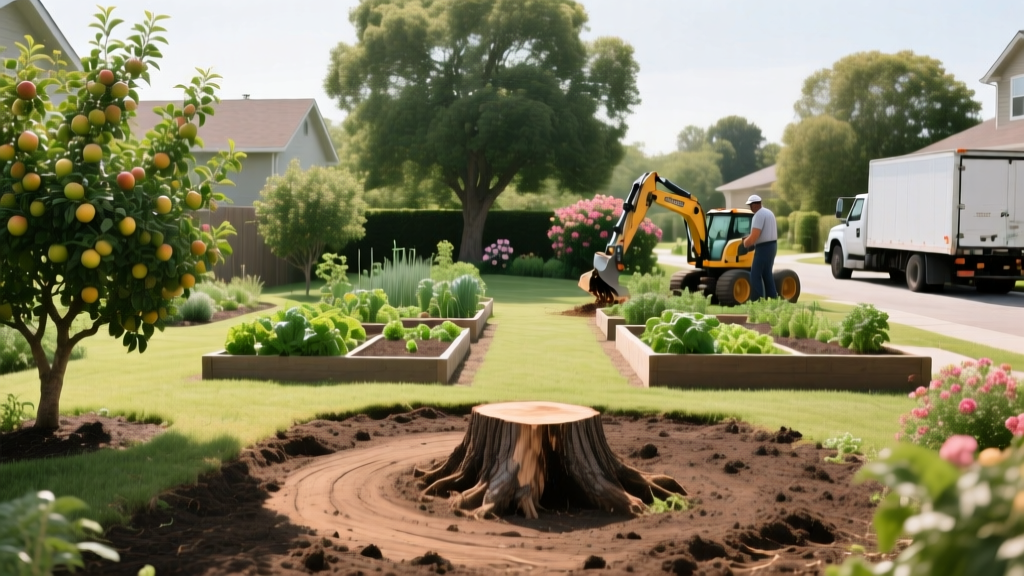
2026 Tree Removal & Stump Grinding Costs For Edible Yards
Anna KowalskiPublished
Transforming Your Yard: Why Remove Trees for Foodscaping in 2026?
As edible landscaping and foodscaping continue to dominate home garden trends in 2026, homeowners are increasingly rethinking their yard layouts to maximize food production. Whether you are establishing a new permaculture food forest, expanding your raised vegetable beds, or planting a heritage apple orchard, you may quickly realize that existing ornamental or diseased trees are standing in your way. Removing a tree in an edible landscape requires a delicate balance. You must clear the space and eliminate the stump while fiercely protecting the surrounding soil biology that your food crops rely on to thrive.
Understanding the costs and logistical factors of tree removal and stump grinding is essential for any foodscape renovation. In 2026, pricing has shifted due to advancements in low-impact removal equipment and a growing demand for organic soil preservation techniques. This comprehensive guide breaks down the exact cost factors, stump grinding necessities, and soil protection strategies you need to know before bringing an arborist into your edible yard.
2026 Tree Removal Cost Factors for Edible Landscapes
The cost of removing a tree in 2026 is not a flat rate; it is a highly variable estimate based on the tree's physical characteristics and its proximity to your edible infrastructure. When an arborist evaluates your property, they will consider several critical factors that directly impact the final invoice.
- Tree Size and Species: Larger trees with dense wood (like mature oaks or hickories) require more labor, heavier machinery, and increased disposal fees. Fast-growing, softer woods (like silver maples or poplars) are generally less expensive to dismantle.
- Proximity to Edible Infrastructure: If the tree is leaning over your greenhouse, raised cedar beds, or intricate drip irrigation lines, the arborist must use meticulous rigging techniques to lower branches safely. This precision work increases the hourly labor cost.
- Canopy Spread and Accessibility: Can a standard wood chipper and skid steer access the tree, or must the crew manually haul brush through your berry patches? Limited access means more manual labor, driving up the price.
- Tree Health and Stability: Dead or severely diseased trees pose a hazard to the crew and your property. While dead wood is softer, the unpredictability of falling limbs often requires the use of cranes or specialized climbing gear, which adds a premium to the 2026 market rate.
Average Tree Removal Costs in 2026
Below is a structured breakdown of what you can expect to pay for professional tree removal in 2026, excluding stump grinding.
| Tree Size Category | Approximate Height | Estimated Removal Cost (2026) |
|---|---|---|
| Small Trees | Under 30 feet | $250 - $550 |
| Medium Trees | 30 to 60 feet | $600 - $1,200 |
| Large Trees | 60 to 100 feet | $1,300 - $2,800 |
| Extra-Large / Hazardous | Over 100 feet | $3,000 - $5,500+ |
Stump Grinding: An Absolute Necessity for Foodscaping
When clearing land for an edible garden, leaving the stump behind is simply not an option. A lingering stump and its extensive root system will compete with your new fruit trees or perennial crops for water and nutrients. Furthermore, decaying stumps can harbor fungal pathogens and pests that may eventually spread to your prized edibles.
According to the University of Minnesota Extension, mechanical stump grinding is the most effective way to remove the root flare and major lateral roots without the need for excessive chemical intervention. In 2026, stump grinding costs are typically calculated by the diameter of the stump in inches.
Stump Grinding vs. Chemical Removal: The Edible Safety Perspective
Many homeowners consider chemical stump removers to save money, but in an edible landscape, this is a catastrophic mistake. Chemical removers primarily consist of potassium nitrate. While they accelerate decay, they drastically alter soil salinity and introduce toxic compounds that can persist in the soil food web, rendering the ground unsafe for root vegetables and leafy greens for years.
| Removal Method | 2026 Cost Estimate | Timeframe | Edible Landscape Safety |
|---|---|---|---|
| Mechanical Stump Grinding | $4 - $7 per inch of diameter | 1 - 3 hours | High (Safe for immediate replanting) |
| Chemical Stump Removers | $15 - $30 per bottle | 6 - 12 months | Extremely Low (Toxic to soil biology) |
| Manual Root Excavation | $150+ per hour (Labor) | 1 - 3 days | High (Preserves soil structure) |
For foodscaping, mechanical grinding is the gold standard. Modern 2026 tracked stump grinders exert significantly lower ground pressure (PSI) than older wheeled models, meaning they can navigate your yard without severely compacting the soil where you plan to plant sensitive crops.
Protecting Your Edible Soil During the Removal Process
The biggest hidden cost of tree removal in an edible landscape is soil remediation. Heavy machinery like skid steers and stump grinders can cause severe soil compaction. Compacted soil lacks the necessary pore space for oxygen and water infiltration, which will stunt the growth of future taproot crops like carrots, parsnips, and daikon radishes.
To protect your foodscape, insist that your tree care company uses ground protection mats (like AlturnaMATS) when driving machinery over your lawn or future garden beds. Additionally, ensure the crew does not mix the resulting stump grindings (woodchips and dirt) directly into your topsoil. Fresh woodchips tied up in the soil will temporarily deplete nitrogen levels as they decompose, starving your newly planted edibles. Instead, have the crew pile the grindings in a designated area to compost separately.
Reusing Debris: Hugelkultur and Food Forest Pathways
One of the greatest advantages of managing an edible landscape is the ability to close the nutrient loop. Rather than paying a premium hauling fee to have the tree debris taken to a landfill, repurpose it on-site. The larger logs can be used to construct hugelkultur mounds—raised beds built over decaying wood that act as massive moisture sponges, perfect for growing thirsty crops like tomatoes, squash, and melons during dry summer months.
The smaller branches and chipped wood are invaluable for mulching. As highlighted by the Oregon State University Extension, applying arborist woodchips around woody ornamentals and fruit trees helps regulate soil temperature, retain moisture, and suppress weeds. In a permaculture food forest, these chips are essential for creating fungal-dominant pathways that feed the mycorrhizal networks connected to your fruit and nut trees.
Replanting Your Foodscape After Removal
Once the tree is gone and the stump is ground down to at least 12 to 18 inches below the surface, you are ready to replant. However, the soil left behind by a mature tree is often depleted of specific micronutrients. Before planting your new edible crops, conduct a comprehensive soil test to determine your pH and NPK (Nitrogen, Phosphorus, Potassium) levels.
If you are planting a new fruit tree in the exact spot where the old stump was removed, you must address the issue of "replant disease" or specific replant disorder. This occurs when soil-borne pathogens from the previous tree's roots attack the new, vulnerable sapling. To combat this in 2026, organic foodscape managers recommend amending the planting hole with high-quality, inoculated compost and introducing specialized mycorrhizal fungi to give the new tree a competitive biological advantage.
For more guidance on establishing new trees in your edible landscape, the Arbor Day Foundation offers excellent, up-to-date resources on proper planting depths and early-care watering schedules to ensure your new food-producing trees establish deep, resilient root systems.
Final Thoughts on Budgeting for Foodscape Renovations
Removing a tree to make way for an edible garden is an investment in your property's long-term yield and biodiversity. When budgeting for your 2026 foodscape renovation, always allocate an extra 15% to 20% of the estimated tree removal cost for soil amendment, stump grinding, and debris management. By prioritizing soil health, avoiding toxic chemical removers, and repurposing organic matter, you ensure that the ground left behind is perfectly primed to produce a bountiful, organic harvest for decades to come.
