Tree Care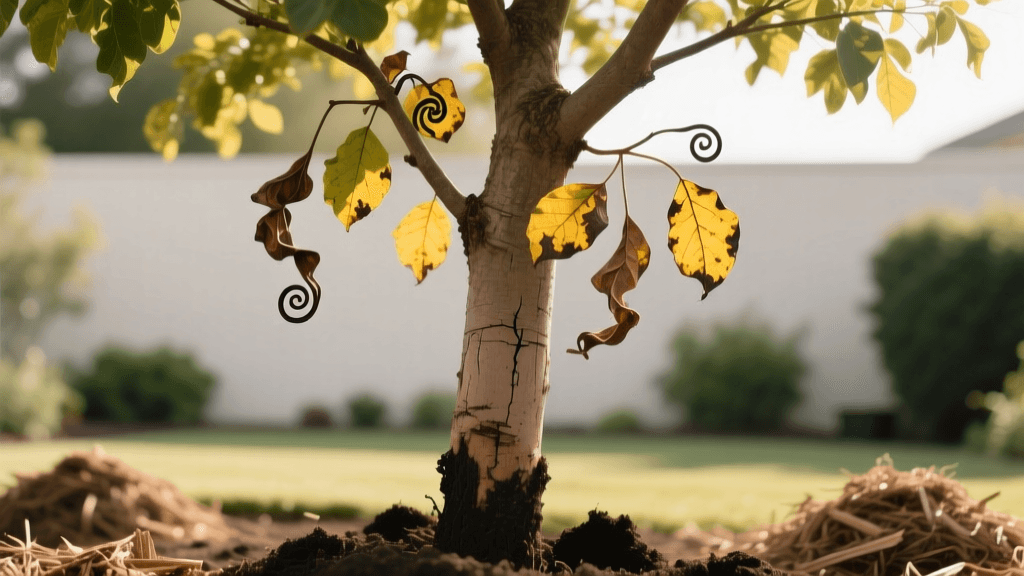
How to Diagnose and Treat Tree Transplant Shock Fast
Understanding Tree Transplant Shock
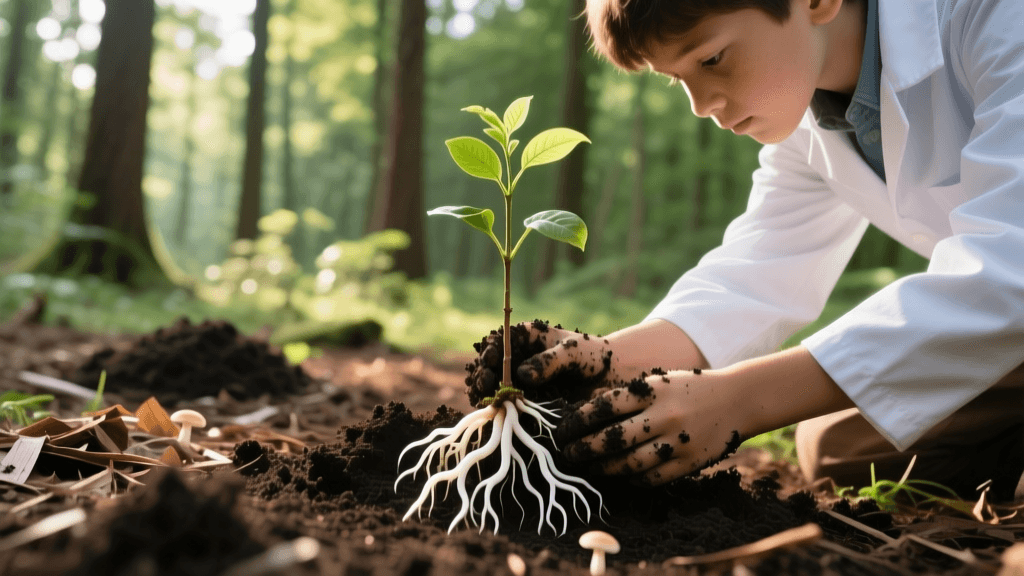
Transplant shock is a complex physiological condition that occurs when a tree is moved from one location to another. Whether you are relocating a mature specimen from a nursery or transplanting a wild sapling, the physical disruption of the root system triggers a cascade of stress responses. According to experts at the Penn State Extension, a newly transplanted tree can lose up to 90 percent of its root system during the digging and moving process. This massive loss of fine, water-absorbing feeder roots leaves the tree unable to support its existing canopy, resulting in visible distress above ground.
The primary goal of troubleshooting transplant shock is to minimize moisture loss while encouraging rapid root regeneration. If left untreated, severe transplant shock can lead to secondary pest invasions, fungal diseases, and ultimately, tree mortality. By understanding the biological mechanisms at play and implementing a structured recovery protocol, homeowners and landscapers can drastically improve survival rates.
The Science of Root Loss and Canopy Stress
When a tree is dug up, the structural roots (which provide stability) are often severed, but the most critical loss is the fine root hairs. These microscopic structures are responsible for the vast majority of water and nutrient uptake. Without them, the tree's vascular system cannot pull sufficient moisture to the leaves, especially during hot or windy conditions. The tree responds by closing its stomata to conserve water, which halts photosynthesis and starves the root system of the carbohydrates it needs to grow new tissue. Breaking this negative feedback loop requires precise environmental manipulation and targeted horticultural care.
Diagnostic Chart: Transplant Shock vs. Other Issues
Before applying treatments, it is crucial to accurately diagnose the problem. Transplant shock is frequently misidentified as overwatering, drought stress, or pest damage. Use the following diagnostic table to isolate the root cause of your tree's decline.
| Symptom | Transplant Shock | Overwatering / Root Rot | Pest Infestation |
|---|---|---|---|
| Leaf Wilting | Dry, crispy edges; leaves curl inward during peak heat | Yellow, mushy leaves that drop easily; foul soil odor | Localized wilting on specific branches; visible webbing or bore holes |
| Leaf Color | Premature autumn coloration; marginal leaf scorch (browning edges) | Uniform chlorosis (yellowing) starting at the inner canopy | Stippling, bronze discoloration, or skeletonized leaf tissue |
| Growth Habit | Stunted terminal growth; delayed spring bud break | Dieback starting from the root collar upward | Presence of frass (sawdust-like debris) or sap weeping from bark |
| Soil Moisture | Soil may be adequately moist, but roots cannot absorb it | Soil is constantly saturated; poor drainage | Soil moisture is generally normal |
Step-by-Step Treatment and Recovery Plan
Once you have confirmed that your tree is suffering from transplant shock, immediate intervention is required. The Morton Arboretum emphasizes that patience and consistent, measured care are the most effective tools for recovery.
1. Precision Watering Techniques
The most common mistake homeowners make is either underwatering or drowning the root ball. Because the root ball soil often has a different texture than the surrounding native soil, water may not transfer evenly between the two zones. You must water the root ball directly.
- The Caliper Rule: Apply 1 to 1.5 gallons of water per inch of trunk caliper (measured 6 inches above the soil line) per watering session. For a 2-inch caliper tree, this means 2 to 3 gallons per session.
- Frequency: Water deeply 2 to 3 times per week during the first growing season, adjusting for rainfall.
- Tools: Use a soil moisture probe or a simple 6-inch steel screwdriver. If you cannot easily push the screwdriver into the root ball soil, it is time to water. Avoid relying on surface-level moisture meters, which only read the top inch of soil.
2. Strategic Mulching Applications
Mulch acts as an insulating blanket, regulating soil temperature and retaining critical moisture. However, improper mulching can suffocate roots and invite rot.
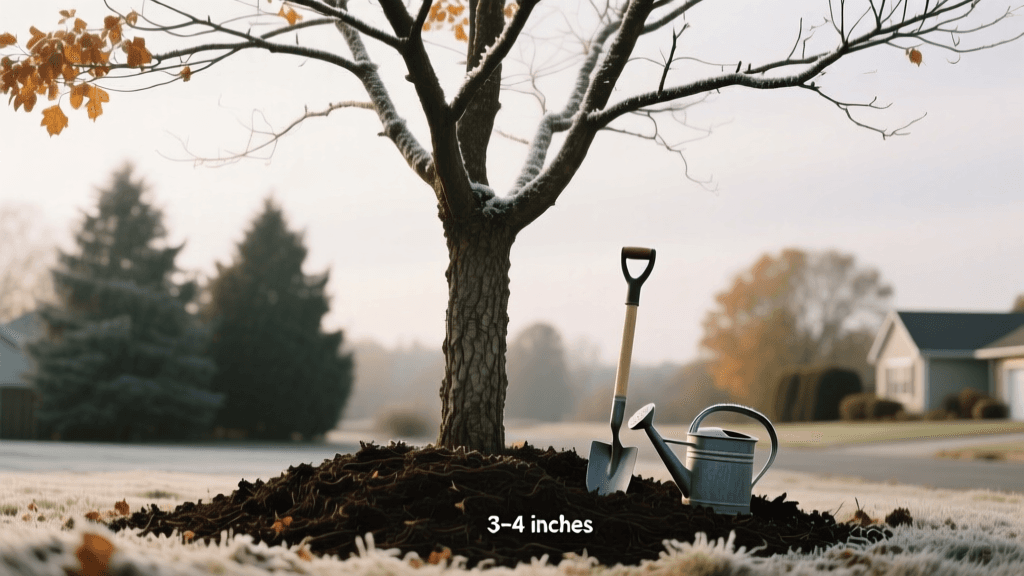
- Measurements: Apply a 2 to 4-inch layer of organic hardwood mulch in a 3-foot radius around the tree.
- The Donut Method: Keep the mulch at least 3 inches away from the trunk flare. 'Volcano mulching' (piling mulch against the bark) traps moisture against the cambium layer, leading to fatal fungal infections and girdling roots.
- Cost & Materials: Premium shredded hardwood mulch typically costs $30 to $45 per cubic yard. Avoid using dyed mulches or rubber mulch, as they do not break down to improve soil biology.
3. Root Stimulants and Soil Biology
While high-nitrogen fertilizers should be strictly avoided during the first year (as they force top growth at the expense of root development), biological soil amendments can accelerate recovery.
- Mycorrhizal Fungi: Products containing Endo and Ectomycorrhizal fungi (such as MycoApply or Espoma Bio-tone Starter Plus) form symbiotic relationships with the damaged root system, effectively acting as artificial root hairs to expand the water-absorption zone.
- Vitamin B1 and Rooting Hormones: Liquid root stimulators containing Indole-3-butyric acid (IBA) and Vitamin B1 (like SuperThrive) can reduce transplant stress and encourage lateral root branching. Apply at a rate of 1/4 teaspoon per gallon of water during your initial deep watering.
The Pruning Myth: Do Not Compensate for Root Loss
Historically, arborists recommended pruning up to 30 percent of a tree's canopy at the time of planting to 'balance' the top growth with the reduced root system. Modern research, including guidelines published by the University of Minnesota Extension, has thoroughly debunked this practice. Pruning removes the very leaves the tree needs to produce carbohydrates for root regeneration. Furthermore, pruning wounds trigger the release of growth-suppressing hormones that can stall recovery. Only prune dead, diseased, or structurally compromised branches during the first year of transplant shock.
Managing Environmental Stressors
A tree in transplant shock is highly vulnerable to secondary environmental stressors. Protect your investment by addressing the following variables:
- Wind Desiccation: For evergreens and thin-barked species, harsh winds can strip moisture from the foliage faster than the damaged roots can replace it. Erect a temporary burlap windbreak on the windward side of the tree during the first winter.
- Sunscald: Thin-barked trees like maples, ash, and fruit trees are prone to sunscald, where winter sun warms the bark, followed by a sudden freeze that kills the cambium tissue. Wrap the lower trunk with commercial tree wrap or white plastic guards from Thanksgiving until Easter.
- Weed Competition: Grass roots are aggressive and will steal water and nutrients from your recovering tree. Maintain a grass-free zone under the entire mulch ring. Use a glyphosate-free, contact herbicide or manual weeding to keep the area clear without damaging the tree's shallow surface roots.
The Recovery Timeline: Setting Realistic Expectations
Recovering from transplant shock is a marathon, not a sprint. The general horticultural rule of thumb is that a tree requires one full year of recovery for every inch of trunk caliper. Therefore, a tree with a 3-inch caliper will take approximately three years to fully re-establish its root system and exit the transplant shock phase. During this period, the tree may exhibit reduced vertical growth, smaller leaf sizes, and early autumn coloration. This is a normal survival mechanism. By maintaining strict adherence to the watering, mulching, and soil biology protocols outlined above, you provide the tree with the stable environment it needs to rebuild its subterranean infrastructure and thrive for decades to come.