Tree Care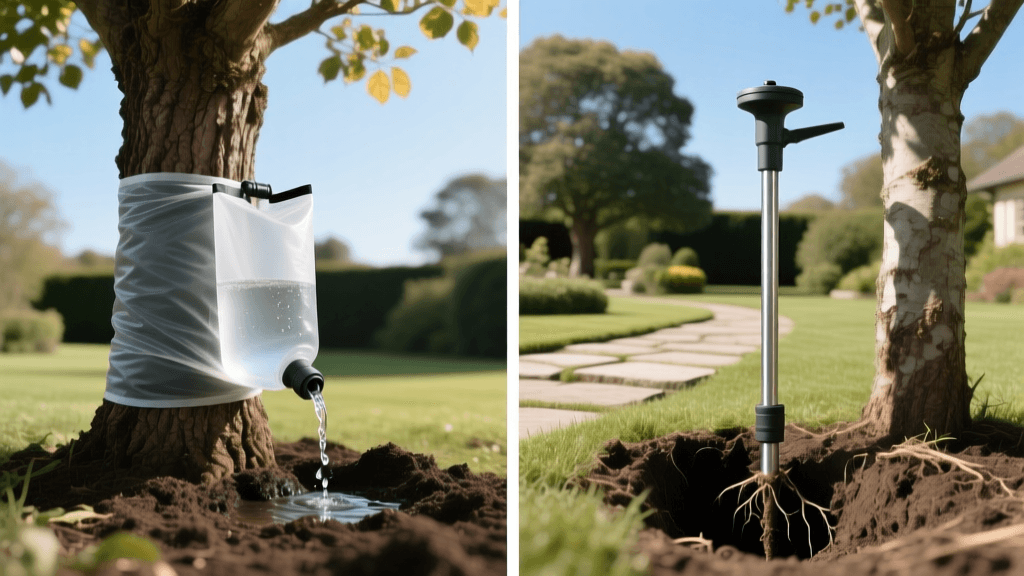
Tree Watering Bags vs Deep Root Probes: Which Is Best?
The Science of Tree Hydration: Why Surface Sprinklers Fail
Watering trees seems like a straightforward task, but relying on standard lawn sprinklers is one of the most common mistakes homeowners make. Turfgrass requires frequent, shallow watering, whereas trees need deep, infrequent hydration to encourage robust taproots and expansive lateral root systems. According to The Morton Arboretum, the majority of a tree's absorbing roots are located in the top 12 to 18 inches of soil, often extending well beyond the drip line. Shallow sprinkler systems rarely penetrate this zone effectively, leading to surface-rooted, drought-stressed trees that are highly susceptible to windthrow and disease.
To solve this, the arboriculture industry has developed specialized irrigation tools. The two most popular categories for residential and commercial tree care are slow-release tree watering bags and subsurface deep root watering probes. Both claim to deliver life-saving hydration directly to the root zone, but they operate on entirely different mechanical principles and serve different stages of tree development. In this comprehensive review, we will compare the top products in both categories, analyze their costs, and help you determine which tool is best for your specific landscape needs.
Tree Watering Bags: Slow-Release Surface Hydration
Tree watering bags are heavy-duty, UV-treated plastic bladders that wrap around the base of a tree trunk. Filled with a standard garden hose, they slowly drip water over a period of 5 to 9 hours through micro-emitters located at the bottom seams. This slow-release mechanism prevents water runoff and allows the soil to gradually absorb moisture, reducing evaporation and ensuring the root ball remains consistently damp.
Top Pick: Treegator Original
The Treegator Original is the industry standard for tree watering bags, holding up to 20 gallons of water. It is designed for single-trunk trees with a caliper up to 8 inches. The heavy-duty polyethylene material is resistant to UV degradation and features a heavy-duty zipper that allows you to connect two bags together for larger trees. Pros: Extremely easy to set up, highly effective on sloped terrain where surface runoff is an issue, and requires zero active monitoring once filled. Cons: The micro-emitters can clog with hard water mineral deposits or algae over time, and the bags must be removed and stored during winter to prevent cracking. Cost: Approximately $35 to $40 per bag.
Runner Up: ArborRain Tower
The ArborRain Tower takes a different approach by utilizing a freestanding, cylindrical design rather than a wrap-around bladder. Holding 14 gallons, it features a proprietary dripper system that delivers water evenly across a wider surface area, rather than concentrating it solely at the trunk base. Pros: Less likely to trap moisture against the tree bark (reducing the risk of fungal rot and girdling roots), easier to clean, and highly visible to prevent accidental lawnmower damage. Cons: Takes up more physical space in garden beds and holds slightly less water than the Treegator. Cost: Approximately $30 to $35 per unit.
Deep Root Watering Probes: Targeted Subsurface Delivery
Deep root watering probes are rigid or semi-rigid spikes that attach directly to a garden hose. They are pushed 12 to 24 inches into the soil, bypassing the highly evaporative topsoil layer and injecting water (and optionally, liquid fertilizers) directly into the deep root zone. This method not only hydrates the tree but also helps fracture compacted soil, introducing vital oxygen to suffocating root systems.
Top Pick: Dramm Deep Root Waterer
The Dramm Deep Root Waterer is constructed from heavy-duty, rust-resistant metal and features a T-handle for ergonomic insertion into tough soils. It includes a shut-off valve at the top, allowing you to control the flow rate and prevent soil erosion around the injection site. Pros: Exceptional durability, delivers water exactly where mature trees need it, and doubles as a soil aerator. Cons: Requires physical labor to push into dry, compacted clay soils, and you must actively hold or monitor the probe for 5 to 10 minutes per injection site. Cost: Approximately $45 to $60.
Budget Pick: Ross Root Feeder
The Ross Root Feeder is a classic, lightweight aluminum probe that features a built-in cartridge chamber. This allows homeowners to insert dissolvable fertilizer spikes directly into the water stream, feeding the tree while watering it. Pros: Very affordable, lightweight, and integrates fertilization seamlessly. Cons: The aluminum shaft can bend if forced into rocky soil, and the plastic hose connection is prone to cracking if left attached to the hose under high pressure. Cost: Approximately $15 to $20.
Head-to-Head Comparison Chart
| Feature | Tree Watering Bags (e.g., Treegator) | Deep Root Probes (e.g., Dramm) |
|---|---|---|
| Primary Mechanism | Gravity-fed slow surface drip | Pressure-fed subsurface injection |
| Water Delivery Depth | Top 6 to 12 inches (gradual percolation) | 12 to 24 inches (immediate injection) |
| Setup & Labor | Low (Fill and walk away) | High (Manual insertion and monitoring) |
| Best Tree Age | Newly planted and young trees (1-3 years) | Established and mature trees (4+ years) |
| Soil Compaction Benefit | None | High (fractures compacted clay) |
| Maintenance | Requires emitter cleaning and winter storage | Requires valve clearing and rust prevention |
| Average Cost | $30 - $40 | $20 - $60 |
Matching the Tool to Your Soil and Tree Age
Choosing between a watering bag and a deep root probe is not a matter of which product is universally superior, but rather which tool matches the biological needs of your tree and the physical properties of your soil. The Colorado State University Extension emphasizes that mature trees have expansive root systems that require deep, widespread watering, whereas newly planted trees have confined root balls that need consistent, localized moisture to prevent transplant shock.
When to Choose Tree Watering Bags
Tree watering bags are the undisputed champions for newly planted trees. When a tree is first transplanted, its root ball is highly susceptible to drying out, and the surrounding native soil may not yet integrate with the new roots. A slow-release bag ensures the root ball remains uniformly moist without drowning it. Furthermore, if your landscape features sloped terrain or heavy clay soil that repels rapid water application, a watering bag prevents costly runoff. They are also ideal for vacation homes or busy homeowners who need a 'set-it-and-forget-it' irrigation strategy during the critical first two years of establishment.
When to Choose Deep Root Probes
Once a tree is established and its roots have expanded beyond the original planting hole, watering bags become largely ineffective. The water simply drips near the trunk, missing the active absorbing roots located near the drip line. This is where deep root probes excel. According to the Arbor Day Foundation, mature trees benefit most from deep watering techniques that encourage roots to grow downward, increasing drought tolerance and structural stability. Probes are also essential for trees suffering from soil compaction due to foot traffic or construction, as the physical act of inserting the probe creates macropores that allow oxygen to reach suffocating roots.
Expert Tips for Maximizing Tree Health and Tool Longevity
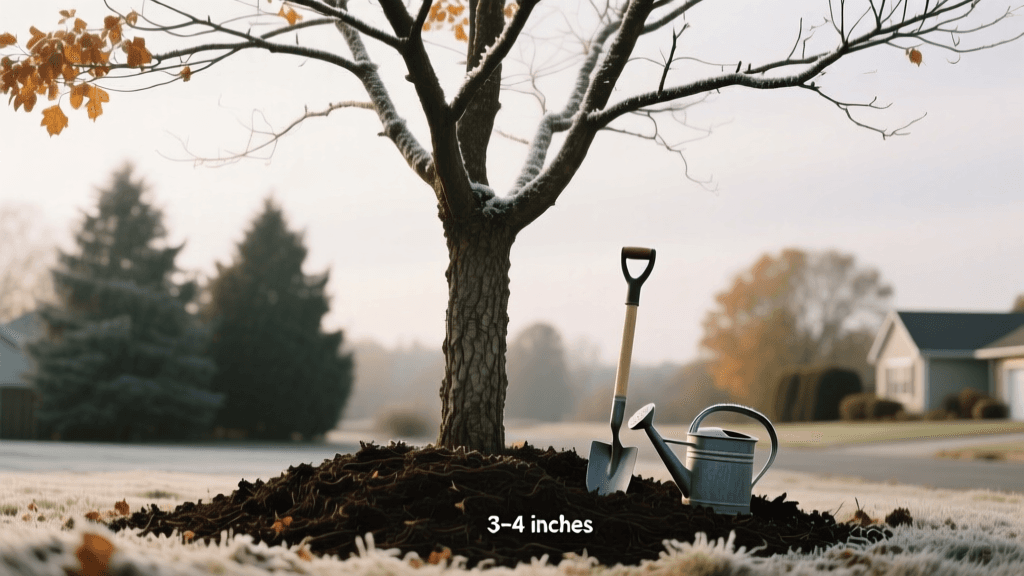
Regardless of which product you choose, proper technique and complementary landscape practices will dictate your success. First, always apply a 2-to-3-inch layer of organic wood chip mulch around the base of your trees, extending out to the drip line. Mulch acts as a thermal insulator, retaining the moisture delivered by your watering bags or probes while suppressing water-stealing weeds. However, ensure the mulch is kept at least 3 inches away from the actual tree trunk to prevent bark rot and rodent damage.
Second, invest in a simple $15 analog soil moisture meter. Before deploying your deep root probe or refilling your tree bag, insert the moisture meter 8 inches into the soil near the drip line. If the meter reads 'moist' or 'wet,' delay watering. Overwatering is just as lethal as underwatering, as it displaces oxygen in the soil and invites fatal root rot pathogens like Phytophthora.
Finally, maintain your equipment. For tree watering bags, flush them with a mixture of white vinegar and water at the end of the season to dissolve calcium deposits that clog the micro-emitters. Allow them to dry completely before folding and storing them in a frost-free garage. For metal deep root probes, rinse the exterior to remove acidic soil compounds, dry the shaft, and apply a light coat of silicone lubricant to the shut-off valve to ensure smooth operation the following spring.
Final Verdict
For arborists, landscapers, and dedicated homeowners, both tree watering bags and deep root probes are essential tools in the tree care arsenal. If you are managing a landscape with newly planted trees, sloped beds, or lack the time for manual watering, invest in a fleet of Treegator Original or ArborRain Tower bags. They guarantee transplant survival with minimal labor. Conversely, if you are tasked with maintaining mature, drought-stressed shade trees or combating heavy, compacted urban soils, the Dramm Deep Root Waterer is an invaluable investment that delivers hydration and aeration precisely where established trees need it most. By matching the tool to the tree's life stage, you ensure a vibrant, resilient canopy for decades to come.