Tree Care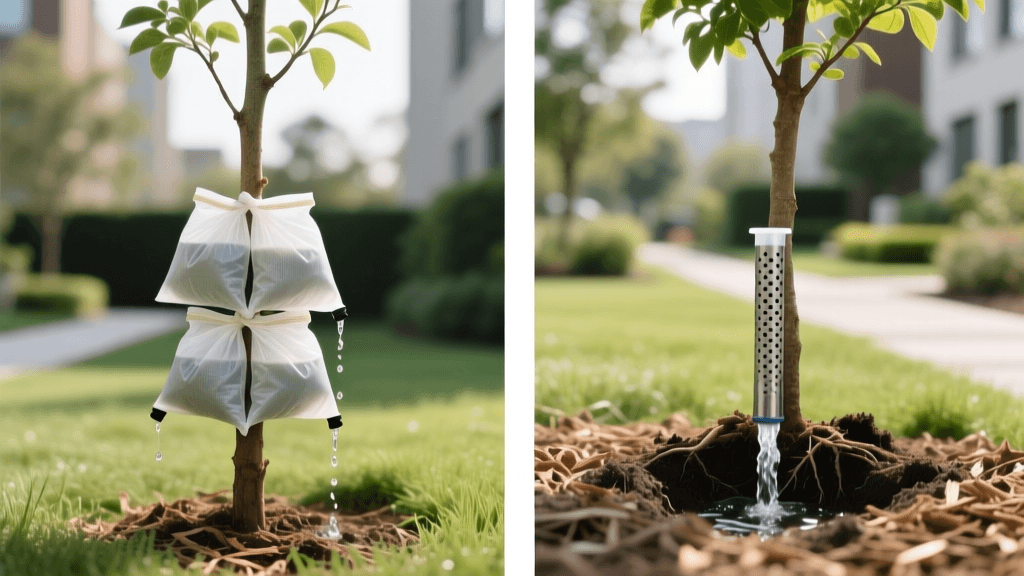
Tree Watering Bags vs Deep Root Stakes: A Full Review
The Battle for Hydration: Surface Bags vs. Subsurface Stakes
Planting a new tree is a significant investment in your property's curb appeal, ecological footprint, and long-term shade canopy. However, the first two years of a tree's life are the most critical, and improper watering is the number one cause of transplant shock and young tree mortality. Homeowners are often caught between two popular irrigation solutions: tree watering bags and deep root watering stakes. Both promise to take the guesswork out of tree care, but they operate on fundamentally different horticultural principles.
In this comprehensive product review and comparison, we will break down the mechanics, costs, and effectiveness of the top tree watering bags and deep root injectors on the market. By the end of this guide, you will know exactly which tool belongs in your garden shed.
The Biology of Tree Roots: Why Watering Depth Matters
Before comparing products, it is essential to understand how tree roots consume water. When a tree is planted, its root ball is confined to a small area. The goal of the first two years is to encourage roots to expand outward and downward into the native soil. If water is only applied to the very surface, roots will grow upward to chase the moisture, leading to girdling roots, poor anchorage, and extreme vulnerability to summer droughts. Conversely, delivering water deep into the soil profile encourages structural anchor roots that stabilize the tree and access subsurface moisture reserves.
Tree Watering Bags: Slow-Release Surface Hydration
Tree watering bags are large, heavy-duty plastic bladders that wrap around the base of the trunk. Filled with a standard garden hose, they slowly drip water over several hours through microscopic emitters at the base. They are designed to keep the root ball consistently moist without causing runoff.
Top Pick: The Original Treegator
The Treegator is the pioneer of this category and remains the gold standard for arborists and landscapers. Made from UV-treated polyethylene, it holds up to 15 gallons of water and typically empties over 5 to 9 hours, depending on soil absorption rates.
- Capacity: 15 Gallons
- Cost: $25 - $30
- Best For: Trees with a trunk caliper of 1 to 4 inches.
- Pros: Extremely durable, zip-seal prevents debris and mosquito breeding, consistent drip rate.
- Cons: Can promote surface roots if used exclusively; must be removed between waterings to prevent trunk rot and bark damage.
Budget Alternative: VINGLI 20-Gallon Tree Watering Bag
For homeowners planting multiple trees on a budget, the VINGLI bag offers a larger capacity at a lower price point. It features a similar wrap-around design but uses slightly thinner PVC material.
- Capacity: 20 Gallons
- Cost: $16 - $20
- Best For: Larger caliper trees or extremely fast-draining sandy soils.
- Pros: Excellent value, larger volume reduces refill frequency.
- Cons: Zippers are prone to snagging, material degrades faster under intense UV exposure compared to the Treegator.
Deep Root Watering Stakes: Subsurface Delivery
Deep root waterers are metal or heavy-duty plastic probes that attach to a garden hose. You push them 12 to 18 inches into the soil around the tree's drip line. They deliver water and sometimes liquid fertilizer directly to the deeper root zones while simultaneously aerating compacted soil.
Top Pick: Ross Deep Root Feeder
The Ross Deep Root Feeder is a classic, reliable tool that utilizes a siphon mechanism to draw fertilizer from a specialized cartridge while watering. The 14-inch metal probe easily penetrates most soils.
- Depth: 14 Inches
- Cost: $15 - $18
- Best For: Established trees, clay soils, and simultaneous fertilization.
- Pros: Aerates soil, bypasses surface evaporation, delivers nutrients directly to the root zone.
- Cons: Requires manual labor to push into hard soil, tethered to a hose during use, can create mud pockets if left in one spot too long.
Premium Pick: Yard Butler Deep Root Waterer
For those dealing with heavily compacted clay or rocky soils, the Yard Butler is built like a tank. It features a T-handle with a built-in foot step, allowing you to use your body weight to drive the 36-inch probe deep into the earth.
- Depth: 36 Inches (also available in 24-inch)
- Cost: $35 - $45
- Best For: Large shade trees, severe drought conditions, and heavy clay soils.
- Pros: Unmatched durability, dual-outlet water flow, reaches deep taproots.
- Cons: Heavy, higher upfront cost, overkill for small ornamental trees.
Head-to-Head Comparison Chart
| Feature | Tree Watering Bags | Deep Root Stakes |
|---|---|---|
| Water Delivery Depth | 1 to 3 inches (Surface) | 12 to 36 inches (Subsurface) |
| Setup Time | 2 to 3 minutes | 5 to 10 minutes of physical labor |
| Evaporation Loss | Moderate to High | Near Zero |
| Root Encouragement | Surface and Structural Roots | Deep Anchor Roots |
| Average Cost | $20 to $30 | $15 to $45 |
| Best Soil Type | Loam and Sandy Soils | Clay and Compacted Soils |
What the Science Says: Expert Insights on Tree Irrigation
When deciding between surface and subsurface watering, it is vital to consult horticultural science. According to the Texas A&M AgriLife Extension Service, deep and infrequent watering is paramount for establishing woody plants. Their guidelines emphasize that water should penetrate the soil to a depth of at least 12 inches to encourage roots to grow downward rather than remaining near the surface where they are susceptible to drought, heat stress, and lawnmower damage.
Deep watering promotes a robust, drought-tolerant root system. Shallow, frequent watering leads to weak surface roots that compete with turfgrass and fail to anchor the tree during high wind events. - Texas A&M AgriLife Extension
This expert consensus suggests that while tree watering bags are excellent for the immediate survival of the root ball during the first few weeks after transplanting, deep root stakes are superior for long-term establishment and training the tree to survive in its native environment.
Practical Application: When to Use Which Tool
Neither tool is universally perfect; the best choice depends on your specific landscape scenario, soil type, and the age of the tree.
When to Choose Tree Watering Bags
- Newly Planted Trees (Weeks 1-8): The original root ball needs constant, gentle moisture to prevent transplant shock. Bags provide a slow, steady drip that keeps the burlap and surrounding soil perfectly hydrated.
- Sandy Soils: In soils that drain too quickly, a slow-release bag ensures water has time to be absorbed rather than running off.
- Vacation or Busy Schedules: If you cannot be home to hold a hose for 30 minutes twice a week, a bag is a reliable set-and-forget solution.
When to Choose Deep Root Stakes
- Establishing Trees (Months 3-24): Once the roots begin to push past the original root ball, you need to train them to seek deeper moisture.
- Clay and Compacted Soils: Surface water often pools and runs off heavy clay. A deep root stake injects water below the hardpan layer where it can be utilized.
- Mature Trees in Drought: Large shade trees have extensive root systems. Deep watering at the drip line is the only effective way to hydrate a mature tree during severe summer droughts.
Common Mistakes Homeowners Make
Even with the best tools, improper technique can harm your trees. Avoid these common pitfalls:
- Volcano Mulching with Bags: Never pile mulch against the trunk and then place a watering bag over it. The constant moisture against the bark will invite fungal pathogens and rot. Always leave a 3-inch gap between the mulch and the tree trunk.
- Leaving Bags On All Season: Treegators and similar bags are meant to be filled, emptied, and removed. Leaving them wrapped around the trunk for weeks creates a dark, damp haven for insects, rodents, and bark-decaying fungi.
- Over-fertilizing with Stakes: When using a Ross Deep Root Feeder, do not use fertilizer cartridges every time you water. Excessive salts in the soil can burn delicate root hairs. Fertilize only in early spring or late fall based on a soil test.
Final Verdict
For the ultimate tree care regimen, the ideal approach is a hybrid one. Invest in a high-quality Treegator for the first 60 days after planting to ensure the root ball survives the initial transplant shock. Once the tree shows signs of new growth, transition to a Yard Butler or Ross Deep Root Feeder to train those roots deep into the soil profile. By understanding the mechanics of both surface and subsurface irrigation, you can ensure your trees grow tall, strong, and resilient for decades to come.