Tree Care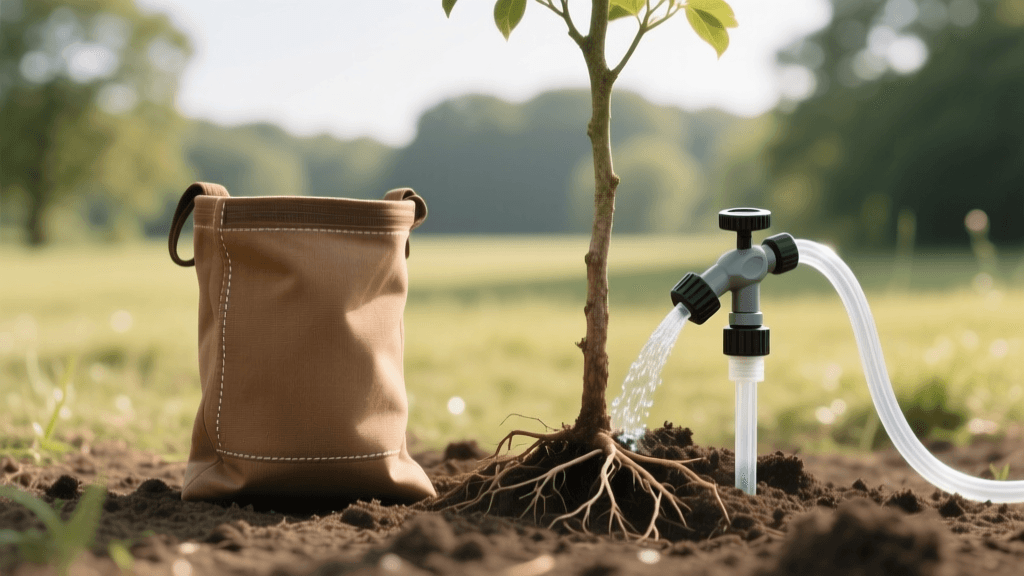
Best Tree Watering Bags vs Drip Emitters Reviewed
The Critical Need for Deep Root Watering
When it comes to establishing a robust root system and ensuring the long-term health of your landscape trees, surface watering simply is not enough. Shallow watering encourages roots to grow upward toward the moisture, making your trees highly susceptible to drought stress, pest infestations, and catastrophic uprooting during severe storms. To cultivate a resilient tree, water must penetrate deeply into the soil profile, reaching the critical root zone where the majority of water-absorbing feeder roots reside. This is where specialized deep-root hydration tools come into play. In this comprehensive product review and comparison guide, we evaluate the two most popular solutions for residential and commercial arborists: slow-release tree watering bags and automated drip irrigation emitters. We will break down the top products on the market, analyze their costs, and provide actionable installation advice to help you make the best investment for your trees.
The Science of Deep Root Hydration
Before diving into product reviews, it is essential to understand the mechanics of tree transpiration and soil moisture dynamics. According to the University of Florida IFAS Extension, the vast majority of a tree's absorbing roots are located in the top twelve to eighteen inches of soil, extending well beyond the tree's drip line. Watering directly at the trunk not only wastes water but can also promote fatal fungal diseases like Phytophthora root rot and collar rot. Effective tree care requires delivering water slowly and evenly across the dripline, allowing it to percolate downward without causing surface runoff. The rate of percolation depends heavily on your soil type. Sandy soils drain rapidly and require more frequent, lower-volume applications, while heavy clay soils absorb water slowly, necessitating very slow release rates to prevent pooling and runoff.
Slow-Release Tree Watering Bags: Product Reviews
Tree watering bags are heavy-duty, UV-treated plastic bladders that zip around the base of a tree. Filled with a standard garden hose, they slowly weep water through micro-perforations over several hours. They are exceptionally popular for newly planted trees and municipal street trees.
Product Review: Treegator Original Slow-Release Watering Bag
The Treegator Original is the industry standard for arborists and homeowners alike. Designed for single-trunk trees up to four inches in caliper, it holds up to twenty gallons of water. The dual-chamber design ensures the bag stands upright, and the heavy-duty zippers allow for a secure fit.
- Pros: Requires no plumbing or tools to install; delivers a massive dose of water directly to the root ball; highly portable for spot-treating drought-stressed trees.
- Cons: The micro-perforations can clog with hard water minerals or algae if not cleaned regularly; UV degradation typically limits the lifespan to two or three seasons; only waters the immediate root ball, not the extended drip line.
- Cost: Approximately twenty-two dollars per bag.
Product Review: Gator XL Tree Watering Bag
For larger, semi-mature trees with a caliper between four and eight inches, the Gator XL is the superior choice. It holds an impressive thirty-two gallons of water and features a wider base to accommodate larger root flares.
- Pros: Higher capacity reduces the frequency of refills during peak summer heat; heavy-duty zippers resist splitting under the weight of thirty-two gallons of water.
- Cons: Bulky and difficult to store during the winter months; the sheer weight when full can cause the bag to lean if not zipped perfectly level.
- Cost: Approximately thirty-five dollars per bag.
Drip Irrigation Tree Rings and Emitters: Product Reviews
For established trees or homeowners looking to automate their landscape hydration, drip irrigation tree rings offer a permanent, customizable solution. These systems connect to your existing irrigation lines or an outdoor faucet equipped with a timer, delivering precise, low-volume water directly to the soil.
Product Review: Rain Bird Drip Irrigation Tree Ring Kit
Rain Bird is a titan in the irrigation industry, and their Tree Ring Kit is a masterclass in efficiency. The kit includes a distribution manifold, flexible tubing, and four adjustable drip emitters rated at one gallon per hour (GPH). You can easily expand the ring to match the exact drip line of your tree.
- Pros: Fully automated when paired with a smart timer; emitters can be repositioned as the tree grows; delivers water exactly where it is needed without wetting the trunk, drastically reducing fungal disease risks.
- Cons: Requires initial setup and minor trenching to hide the tubing; emitters can clog if your water source is not filtered; vulnerable to damage from lawn mowers and string trimmers if not properly mulched over.
- Cost: Approximately twenty-five dollars for the base kit.
Product Review: Melnor Soaker Tree Ring Hose
If you prefer a simpler approach without individual emitters, a porous soaker hose arranged in a spiral around the drip line is a viable alternative. The Melnor flat soaker hose is designed to weep water along its entire length.
- Pros: Very affordable; easy to coil around the base of multiple trees; no complex manifold setup required.
- Cons: Water distribution is notoriously uneven, with emitters closest to the water source receiving higher pressure; the porous rubber degrades quickly when exposed to direct sunlight and ozone; highly susceptible to root intrusion if left in place for multiple years.
- Cost: Approximately eighteen dollars for a fifty-foot roll.
Comprehensive Product Comparison Chart
To help you visualize the differences between these deep-root watering systems, we have compiled a detailed comparison chart based on field testing and manufacturer specifications.
| Product Name | System Type | Capacity / Flow Rate | Estimated Cost | Best Application | Expected Lifespan |
|---|---|---|---|---|---|
| Treegator Original | Slow-Release Bag | 20 Gallons / 5-9 Hours | $22.00 | Newly planted trees (up to 4-inch caliper) | 2-3 Seasons |
| Gator XL | Slow-Release Bag | 32 Gallons / 8-10 Hours | $35.00 | Semi-mature trees (4 to 8-inch caliper) | 2-3 Seasons |
| Rain Bird Tree Ring Kit | Drip Emitters | 1 GPH per Emitter | $25.00 | Established trees and automated landscapes | 5+ Years |
| Melnor Soaker Hose | Porous Soaker Ring | Variable / High Seepage | $18.00 | Temporary drought relief for shrub borders | 1-2 Seasons |
Expert Insights and Authoritative Guidelines
When deciding between bags and emitters, it is crucial to align your product choice with established arboricultural science. The Texas A&M Forest Service strongly advocates for deep, infrequent watering to promote drought-resistant root architecture. In their official drought management guidelines, they note that trees require approximately one inch of water per week during the growing season, applied slowly to prevent runoff.
'Water should be applied at the drip line and beyond, where the most active water-absorbing roots are located. Avoid watering directly at the trunk, as this can lead to stem girdling roots and fatal trunk rot.'
— Texas A&M Forest Service, Drought Management Guidelines
This expert guidance heavily favors drip emitter systems like the Rain Bird kit for established trees, as they allow you to place the water precisely at the drip line. However, for newly planted trees whose root systems have not yet expanded beyond the original root ball, a Treegator bag is the scientifically appropriate choice to keep the confined roots hydrated.
Actionable Installation and Maintenance Guide
Regardless of the system you choose, proper maintenance is vital to ensure longevity and prevent tree damage.
Maintenance Tips for Tree Watering Bags:
- Prevent Algae and Mineral Clogging: At the end of every month, remove the bag and flush it with a solution of one part white vinegar to ten parts water. This dissolves hard water calcium deposits that block the micro-perforations.
- Avoid Trunk Girdling: Never zip the bag so tightly that it restricts the trunk's natural expansion. Leave a half-inch gap between the zipper and the bark.
- Winter Storage: UV radiation and freezing temperatures will destroy the plastic. Drain, dry, and store bags in a cool, dark garage during the winter months.
Maintenance Tips for Drip Emitters and Soaker Hoses:
- Install a Y-Filter: Always install a 120-mesh screen filter between your faucet and the drip line. This prevents sediment and organic matter from clogging the one-GPH emitters.
- Conduct Monthly Flushes: Open the end caps of your drip tubing once a month to allow high-pressure water to flush out accumulated debris.
- Protect from Machinery: Cover all drip lines and soaker hoses with two to three inches of organic wood chip mulch. This protects the tubing from string trimmers, regulates soil temperature, and reduces surface evaporation.
Final Verdict: Choosing the Right System for Your Landscape
Selecting the optimal deep-root watering tool depends entirely on the age of your trees and your willingness to automate. If you are a homeowner who has recently planted several saplings or ball-and-burlap trees, the Treegator Original Slow-Release Watering Bag is an indispensable, low-tech investment. It guarantees the immediate root ball receives the exact volume of water required for transplant shock recovery without requiring you to stand in the yard with a hose for hours.
Conversely, if you are managing a mature landscape with established trees, investing in the Rain Bird Drip Irrigation Tree Ring Kit is the superior, long-term strategy. By connecting the emitters to a smart irrigation timer, you ensure your trees receive consistent, deep hydration exactly at the drip line, perfectly aligning with the guidelines set forth by the Texas A&M Forest Service. While the initial setup requires a bit more labor, the five-plus year lifespan and automation capabilities make drip emitters the ultimate choice for proactive, science-backed tree care.