Tree Care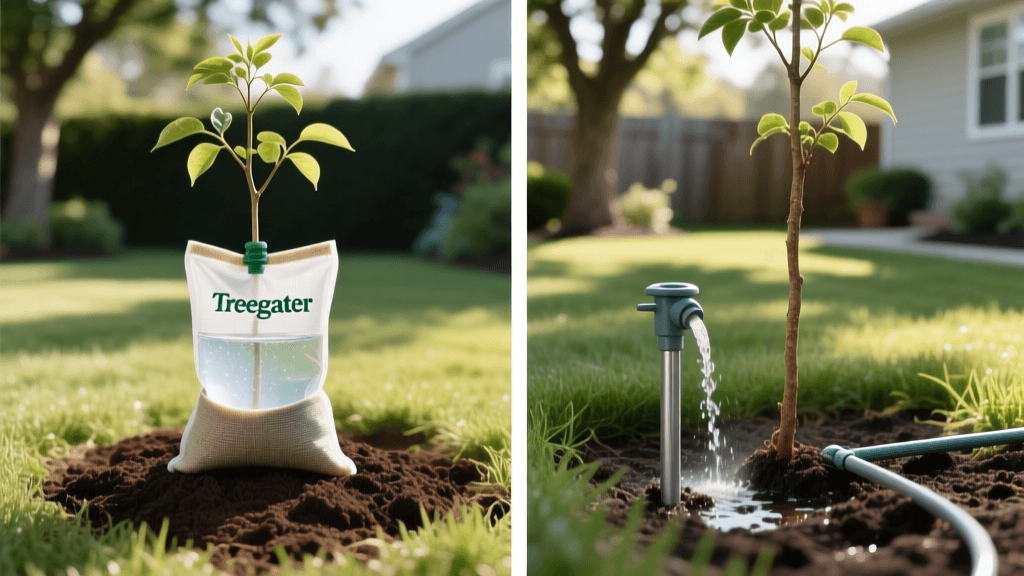
Tree Watering Bags vs Deep Root Stakes: Expert Review
The Critical Role of Proper Tree Hydration
Watering a tree seems like a straightforward task, but the reality of tree care reveals a much more complex science. Simply spraying the base of a trunk with a garden hose often leads to shallow root growth, increased surface evaporation, and a higher susceptibility to drought stress. For both newly planted saplings and established shade trees, delivering water directly to the active root zone is essential for long-term health and structural stability.
In recent years, the market has been flooded with specialized tree watering products designed to take the guesswork out of irrigation. The two most popular categories are slow-release tree watering bags and deep root watering stakes. But which system actually delivers the best results for your time and money? In this comprehensive product review and comparison, we break down the top contenders on the market, evaluating their efficiency, cost, setup time, and overall impact on tree health.
The Contenders: Watering Bags vs. Deep Root Stakes
Before diving into the data, it is important to understand the mechanics behind the two primary watering technologies available to homeowners and landscaping professionals.
Category 1: Slow-Release Tree Watering Bags
Tree watering bags are typically made from heavy-duty, UV-treated polyethylene. They are designed to hold a large volume of water and release it slowly through micro-perforations at the base of the bag. The goal is to provide a steady drip over several hours, allowing the soil to absorb moisture without excessive runoff.
- Treegator Original Slow-Release Watering Bag: The industry pioneer. It wraps around the trunk and zips shut, holding up to 20 gallons of water. It typically empties over 5 to 9 hours depending on soil absorption rates and temperature. Retailing for approximately $22 per bag, it is a highly accessible option for residential planting projects.
- ArborRain Tower: A premium alternative that stands independently around the tree without touching the trunk. It holds 22 gallons and features a specialized baffle system to deliver water evenly. Priced around $38, it is favored by commercial landscapers who want to avoid trunk-contact moisture issues.
Category 2: Deep Root Watering Stakes
Deep root watering stakes are rigid, perforated tubes driven directly into the soil within the tree's drip line. They bypass the surface layer entirely, delivering water, and optionally liquid fertilizers, straight to the deeper root zone. This method actively combats soil compaction and encourages roots to grow downward rather than laterally.
- Deep Drip Tree Watering Stakes: Available in 14-inch and 24-inch lengths, these stakes feature a built-in emitter head that connects to a standard garden hose or a 1/4-inch drip irrigation line. They cost about $18 per stake, and a standard tree requires two to four stakes placed evenly around the root ball. Total setup cost per tree ranges from $36 to $72.
Head-to-Head Comparison Chart
To visualize how these systems stack up against one another, we have compiled a side-by-side comparison based on field testing and manufacturer specifications.
| Feature | Treegator Bag | ArborRain Tower | Deep Drip Stakes |
|---|---|---|---|
| Water Capacity | 15 - 20 Gallons | 22 Gallons | Unlimited (Hose/Drip) |
| Delivery Depth | Surface (Top 2-4 inches) | Surface (Top 2-4 inches) | 14 to 24 inches deep |
| Setup Time | 2-3 Minutes | 1-2 Minutes | 10-15 Minutes |
| Average Cost per Tree | $22 | $38 | $36 - $72 |
| Evaporation Loss | Moderate | Low | None |
| Best Application | Newly planted saplings | Multi-trunk or sensitive bark | Established trees & clay soils |
Performance Breakdown: Science and Efficiency
Choosing the right product requires looking beyond the marketing claims and understanding how water interacts with soil profiles and root systems.
Water Penetration and Root Zone Dynamics
According to the University of Minnesota Extension, the most critical roots for water and nutrient uptake are located in the top 12 to 18 inches of soil, extending outward to the drip line. Tree watering bags, by design, saturate the immediate surface area around the trunk. While this is helpful for keeping the shallow root ball of a newly planted tree moist, it fails to encourage deep root establishment. Conversely, Deep Drip stakes inject water exactly where the absorbing roots are developing, training the tree to seek moisture deeper in the soil profile, which is vital for long-term drought resistance.
Evaporation, Runoff, and Wind Interference
Surface watering bags are subject to environmental variables. On hot, windy days, a significant percentage of the water released by a Treegator bag can be lost to surface evaporation before it penetrates heavy clay soils. Furthermore, if the ground is heavily compacted or sloped, water may pool or run off before the bag empties. Deep root stakes completely eliminate surface evaporation and wind interference, ensuring that 100 percent of the applied water reaches the subterranean root zone.
Trunk Health and Disease Prevention
One of the most significant drawbacks of traditional zip-around watering bags is the moisture they trap against the bark. The Arbor Day Foundation warns that keeping the trunk constantly wet can invite fungal pathogens, bark rot, and boring insects. The ArborRain Tower mitigates this risk by standing a few inches away from the trunk, but it still wets the surface soil immediately adjacent to the root flare. Deep Drip stakes are installed away from the trunk entirely, keeping the root flare dry and healthy while hydrating the peripheral roots.
Soil Types and Tree Age: Which System Should You Choose?
There is no single 'best' product for every scenario. Your choice should be dictated by your specific soil composition and the maturity of the trees in your landscape.
For Newly Planted Trees (0-2 Years)
When a tree is first transplanted, its root system is confined to the original nursery root ball. During the first two growing seasons, keeping this specific ball moist is the top priority. A Treegator Bag or ArborRain Tower is highly recommended here. The slow, steady drip prevents the delicate new root hairs from drying out between manual waterings. However, you must remember to remove and dry the bags periodically to prevent algae buildup and inspect the trunk for pests.
For Established Trees and Heavy Clay Soils
If you are managing mature trees during a summer drought, or if your property features heavy, poorly draining clay soil, surface bags are largely ineffective. Water will simply pool on the surface and evaporate. In these scenarios, Deep Drip Stakes are the undisputed winner. By driving the 24-inch stakes into the ground, you bypass the impermeable clay crust and deliver hydration directly to the deeper, established root network. Furthermore, the physical act of driving the stakes into the ground helps aerate compacted soil, a secondary benefit noted by the Colorado State University Extension as crucial for urban tree survival.
Expert Tips for Maximum Tree Hydration
Regardless of the product you choose, proper technique is paramount. Follow these professional guidelines to maximize your investment:
- Calculate the Correct Volume: A general rule of thumb for tree watering is to apply 10 gallons of water per inch of trunk diameter (measured at knee height) each week during the growing season. Adjust this based on recent rainfall.
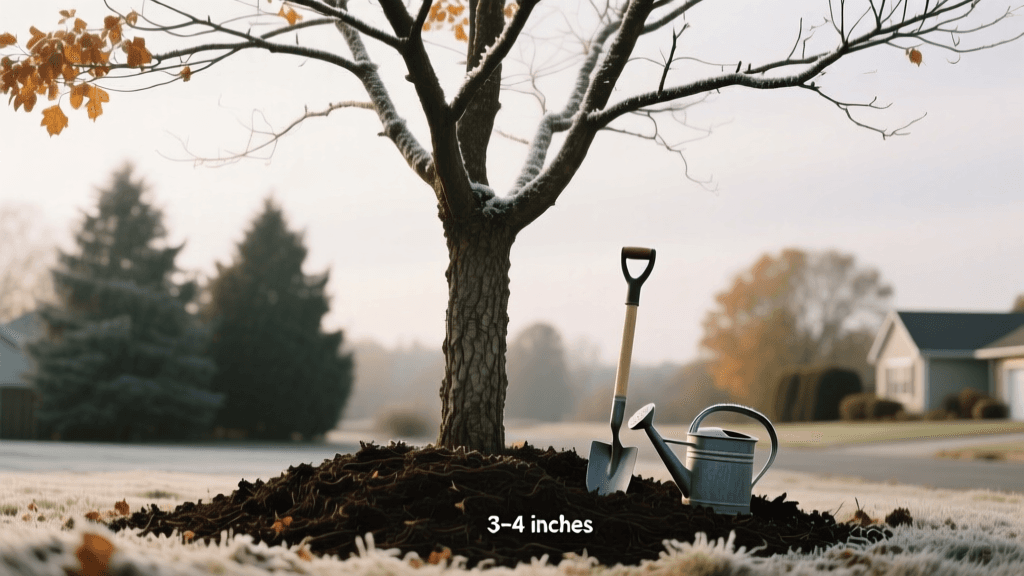
- Mulch Correctly: Always apply a 2 to 3-inch layer of organic mulch over the root zone to retain soil moisture. Never pile mulch against the trunk in a 'volcano' shape, as this mimics the negative effects of leaving a watering bag on too long.
- Winterize Your Gear: Tree watering bags and plastic stakes can become brittle and crack when exposed to freezing temperatures. Always drain, clean, and store your watering bags in a garage or shed before the first hard frost. Deep Drip stakes can remain in the ground year-round, but ensure they are completely drained of water to prevent frost heave damage.
Pro Tip: If using Deep Drip stakes with a drip irrigation system, install a flush valve at the end of your drip line. This allows you to periodically blow out the system and prevent the micro-emitters inside the stakes from clogging with hard water mineral deposits or soil debris.
Final Verdict
Both tree watering bags and deep root stakes serve valuable, yet distinct, purposes in modern arboriculture. If you are planting a new orchard or installing a few saplings in your front yard and need a low-effort, low-cost solution to keep the root balls moist, the Treegator Bag remains a reliable, budget-friendly staple. However, for serious tree care enthusiasts, arborists managing drought-stressed urban canopies, or homeowners dealing with compacted clay soils, Deep Drip Stakes offer a superior, scientifically sound method of hydration that promotes deeper, stronger, and more resilient root systems.