Tree Care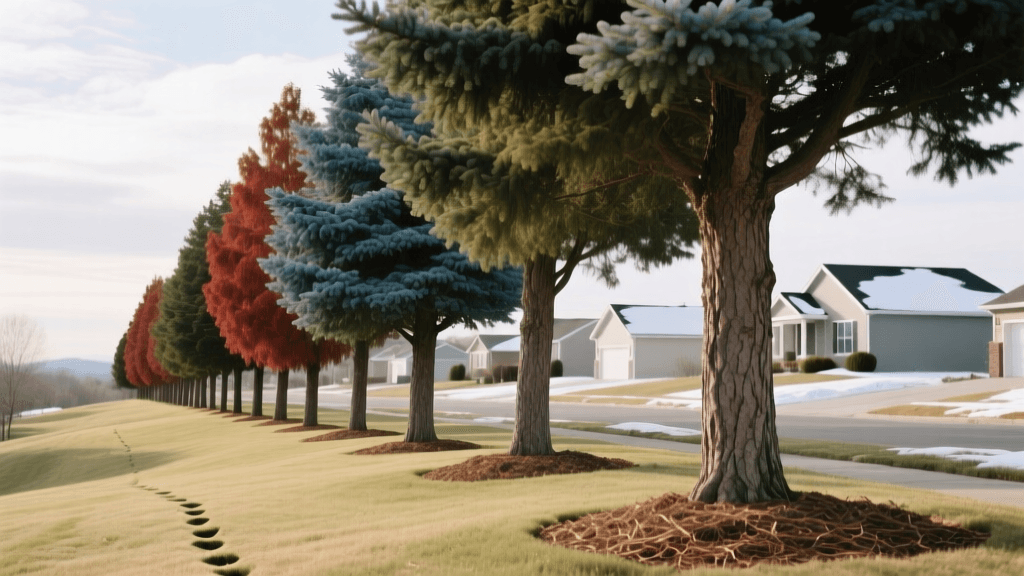
Designing a Tree Windbreak: Species, Spacing, and Placement
Planning a Functional Landscape: The Power of Windbreaks
Planning a landscape goes far beyond selecting colorful perennials or laying down fresh sod. For homeowners in regions with harsh winters or sweeping plains, strategic tree placement is a critical component of functional landscape design. Designing a tree windbreak—a deliberate planting of trees and shrubs to deflect and slow prevailing winds—offers profound benefits for both your property's microclimate and your household budget. According to the USDA National Agroforestry Center, a well-designed windbreak can reduce winter heating costs by 10% to 30%. However, achieving these energy savings requires precise planning, proper species selection, and meticulous spacing. This comprehensive guide will walk you through the design, layout, and planting strategies necessary to establish a thriving, effective windbreak on your property.
Why Plant a Windbreak? The ROI of Strategic Placement
Before breaking ground, it is essential to understand the mechanics of a windbreak. When wind strikes a dense barrier of trees, it is forced upward and over the canopy. This creates a 'wind shadow' on the leeward side of the trees, an area of significantly reduced wind speed. The most effective wind shadow typically extends for a distance of 10 times the height of the trees (known as the 10H rule). For example, a windbreak composed of trees that will eventually reach 50 feet in height will protect a zone up to 500 feet deep.
Beyond lowering heating bills by reducing cold air infiltration into your home, a properly planned windbreak offers secondary design benefits. It acts as a natural privacy screen, reduces soil erosion, creates a sheltered microclimate for more delicate garden plants, and provides vital winter habitat for local wildlife. When planning your landscape, positioning the windbreak perpendicular to the prevailing winter winds (which typically blow from the northwest or north in most of North America) is crucial for maximum efficiency.
Core Design Principles: Density, Height, and Orientation
A successful windbreak design relies on three main architectural principles: density, height, and orientation. Density refers to the percentage of the windbreak that is solid foliage versus open space. For winter wind protection, you want a density of 50% to 60%. If the windbreak is too dense (80% or higher), the wind will create severe, damaging turbulence immediately behind the trees. A 50% density filters the wind, slowing it down gently and allowing it to drop snow evenly rather than creating massive, unmanageable snowdrifts right against your driveway or home.
To achieve this optimal density, landscape architects often recommend a multi-row design. A standard, highly effective residential windbreak consists of three to five staggered rows. The outermost rows (facing the wind) should be dense, low-to-medium evergreens or deciduous shrubs. The middle and inner rows should feature taller, primary coniferous trees. This staggered, triangular profile lifts the wind smoothly over the canopy while catching ground-level drafts.
Top Evergreen Species for Windbreaks
Selecting the right tree species is the most critical decision in your planning phase. You need trees that retain their foliage year-round, tolerate harsh conditions, and fit your specific soil type. Here are three top-tier choices for residential windbreaks, including estimated costs for balled-and-burlapped (B&B) specimens:
- Eastern Red Cedar (Juniperus virginiana): A rugged, native evergreen that thrives in poor, rocky soils and extreme drought. It grows 1 to 2 feet per year and reaches a mature height of 40 to 50 feet. Cost: $35 to $65 per 5-foot B&B tree.
- Colorado Blue Spruce (Picea pungens): Prized for its striking silvery-blue needles and stiff, pyramidal shape. It provides excellent density but requires well-draining soil and full sun. Grows 1 foot per year, reaching 50 to 75 feet. Cost: $50 to $120 per 5-foot B&B tree.
- 'Green Giant' Arborvitae (Thuja standishii x plicata): The fastest-growing option, capable of adding 3 feet of height annually. It forms a lush, dark green wall but requires consistent moisture and is less tolerant of severe drought. Reaches 40 to 60 feet. Cost: $45 to $85 per 6-foot B&B tree.
Spacing and Layout: A Structural Guide
Improper spacing is the most common mistake in windbreak planning. Planting trees too close together leads to intense competition for water and nutrients, resulting in stunted growth and the die-off of lower branches (which ruins your ground-level wind density). Planting them too far apart leaves gaps that funnel and accelerate wind. Use the following structural guide to plan your layout:
| Species | Mature Width | In-Row Spacing | Between-Row Spacing |
|---|---|---|---|
| Eastern Red Cedar | 15 - 20 ft | 8 - 12 ft | 12 - 15 ft |
| Colorado Blue Spruce | 15 - 25 ft | 12 - 15 ft | 15 - 20 ft |
| 'Green Giant' Arborvitae | 12 - 18 ft | 6 - 8 ft | 10 - 12 ft |
Pro-Tip: Always stagger the trees in a zig-zag pattern between rows. This ensures that the gaps in one row are covered by the trees in the adjacent row, maintaining a continuous visual and physical barrier.
Step-by-Step Planting and Site Preparation
Once your design is mapped out with landscaping paint, site preparation begins. Test your soil using a local university extension kit; most conifers prefer a slightly acidic pH between 6.0 and 6.5. If your soil is heavy clay, amend the planting zone by tilling in 2 inches of aged pine bark humus to improve drainage.
When digging, the hole should be twice as wide as the root ball but no deeper. The root flare (where the trunk widens at the base) must sit slightly above the surrounding grade. Never plant a tree too deep, as this suffocates the roots and invites fatal fungal pathogens like Phytophthora. For B&B trees, carefully cut away all synthetic burlap and wire cages before backfilling with native soil. Water deeply immediately after planting to collapse air pockets.
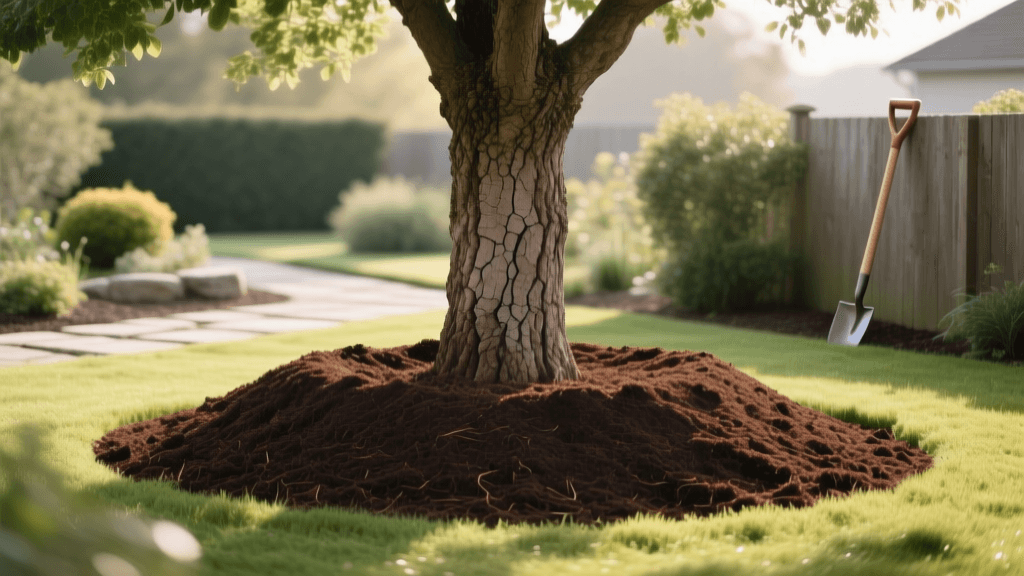
Apply a 3-inch layer of shredded hardwood mulch in a wide ring around the base of each tree to retain moisture and regulate soil temperature. Keep the mulch at least 3 inches away from the trunk to prevent 'volcano mulching,' which causes trunk rot. Install a drip irrigation line using 0.5-inch tubing with 1-gallon-per-hour emitters to ensure deep, consistent watering during the first two critical growing seasons.
Long-Term Maintenance and Pruning
A windbreak requires minimal but specific maintenance to maintain its structural integrity. Unlike ornamental landscape trees, windbreak conifers should rarely be pruned. The lower branches are vital for stopping ground-level wind and snow. Only prune dead, diseased, or severely broken limbs, making clean cuts just outside the branch collar. Avoid shearing the leaders (top growth), as this ruins the natural pyramidal shape and reduces the overall height of your wind shadow.
Fertilize in early spring using a slow-release, granular fertilizer formulated for evergreens, such as Osmocote Smart-Release or a natural alternative like Milorganite. Apply at a rate of 1 to 2 pounds of actual nitrogen per 1,000 square feet of root zone. Monitor for pests like spider mites or bagworms, treating early with horticultural oil or Bacillus thuringiensis (Bt) respectively.
Authoritative Insights on Windbreak Efficiency
The science behind windbreaks is well-documented by agricultural and forestry experts. When planning your layout, it is wise to heed the research of established institutions.
'A windbreak's effectiveness is directly tied to its structural density and the length of the protected zone. Homeowners often underestimate the spatial requirements of mature trees. Planning for the tree's 20-year mature width, rather than its planting-day size, is the single most important factor in ensuring the windbreak remains healthy and functional over its lifespan.' — USDA National Agroforestry Center, Windbreak Design Guidelines
By respecting these spatial requirements and choosing the right species for your specific hardiness zone, your windbreak will transition from a simple row of saplings into a towering, energy-saving architectural feature of your landscape.