Tree Care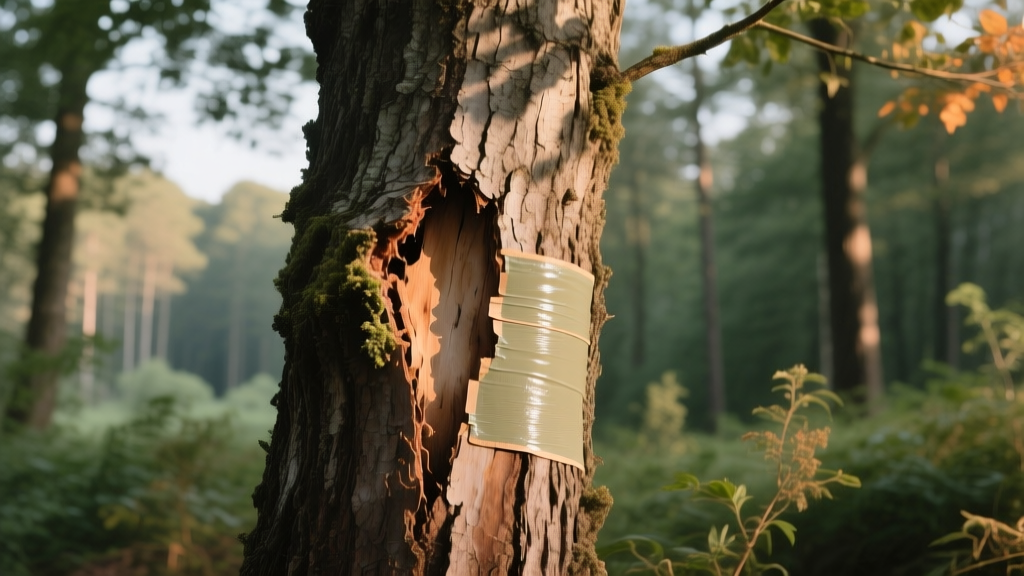
2026 Tree Wound Dressing Debate: Paint vs Natural Healing
David ParkPublished
The Great Tree Wound Dressing Debate in 2026
For decades, a persistent myth plagued the landscaping and arboriculture industries: the belief that trees require a protective "band-aid" after sustaining a wound from pruning, storm damage, or planting stress. Walk into any garden center in the early 2000s, and you would find shelves lined with black tar, petroleum-based pruning paints, and aerosol wound sealants. However, as we navigate the 2026 planting season, the scientific consensus is absolute. The application of traditional tree wound dressings is not only unnecessary but actively harmful to the long-term health of your trees.
Understanding the debate between artificial wound dressings and natural healing is especially critical when approaching Tree Selection and Planting. The way a tree compartmentalizes damage dictates how we should select nursery stock, how deep we plant the root flare, and how we handle initial pruning at the time of planting. In this comprehensive guide, we will explore the science of natural tree healing, why pruning paints fail, and how to apply these principles to your 2026 tree planting projects.
The Science of Natural Healing: Understanding CODIT
To understand why wound dressings are obsolete, we must first understand how trees heal. Unlike humans and animals, trees do not regenerate or "heal" damaged tissue in the traditional sense. Instead, they survive through a process known as Compartmentalization of Decay in Trees (CODIT). Pioneered by Dr. Alex Shigo, this biological model explains how a tree isolates damage to prevent the spread of decay and pathogens.
When a tree sustains a wound—whether from a pruning cut, a broken branch, or a lawnmower nick at the base—it immediately begins constructing four chemical and physical "walls" around the injury:
- Wall 1: Plugs the vascular tissue above and below the wound to stop vertical spread.
- Wall 2: Utilizes the latewood rings to block decay from moving inward toward the heartwood.
- Wall 3: Uses the medullary rays to block lateral (side-to-side) spread.
- Wall 4: The most critical barrier. The tree generates new, specialized callus tissue (woundwood) from the cambium layer at the edges of the wound, eventually rolling over and sealing the injury from the outside in.
According to research highlighted by the University of Minnesota Extension, applying thick pruning paints or tars actually interferes with Wall 4. Sealants trap moisture and fungal spores inside the wound, creating a dark, humid environment that accelerates rot while preventing the formation of protective woundwood.
How Wound Care Dictates Tree Selection and Planting
The principles of CODIT and natural healing extend far beyond the pruning saw. When selecting and planting new trees in 2026, your goal should be to minimize wounds and maximize the tree's innate energy reserves for compartmentalization.
Selecting Trees with Structural Integrity
The best way to manage tree wounds is to prevent them from happening in the first place. When inspecting nursery stock, prioritize trees with strong branch architecture. Look for a dominant central leader and wide, U-shaped branch unions. Avoid trees with "included bark" (where bark grows inward at the branch crotch, forming a V-shape). Included bark creates weak structural unions that are highly prone to splitting during high winds or heavy snow loads. A split trunk creates a massive, catastrophic wound that the tree cannot compartmentalize, often leading to total failure or removal.
Planting Practices That Prevent Trunk Wounds
One of the most common and lethal "wounds" inflicted on newly planted trees is not caused by a saw, but by improper planting depth and mulching. The Arbor Day Foundation continually emphasizes that the root flare (where the trunk widens at the base) must be fully visible above the soil line.
When trees are planted too deep, or when homeowners pile mulch against the trunk in a "mulch volcano," the bark at the base of the tree is kept in constant, unnatural moisture. Tree bark is designed to be exposed to air; when buried, it begins to decay, effectively creating a continuous, girdling wound around the entire circumference of the trunk. This invites fungal pathogens and girdling roots, ultimately killing the tree. Always plant high, and apply a 2-to-3-inch layer of organic mulch in a wide donut shape, keeping it at least 3 inches away from the trunk.
Initial Pruning at the Time of Planting
In the past, landscapers would heavily prune the canopy of a newly planted tree to "balance" it with the roots lost during nursery harvesting. Modern arboriculture has completely abandoned this practice. Heavy pruning at planting removes the very leaves the tree needs to photosynthesize and generate the energy required to grow new roots and compartmentalize nursery wounds. In 2026, the rule is simple: only prune dead, diseased, or broken branches at the time of planting. Leave the healthy canopy intact, and allow the tree to heal naturally.
Comparison Chart: Wound Treatments vs. Natural Healing
The table below illustrates why modern, certified arborists credentialed by the International Society of Arboriculture (ISA) have moved away from commercial sealants in favor of proper pruning techniques and natural air-drying.
| Treatment Method | Composition | Effect on Decay | Effect on Woundwood (Wall 4) | 2026 Arborist Consensus |
|---|---|---|---|---|
| Petroleum Pruning Paint | Asphalt, oils, solvents | Traps moisture; accelerates fungal growth | Inhibits callus formation | Strongly Discouraged |
| Aerosol Sealants | Synthetic polymers, propellants | Seals in existing pathogens | Delays natural sealing | Strongly Discouraged |
| Natural Air-Drying (CODIT) | N/A (Proper pruning cut) | Allows surface to dry, halting rot | Promotes rapid woundwood roll | Industry Standard |
| Light Latex Paint | Water-based interior latex | Does not trap moisture | Minimal interference | Only for specific disease vectors (e.g., Oak Wilt) |
The Rare Exceptions: When Dressing is Justified
While natural healing is the gold standard for 99% of tree wounds, there are a few highly specific scenarios in 2026 where a wound dressing is still recommended by plant pathologists.
Oak Wilt Prevention: In regions where Oak Wilt is prevalent (such as Texas, the Midwest, and parts of the Northeast), fresh wounds on oak trees emit volatile compounds that attract sap-feeding beetles carrying the fatal Bretziella fagacearum fungus. If an oak tree must be pruned or is accidentally damaged during the active beetle season (typically spring to early summer), immediately applying a thin coat of standard, water-based interior latex paint can mask the scent and deter the beetles. This is not to "heal" the wound, but strictly as an insect deterrent.
Excessive Bleeding: Trees like maples, birches, and elms are known as "bleeders" if pruned in late winter or early spring when sap flow is heavy. While the sap loss looks alarming, it rarely harms the tree. However, if the dripping sap is causing a nuisance on patios or driveways, a light application of latex paint can temporarily slow the flow until the tree leafs out and the sap pressure drops.
Best Practices for 2026 Tree Planting and Pruning
To ensure your newly planted trees establish vigorously and heal any minor nursery scars naturally, follow these actionable steps:
- Make Targeted Pruning Cuts: When removing a damaged branch, never make a "flush cut" against the trunk. Always cut just outside the branch collar (the swollen area where the branch meets the trunk). The collar contains the chemical zones necessary to initiate Wall 4 of the CODIT process.
- Sanitize Your Tools: Before moving from one tree to the next, wipe your pruning shears and saws with 70% isopropyl alcohol. This prevents the mechanical transmission of bacterial and fungal pathogens directly into fresh, open wounds.
- Water to Support Healing: Compartmentalization requires massive energy reserves. A newly planted tree that is drought-stressed will not have the carbohydrates necessary to produce woundwood. Provide deep, slow watering (roughly 10-15 gallons per week for a newly planted 2-inch caliper tree) during the first two growing seasons.
- Protect the Trunk: Use physical tree guards or wire mesh cages to protect young trunks from lawnmower nicks and rodent damage during the winter. Preventing the wound is always superior to managing the aftermath.
By abandoning outdated pruning paints and embracing the biological brilliance of CODIT, you set your landscape up for decades of structural integrity, vibrant health, and natural beauty. When you select the right tree, plant it at the correct depth, and let nature do the healing, your trees will thrive in 2026 and far beyond.
