Tree Care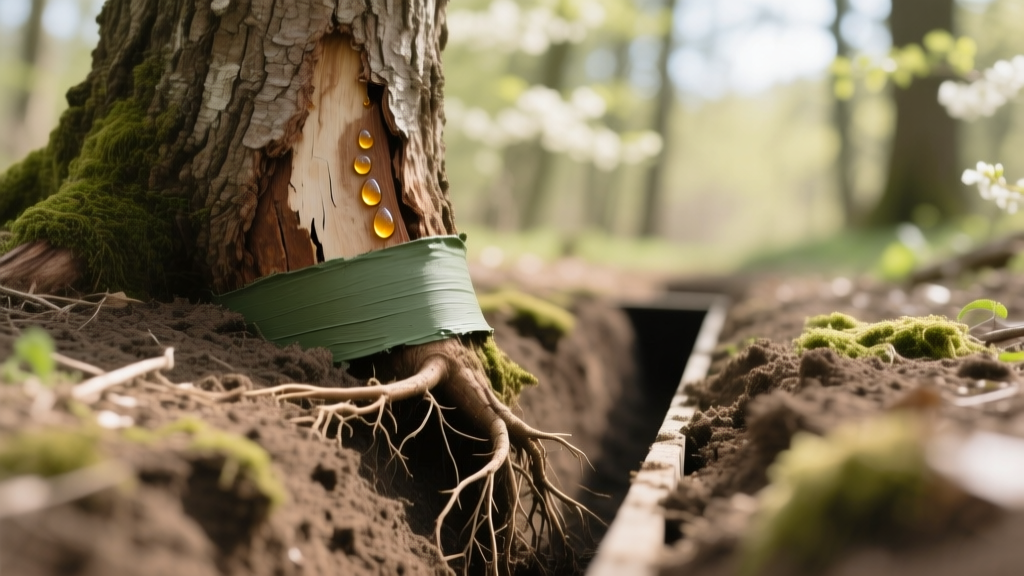
Tree Wound Paint vs Natural Healing: 2026 Drainage Guide
Sarah ChenPublished
The Intersection of French Drain Installation and Tree Health
When addressing chronic yard flooding, installing a French drain is often the most effective solution. A standard French drain involves excavating a trench 12 to 24 inches deep, lining it with permeable non-woven geotextile fabric, and embedding a perforated corrugated pipe surrounded by 3/4-inch washed drain rock. However, when this drainage path intersects with the critical root zone of mature trees, contractors and DIY homeowners face a major biological hurdle. In 2026, modern landscaping practices demand that we balance effective water management with rigorous tree health preservation. During excavation, it is nearly impossible to avoid encountering structural and feeder roots. Furthermore, maneuvering trenchers, mini-excavators, and shovels in tight spaces frequently results in accidental bark scrapes and trunk wounds. This brings us to one of the most persistent questions in arboriculture and hardscaping: should you apply tree wound paint to these cuts and scrapes, or let nature take its course?
The 2026 Consensus: Tree Wound Paint vs. Natural Healing
For decades, the standard operating procedure for both landscapers and arborists was to slather pruning cuts, root slices, and bark abrasions with black asphalt-based wound dressings or petroleum-based sealants. The logic seemed sound: a French drain is a wet environment designed to move water, and covering a tree wound would supposedly prevent rot, fungal spores, and moisture intrusion. However, extensive research culminating in the definitive arboricultural guidelines of 2026 has completely overturned this practice. Today, leading authorities, including the International Society of Arboriculture (ISA), universally advise against the use of wound paints, tars, and sealants. The consensus is clear: natural healing is vastly superior to artificial sealants, especially in the damp, microbe-rich environments surrounding drainage trenches.
Why Wound Sealants Fail in Wet Drainage Environments
When you install a French drain, you are deliberately creating a pathway for groundwater and surface runoff. The soil surrounding your drainage trench will experience fluctuating moisture levels. If you apply a traditional wound dressing to a severed root or a scraped trunk near this trench, you inadvertently create a microenvironment that accelerates decay rather than preventing it. Wound paints are prone to cracking as the tree's trunk and roots expand and contract with seasonal temperature changes and moisture uptake. Once these microscopic cracks form, moisture from the newly installed drainage system and surrounding soil becomes trapped behind the sealant. This dark, damp, and sealed environment is the perfect incubator for wood-decaying fungi and anaerobic bacteria. Instead of protecting the tree, the paint acts as a petri dish, compromising the tree's structural integrity and potentially leading to catastrophic failure or root rot.
Understanding CODIT: How Trees Heal Themselves
To understand why natural healing is the only recommended approach, we must look at how trees respond to injury. Trees do not "heal" in the human sense; they do not regenerate damaged tissue. Instead, they "seal" their wounds through a highly evolved biological process known as Compartmentalization of Decay in Trees (CODIT). When a trencher slices through a root or a shovel scrapes the cambium layer, the tree immediately initiates chemical and physical barriers to wall off the damaged area. According to the University of Minnesota Extension, the tree produces specialized compounds that restrict the spread of decay to the surrounding healthy wood. Applying a thick layer of wound paint interferes with this process. It can prevent the formation of callus wood (the donut-shaped roll of new tissue that grows over a wound) and disrupt the tree's natural chemical defenses. By leaving the wound exposed to the air, the tree can efficiently dry the damaged surface and initiate its compartmentalization walls.
Step-by-Step Root Management During Trenching
So, how should you handle root encounters when laying down your perforated pipe and gravel? The goal is to make clean, precise cuts that the tree can easily compartmentalize, rather than leaving jagged, torn root ends.
- Locate and Map Roots: Before firing up a mechanical trencher, use a hand shovel or an air spade to carefully expose the soil profile. Mechanical trenchers are notorious for tearing and shattering roots, which creates massive, uneven wounds that are highly susceptible to decay.
- Use the Right Tools: For roots smaller than two inches in diameter, use a high-quality, razor-sharp bypass pruning saw or a 2026-model battery-powered reciprocating saw equipped with a clean-cut wood blade. For larger structural roots, consult an arborist before cutting, as severing them can destabilize the tree.
- Make Clean, Flush Cuts: Cut the root cleanly on the side facing the trench. Do not leave stubs. A smooth, flat cut allows the tree to grow callus tissue evenly over the wound margin.
- Avoid Soil Smearing: Try not to pack wet clay or muddy soil directly against the fresh root cut. Backfill the area around the root with clean, washed drainage gravel to promote aeration.
- Install Root Barriers: If you are routing a French drain dangerously close to a trunk, consider installing a rigid, high-density polyethylene (HDPE) root barrier between the trench and the tree to deflect future root growth away from your drainage pipe.
Species-Specific Root Tolerance Near Drainage Trenches
Not all trees react to root pruning and drainage excavation equally. When planning your French drain route in 2026, it is crucial to consider the species you are working around. Trees such as Sugar Maples, Red Maples, and Willows are generally more resilient to root pruning and can rapidly compartmentalize cuts made for drainage trenches. Conversely, mature Oaks, Beeches, and Birches are highly sensitive to root disturbance. Severing even small roots near the drip line of an Oak can introduce oak wilt or armillaria root rot, especially in the moist environment of a French drain bed. For these sensitive species, it is highly recommended to route your perforated pipe at least 10 to 15 feet away from the trunk, or utilize directional boring to tunnel beneath the critical root zone rather than trenching through it.
Comparison Chart: Wound Sealants vs. Natural Healing
| Feature | Tree Wound Paint / Sealant | Natural Healing (CODIT) |
|---|---|---|
| Moisture Management | Traps moisture against the wound, promoting rot | Allows wound surface to dry, deterring fungi |
| Callus Formation | Inhibits or delays callus wood roll-over | Promotes rapid, even callus tissue growth |
| Microenvironment | Creates a dark, anaerobic incubator for decay | Maintains natural, aerobic bark conditions |
| Longevity in Trenches | Cracks quickly due to soil shifting and water flow | Permanent biological compartmentalization |
| 2026 Arborist Consensus | Strongly discouraged for all landscape wounds | Universally recommended best practice |
Protecting the Trunk from Equipment Damage
Trunk scrapes are incredibly common during French drain installation, particularly when maneuvering wheelbarrows loaded with heavy gravel or backing up a mini-excavator. If the bark is scraped but the underlying cambium layer is intact, the tree will naturally seal the superficial damage. If the bark is completely stripped away, leaving a raw, exposed wound, the instinct to "paint" it is strong. Resist this urge. The Penn State Extension explicitly warns against using wound dressings on construction-related tree damage. Instead, carefully trim any loose, jagged bark flaps around the perimeter of the wound using a sterilized utility knife. Create a smooth, oval-shaped margin (pointed at the top and bottom) to encourage rapid callus formation and allow water to run off the wound rather than pooling on horizontal ledges.
Final Thoughts on 2026 Drainage Landscaping
Installing a French drain is a vital home improvement project that protects your foundation and eliminates soggy lawns. However, it requires a delicate touch when navigating the critical root zones of established trees. As we move through 2026, the landscaping industry continues to abandon outdated, harmful practices like tree wound painting in favor of science-backed, natural healing methodologies. By focusing on clean root cuts, careful equipment operation, and allowing the tree's natural CODIT process to do its job, you can successfully install a high-capacity drainage system without sacrificing the health and longevity of your landscape's most valuable assets.
