Tree Care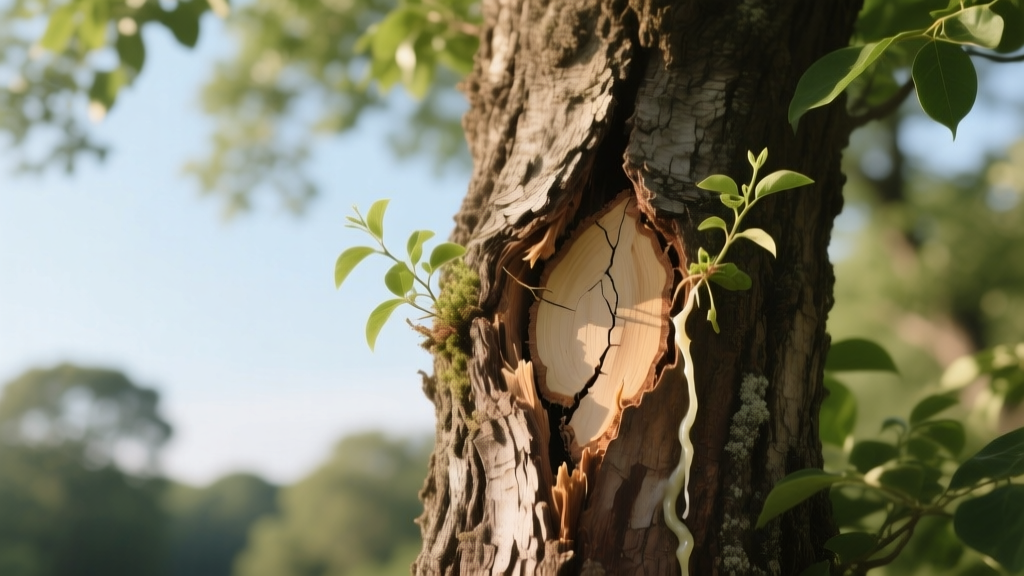
Tree Wound Paint vs Natural Healing: 2026 Fertilizer Guide
Mike RodriguezPublished
The Great Tree Wound Debate: Paint vs. Natural Healing
For decades, homeowners and even some landscaping professionals operated under the assumption that applying a protective coating to a fresh tree wound was essential for preventing decay and insect infestation. This practice, commonly known as tree wound dressing, involved slathering pruning cuts and storm damage with tar, asphalt-based paints, or polyurethane sealants. However, as we navigate the arboricultural best practices of 2026, the consensus among certified arborists and forestry scientists is unequivocal: tree wound paint does more harm than good.
According to research highlighted by the University of Minnesota Extension, wound dressings do not stop decay. In fact, they often trap moisture against the exposed wood, creating an ideal, dark, and humid environment for decay-causing fungi and anaerobic bacteria to thrive. Furthermore, these sealants can crack over time due to temperature fluctuations, allowing water to seep behind the barrier where it remains hidden from the drying effects of the sun and wind.
Instead of relying on artificial, petroleum-based barriers, modern tree care emphasizes a tree's innate biological defense mechanism: natural healing through compartmentalization. But this biological process requires immense energy, which is exactly where strategic fertilization comes into play.
Understanding CODIT: The Biological Engine of Natural Healing
Trees do not "heal" in the way human skin regenerates over a cut. Instead, they survive injuries through a process called the Compartmentalization of Decay in Trees (CODIT). When a tree is wounded, it immediately begins constructing chemical and physical barriers around the injury site to isolate the damaged tissue and prevent the spread of pathogens to the healthy wood.
Simultaneously, the tree generates callus tissue (woundwood) from the cambium layer surrounding the cut. This callus tissue slowly rolls over the wound, eventually sealing it off entirely. This biological process is incredibly energy-intensive. A tree cannot effectively compartmentalize decay or produce robust callus tissue if it is malnourished or suffering from soil deficiencies. This is where the intersection of wound management and precise fertilizer schedules becomes critical for long-term tree health.
Best Fertilizer Types for Wound Recovery in 2026
To support a tree's natural CODIT response, you must provide the right nutrients at the right time. Applying the wrong fertilizer, such as a high-nitrogen, quick-release synthetic formula immediately after a severe pruning or storm damage event, can actually be detrimental. Excess nitrogen forces the tree to push out rapid, weak vegetative growth at the expense of root development and defense chemistry, making it more susceptible to pests that are attracted to fresh wounds.
Here is a breakdown of the most effective fertilizer types and soil amendments for supporting natural wound healing:
| Fertilizer Type | Primary Benefit for Wound Healing | Application Timing | Best For |
|---|---|---|---|
| Slow-Release Granular (e.g., 16-4-8) | Provides steady nitrogen for callus tissue without flush growth | Early Spring | Mature trees with moderate damage |
| Mycorrhizal Inoculants | Expands root surface area for better water and nutrient uptake | Anytime soil is workable | Transplants or severe root/wound damage |
| Potassium-Rich Organic (e.g., Kelp Meal) | Boosts cellular wall strength and disease resistance | Late Spring / Early Fall | Trees prone to fungal infections |
| Liquid Bio-stimulants (Humic/Fulvic Acid) | Reduces shock and improves nutrient bioavailability | Post-injury / Summer | Stressed trees needing immediate support |
The Role of Potassium and Phosphorus
While nitrogen is necessary for the physical growth of callus tissue, potassium (K) and phosphorus (P) are the unsung heroes of wound recovery. Potassium regulates the opening and closing of stomata, improves drought tolerance, and thickens cell walls, making the newly formed woundwood more resistant to boring insects. Phosphorus is vital for root energy transfer and the synthesis of the chemical barriers used in the CODIT process. In 2026, many arborists recommend a comprehensive soil test before applying any macronutrients to ensure you are not inadvertently creating a nutrient lockout or disrupting the local soil microbiome.
The 2026 Fertilizer Schedule for Injured Trees
Timing your fertilizer applications to align with the tree's natural growth cycles is paramount for successful wound compartmentalization. The International Society of Arboriculture (ISA) emphasizes that fertilization should be based on plant needs and soil conditions rather than a rigid calendar, but general seasonal guidelines apply to injured trees.
Early Spring (Dormancy Break)
As soil temperatures rise above 50°F, the tree's root system becomes active. This is the optimal time to apply a slow-release, balanced granular fertilizer. The nutrients will be available just as the cambium layer begins producing the callus tissue needed to cover the wound. Avoid quick-release fertilizers, which can wash away in spring rains before the tree can absorb them, leading to groundwater pollution.
Late Spring to Early Summer (Peak Callus Growth)
During this window, the tree is actively sealing wounds. If a soil test indicates a potassium or phosphorus deficiency, a targeted organic amendment like kelp meal or bone meal can be applied. Liquid bio-stimulants containing humic and fulvic acids can also be applied as a soil drench to help the tree process the nutrients already present in the soil, reducing the overall stress of the injury.
Late Summer and Fall (Storage and Hardening)
It is a critical rule of modern arboriculture to avoid high-nitrogen fertilizers in late summer and fall. Pushing new, tender growth as temperatures drop leaves the tree vulnerable to winter kill and frost cracks, which will only create new wounds. Instead, focus on deep root watering and applying a thick layer of organic mulch to insulate the roots and slowly feed the soil food web over the winter.
A Holistic Protocol: Combining Proper Pruning with Nutrition
Fertilizer alone cannot save a tree if the initial wound was created improperly. The foundation of natural healing begins with the cut itself and the environment surrounding the roots.
1. Respect the Branch Collar
Never make flush cuts. The branch collar—the swollen area where the branch meets the trunk—contains the specialized chemical factory required to initiate the CODIT process. Cutting into the collar removes these essential cells and guarantees that decay will enter the trunk. Always cut just outside the collar, leaving a clean, angled surface that the tree can naturally seal.
2. Clean, Sharp Tools
Ragged tears from dull chainsaws or pruning saws crush the cambium layer, killing the cells needed to generate callus tissue. Always use sterilized, razor-sharp tools. If a storm leaves a jagged tear, use a sharp knife or chisel to carefully smooth the bark edges around the wound, creating a clean boundary that the tree can more easily compartmentalize.
3. Proper Mulching and Hydration
A tree fighting to seal a massive wound is under immense hydraulic stress. Ensure the tree receives 1 to 1.5 inches of water per week, either from rainfall or deep, slow irrigation. Apply a 2-to-3-inch layer of arborist wood chips over the root zone, starting a few inches away from the trunk to prevent "volcano mulching," which suffocates the root flare and invites rot.
Conclusion: Trust the Tree, Feed the Soil
The debate between tree wound paint and natural healing was settled by science decades ago, yet the myth of the "protective black tar" still occasionally lingers in big-box garden centers. As we look at tree care in 2026, the most effective "wound dressing" is a robust, well-nourished root system. By abandoning toxic sealants and instead focusing on targeted fertilizer types, precise seasonal schedules, and proper pruning techniques, you empower your trees to defend themselves. Trust the tree's natural biology, provide the nutritional building blocks it needs, and watch as it seamlessly compartmentalizes damage and thrives for decades to come.