Tree Care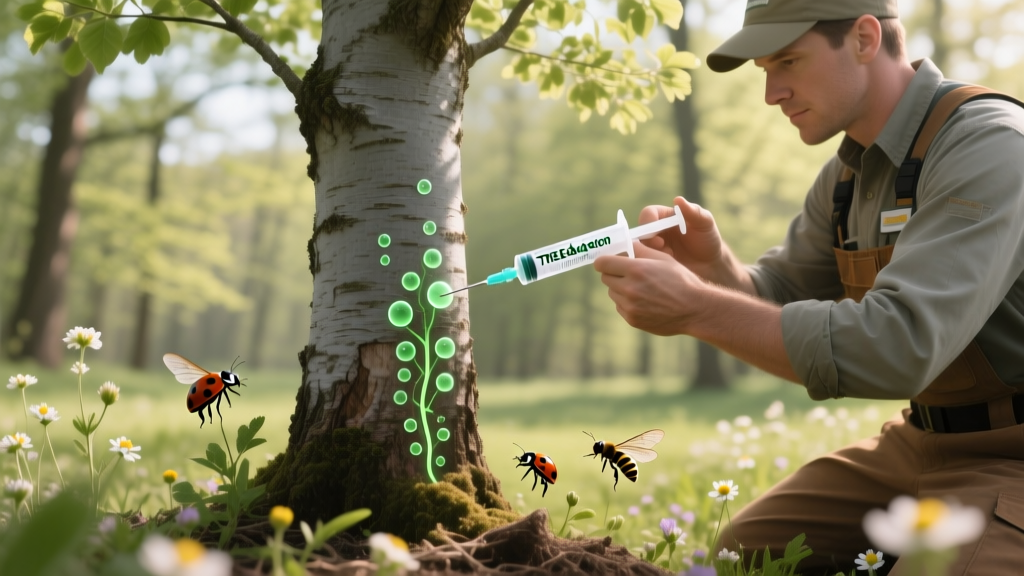
TREE-age EAB Trunk Injection 2026: Save Ash & Beneficial Insects
Robert HayesPublished
The 2026 EAB Landscape: A Shift Toward Targeted Bio-Control
The emerald ash borer (EAB) has fundamentally reshaped North American urban forestry over the last two decades. However, as we navigate the 2026 growing season, the survival of legacy ash trees no longer relies on the indiscriminate, broad-spectrum canopy sprays of the past. Today, the gold standard for saving high-value ash trees is the TREE-age trunk injection. This highly targeted method not only delivers a lethal blow to EAB larvae feeding beneath the bark but also uniquely preserves the delicate bio-control networks of beneficial insects that are critical for long-term ecological balance.
In 2026, Integrated Pest Management (IPM) protocols heavily emphasize the protection of non-target organisms. With the widespread release and establishment of EAB-specific parasitoid wasps across multiple states, arborists and homeowners must choose treatment methods that do not inadvertently assassinate these beneficial allies. According to the USDA APHIS Emerald Ash Borer program, the integration of biological control agents with selective chemical treatments is the most viable strategy for managing EAB populations in both urban and rural forests.
What is TREE-age and How Does Trunk Injection Work?
TREE-age (and its advanced 2026 formulation, TREE-age G4) utilizes the active ingredient emamectin benzoate. Unlike older systemic treatments that are poured into the soil or sprayed onto the trunk bark, TREE-age is injected directly into the xylem—the tree's vascular water-transport system. Once inside, the active ingredient is pulled upward with the transpiration stream, distributing evenly throughout the canopy and the cambial layer where EAB larvae feed.
Because the chemical is entirely contained within the tree's internal vascular system, there is zero drift, no soil leaching, and no toxic residue left on the leaves, flowers, or outer bark. This internal delivery mechanism is precisely why TREE-age is the undisputed champion of beneficial insect safety in modern arboriculture.
Treatment Comparison: TREE-age vs. Broad-Spectrum Alternatives
Understanding why trunk injection is superior for bio-control requires comparing it to other common EAB treatments. The following table outlines how different application methods impact both the target pest and the surrounding beneficial insect populations in 2026.
| Treatment Method | Active Ingredient | Protection Duration | Beneficial Insect Safety | Bio-Control Compatibility |
|---|---|---|---|---|
| Trunk Injection (TREE-age G4) | Emamectin Benzoate | 2 Years | Excellent (Systemic, no external residue) | High (Safe for canopy & bark wasps) |
| Soil Drench | Imidacloprid | 1 Year | Poor (Soil leaching, impacts ground beetles) | Moderate |
| Basal Bark Spray | Dinotefuran | 1 Year | Moderate (Bark residue affects foragers) | Low (Toxic to bark-nesting wasps) |
| Canopy Spray | Bifenthrin / Carbaryl | 1 Month | Terrible (Broad-spectrum kill) | None (Decimates released bio-control agents) |
As highlighted by researchers at the Michigan State University Extension, emamectin benzoate trunk injections provide superior, multi-year control of EAB while mitigating the environmental hazards associated with soil-applied neonicotinoids, which can harm essential ground-dwelling predators and pollinators.
Safeguarding the Bio-Control Brigade: Parasitoid Wasps
The true brilliance of using TREE-age in a 2026 IPM strategy lies in its compatibility with EAB bio-control agents. Over the past decade, millions of stingless parasitoid wasps have been released into North American forests to hunt EAB. The three primary species include:
- Tetrastichus planipennisi: A larval parasitoid that targets EAB grubs in smaller trees and lower branches.
- Spathius galinae: A larger larval parasitoid capable of reaching EAB grubs deep within the bark of mature, thick-barked ash trees.
- Oobius agrili: An egg parasitoid that attacks EAB eggs laid on the bark surface before they can hatch.
When a homeowner or municipality opts for a traditional canopy spray or a basal bark drench, the toxic residue coats the exterior of the tree. When a female Spathius galinae wasp lands on the bark to drill her ovipositor into an EAB larva, she absorbs the contact poison and dies. This effectively neutralizes the bio-control effort.
Conversely, because TREE-age is injected through small ports drilled into the lower trunk and immediately sealed, the exterior bark, the canopy leaves, and the surrounding soil remain completely untouched. The parasitoid wasps can land on the trunk, hunt for EAB larvae, and lay their eggs without any risk of chemical exposure. The TREE-age handles the heavy lifting of protecting the tree's vascular cambium, while the wasps clean up the outer layers and wild seedlings, creating a synergistic defense network. For more on how these wasps interact with urban forests, the University of Wisconsin-Madison EAB Information Network provides excellent regional data on parasitoid establishment and IPM integration.
Step-by-Step TREE-age Trunk Injection Protocol for 2026
Applying TREE-age is a specialized task that requires precision to ensure the tree's vascular system is not damaged and the dosage is accurate. While professional arborists handle large-scale municipal treatments, understanding the process is vital for property managers and informed homeowners.
1. Measure the DBH (Diameter at Breast Height)
Using a flexible measuring tape, measure the circumference of the ash tree trunk at exactly 4.5 feet (54 inches) above the ground. Divide this circumference by 3.14 (Pi) to calculate the DBH. For example, a tree with a 62-inch circumference has a DBH of roughly 20 inches.
2. Calculate the 2026 Dosage
Dosage is strictly dictated by the tree's DBH and the specific formulation of TREE-age being used. For the standard 4.0% emamectin benzoate solution, the typical preventative rate is 0.1 to 0.2 ml per inch of DBH, while therapeutic rates for actively infested trees can reach 0.4 ml per inch. Always defer to the manufacturer's 2026 label instructions and local arborist regulations.
3. Drill the Injection Ports
Using a specialized cordless drill and a sterile, sharp drill bit (typically 11/64 inch), drill holes into the base of the tree. The holes should be spaced evenly around the circumference, usually every 4 to 6 inches, depending on the tree's size. Drill at a slight upward angle to intersect the xylem, stopping at a depth of about 5/8 to 3/4 of an inch. Avoid drilling into old wound tissue or girdling roots.
4. Inject and Seal
Using a pressurized trunk injection system (such as the ArborJet QUIK-jet Air, the industry standard in 2026), insert the injection nozzles into the drilled ports. The system uses air pressure to push the emamectin benzoate into the xylem rapidly, usually completing the process for a 20-inch tree in under five minutes. Once the injection is complete, remove the nozzles and immediately seal the ports with specialized arborist plugs to prevent the entry of secondary pathogens or wood-decaying fungi.
2026 Cost Analysis and Long-Term Tree Health
Investing in TREE-age trunk injections is a financial commitment, but it is vastly more economical than the cost of hazardous tree removal and replacement. In 2026, professional TREE-age injection services typically range from $12 to $18 per inch of DBH.
For our 20-inch DBH example tree, a single treatment will cost between $240 and $360. However, because emamectin benzoate provides robust protection for two full years, the annualized cost drops to roughly $120 to $180 per year. Compare this to the $1,500 to $3,000 cost of safely removing a dead, brittle ash tree near a home or driveway, and the value of proactive, bio-control-friendly treatment becomes undeniable.
Furthermore, by choosing trunk injection, you are investing in the broader ecological health of your neighborhood. You protect your legacy shade tree from EAB, preserve the soil microbiome from neonicotinoid contamination, and provide a safe hunting ground for the beneficial parasitoid wasps that are slowly but surely turning the tide against the emerald ash borer invasion.
Conclusion
The fight against the emerald ash borer in 2026 is no longer just about chemical eradication; it is about intelligent, ecologically mindful management. TREE-age trunk injections represent the pinnacle of modern arboriculture, offering a highly effective, long-lasting shield for vulnerable ash trees while stepping aside to let nature's bio-control agents do their vital work. By embracing this targeted approach, we can save our urban canopies and protect the beneficial insects that sustain our local ecosystems.