Gardening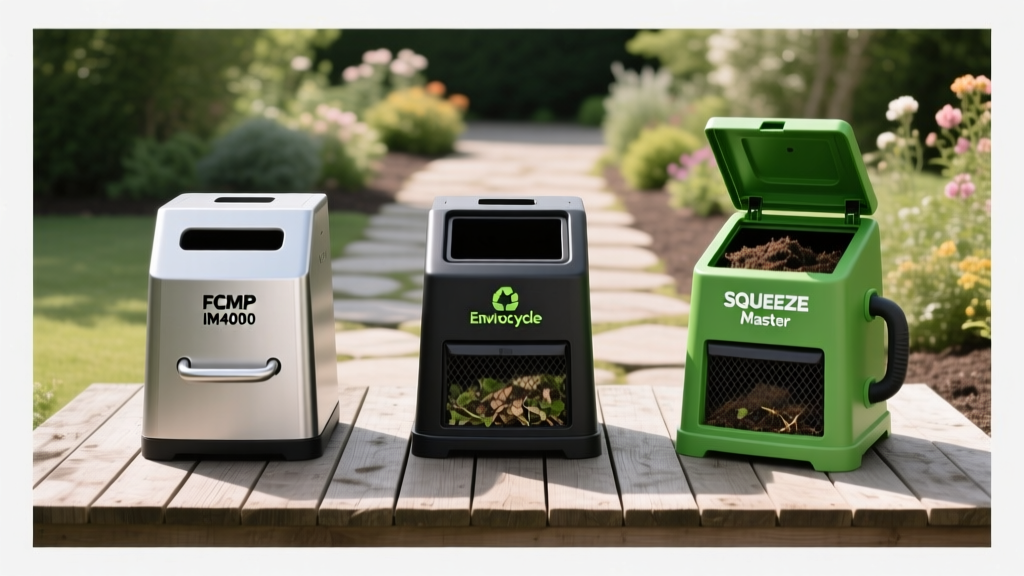
Best Tumbling Composters: FCMP vs. Envirocycle Reviewed
Emily WatsonPublished
The Rise of the Tumbling Composter in Home Gardening
For home gardeners looking to close the nutrient loop, composting is an essential practice. However, traditional open compost piles can be unsightly, attract pests, and require significant physical labor to turn. Enter the tumbling composter: an enclosed, elevated, and easily rotatable bin designed to accelerate the decomposition process while keeping rodents at bay. According to the Environmental Protection Agency (EPA), composting not only enriches soil and helps retain moisture but also significantly reduces methane emissions from landfills by diverting organic yard and food waste.
But with dozens of models on the market, which tumbler actually delivers dark, crumbly 'black gold' in a matter of weeks? In this comprehensive review and comparison, we evaluate three of the most popular tumbling composters on the market: the FCMP Outdoor IM4000, the Envirocycle, and the SQUEEZE Master. We will break down their capacities, materials, aeration designs, and overall value to help you make an informed investment for your garden.
Quick Comparison Chart
Before diving into the in-depth reviews, here is a side-by-side data table comparing the core specifications of these top-tier compost tumblers.
| Model | Capacity | Chamber Design | Primary Materials | Est. Price Range |
|---|---|---|---|---|
| FCMP IM4000 | 37 Gallons | Dual Chamber | BPA-Free Polypropylene, Galvanized Steel | $80 - $100 |
| Envirocycle | 35 Gallons | Single Drum + Curing Base | Recycled Plastic, Rust-Proof Aluminum | $130 - $160 |
| SQUEEZE Master | 43 Gallons | Dual Chamber | Thickened PP, Powder-Coated Steel | $90 - $120 |
In-Depth Product Reviews
1. FCMP Outdoor IM4000 Dual Chamber Tumbling Composter
The FCMP IM4000 is arguably the most recognizable tumbling composter in the home gardening space, and for good reason. It offers a highly functional dual-chamber design that allows for continuous composting. While one side is curing and finishing, you can continue to add fresh kitchen scraps and yard clippings to the other side.
- Capacity & Dimensions: At 37 gallons (roughly 5 cubic feet), it holds enough material to generate the critical mass needed for hot composting, yet it remains compact enough for urban patios.
- Aeration & Mixing: The interior features deep fins that act as baffles. As you spin the drum, these fins break up clumps and mix the materials thoroughly, ensuring oxygen reaches the aerobic microbes.
- Durability: The drum is constructed from UV-resistant, BPA-free recycled polypropylene, while the frame is made of galvanized steel to resist rust.
The Verdict: The FCMP IM4000 is the best budget-friendly option for beginners. The dual-chamber setup is a game-changer for continuous harvesting. However, assembly can be tedious, requiring a power drill and about an hour of your time, and the sliding doors can occasionally stick if organic matter gets trapped in the tracks.
2. Envirocycle The Most Beautiful Composter
Marketeted as 'The Most Beautiful Composter in the World,' the Envirocycle prioritizes aesthetics without sacrificing functionality. It is designed to look like a piece of high-end garden decor rather than a utilitarian waste bin.
- Capacity & Design: It features a 35-gallon main drum. Unlike dual-chamber models, it uses a single drum that sits on a unique, multi-functional base. The base acts as a secondary curing area and features a built-in reservoir to collect nutrient-dense compost tea.
- Aeration & Mixing: Instead of internal fins, the Envirocycle uses a series of raised ribs and a curved interior to tumble the compost. The drum also features adjustable air vents to control oxygen flow and moisture levels.
- Durability: The frame is made from rust-proof aluminum, and the drum is constructed from food-safe, UV-protected recycled plastic. It is completely free of BPA and phthalates.
The Verdict: If you have a highly visible garden space or a small urban balcony where aesthetics matter, the Envirocycle is unmatched. The compost tea collection base is a brilliant addition for liquid fertilization. The primary drawback is the price point—it is significantly more expensive than its competitors—and the single-chamber design means you must stop adding fresh scraps if you want a finished batch.
3. SQUEEZE Master Large Compost Tumbler
For gardeners with larger properties and higher volumes of yard waste, the SQUEEZE Master offers a robust, heavy-duty solution. It builds upon the dual-chamber concept but scales up the durability and capacity.
- Capacity & Dimensions: Boasting a massive 43-gallon capacity, it is one of the largest tumblers in its class. This extra volume is excellent for processing heavy autumn leaf falls and large-scale garden clear-outs.
- Aeration & Mixing: It features 10 adjustable air vents and deep internal mixing fins. The large hexagonal hand grips on the outside of the drum make it surprisingly easy to turn, even when fully loaded with heavy, wet materials.
- Durability: SQUEEZE Master utilizes a thickened, powder-coated steel frame that can withstand harsh weather conditions and heavy snow loads without bending.
The Verdict: The SQUEEZE Master is the workhorse of the group. It is ideal for serious gardeners who generate a lot of biomass. The trade-off is its sheer size and weight; once filled, it requires a bit more physical effort to rotate, and it takes up a larger footprint in the yard.
Critical Buying Factors for Gardeners
When selecting a tumbling composter, it is vital to look beyond the marketing claims and focus on the biological requirements of decomposition. The Cornell Waste Management Institute emphasizes that aerobic composting requires a careful balance of oxygen, moisture, carbon, and nitrogen. Here is what you must consider:
1. Aeration Mechanics
Oxygen is the fuel for the microbes breaking down your organic matter. Tumblers that rely solely on spinning without internal baffles or fins often result in a compacted, anaerobic sludge that smells like ammonia or rotten eggs. Always choose a model with deep internal fins or ribs that physically break apart the compost matrix during rotation.
2. Capacity vs. Critical Mass
Hot composting requires a minimum volume to retain the heat generated by microbial activity. While smaller 15-gallon tumblers exist, they rarely achieve the temperatures necessary to kill weed seeds and pathogens. A capacity between 35 and 45 gallons provides the ideal 'critical mass' for thermal composting while remaining light enough to turn by hand.
3. Dual vs. Single Chambers
A common mistake beginners make is continuously adding fresh kitchen scraps to a single-chamber tumbler. This resets the composting clock, meaning you never actually get finished compost. Dual-chamber models solve this by providing a dedicated 'finishing' side. If you opt for a single-chamber model like the Envirocycle, you must be disciplined about batching your inputs or using a separate curing bin.
Best Practices for Tumbler Composting
Even the most expensive tumbler will fail if managed incorrectly. To ensure rapid decomposition, follow these actionable guidelines endorsed by organic farming experts at the Rodale Institute:
- Master the C:N Ratio: Aim for a 3:1 ratio of 'Browns' (carbon-rich materials like dry leaves, shredded cardboard, and straw) to 'Greens' (nitrogen-rich materials like vegetable scraps and fresh grass clippings) by volume. This prevents the tumbler from becoming a slimy, foul-smelling mess.
- Monitor Moisture Levels: Your compost should feel like a wrung-out sponge. If it is too dry, the microbes will go dormant; add a splash of water or more fresh greens. If it is too wet, add shredded dry leaves or paper to absorb the excess.
- Establish a Turning Schedule: Spin the tumbler 3 to 4 full rotations every 2 to 3 days. Over-turning can actually disrupt the fungal networks forming in the compost, while under-turning starves the system of oxygen.
- Chop Before You Drop: The surface area of your organic matter dictates how fast it breaks down. Run over leaves with a lawnmower and chop large vegetable scraps into 1-inch pieces before adding them to the bin.
Pro Tip: To kickstart a brand-new batch in your tumbler, add a few shovelfuls of finished compost, rich garden topsoil, or a commercial compost starter. This introduces a robust colony of indigenous microbes to begin breaking down the fresh materials immediately.
Final Verdict: Which Should You Buy?
Choosing the right tumbling composter ultimately depends on your garden's size, your budget, and your aesthetic preferences.
For the best overall value and functionality, the FCMP IM4000 remains the undisputed champion. Its dual-chamber design and reliable aeration fins make it incredibly easy to produce continuous batches of high-quality compost without breaking the bank.
If you are an urban gardener or patio grower who needs a system that looks beautiful and provides liquid compost tea, the premium price of the Envirocycle is entirely justified. Its rust-proof aluminum frame and elegant design make it a standout feature rather than an eyesore.
Finally, for large-scale gardeners dealing with heavy yard waste and large volumes of autumn leaves, the SQUEEZE Master offers the heavy-duty capacity and structural integrity required to handle the load season after season.
By investing in the right tumbler and maintaining a proper balance of greens and browns, you will transform your garden waste into a powerful, soil-building resource that will keep your vegetables and flowers thriving for years to come.
