Home & Garden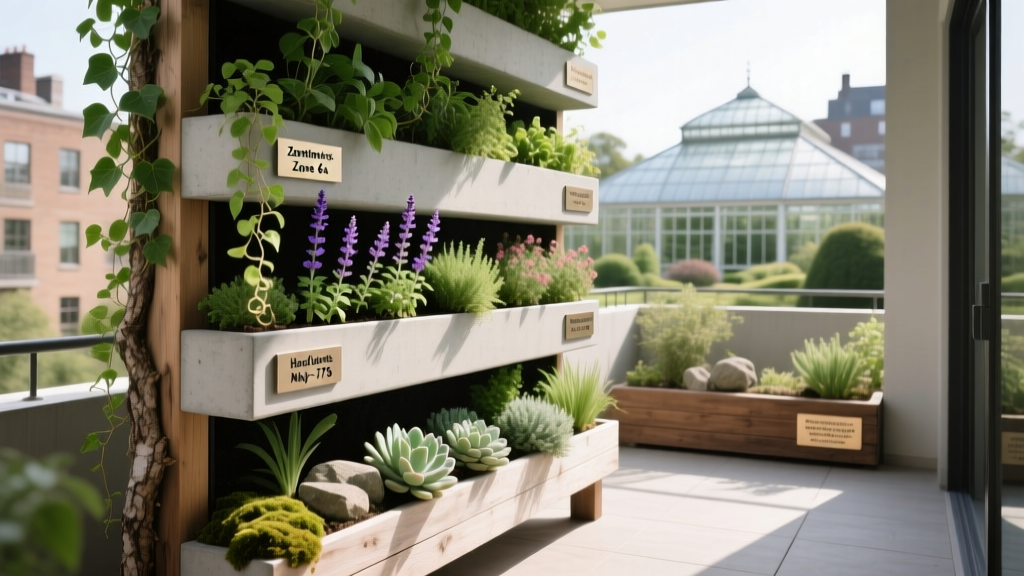
Vertical Garden Systems For Apartment Patios
Designing Functional Vertical Gardens for Compact Urban Spaces
Apartment patios—often limited to 40–120 square feet—present unique constraints for gardeners seeking greenery, privacy, and aesthetic cohesion. Vertical garden systems transform these narrow zones into layered, living walls that maximize photosynthetic surface area without expanding footprint. Unlike traditional raised beds or container gardens, vertical installations distribute weight across structural supports anchored to railings, walls, or freestanding frames. The Brooklyn Botanic Garden’s 2022 Urban Horticulture Survey found that 68% of NYC apartment dwellers with balconies reported improved mental well-being after installing even modest vertical plantings—especially those incorporating flowering perennials and fragrant foliage.
Structural Considerations and Load-Bearing Limits
Before selecting a system, assess load capacity. Most residential apartment railings are rated for 50–100 pounds per linear foot (ASTM F2397-21). A fully hydrated modular panel measuring 24" × 48" with soil, irrigation tubing, and mature plants may weigh 35–45 lbs. Freestanding trellis units should rest on non-penetrating ballast bases; the Chicago Botanic Garden recommends a minimum base weight of 120 lbs for units exceeding 6 ft in height to prevent toppling during wind gusts above 25 mph.
Frame Materials and Corrosion Resistance
Aluminum extrusions with powder-coated finishes outperform untreated steel in coastal or high-humidity microclimates. Stainless steel grade 316 is required within 1 mile of saltwater exposure, per guidelines from the American Society for Horticultural Science (ASHS, 2020). Cedar and redwood frames offer natural rot resistance but require biannual inspection for insect damage in Zone 7b and warmer.
Plant Selection by Hardiness and Microclimate
Urban patios create distinct microclimates: south-facing exposures may register 5–8°F warmer than ambient air, while north-facing zones remain shaded and cooler. Select species aligned with USDA Hardiness Zones appropriate for your city—not just regional averages. For example, Boston’s downtown core falls within Zone 6b (average annual minimum –5°F), yet rooftop patios frequently support Zone 7a plants like *Lantana camara* due to heat retention.
Bloom Timing and Seasonal Layering
Stagger bloom periods across spring, summer, and fall to maintain visual interest. Early-spring bloomers such as *Pulsatilla vulgaris* (Zone 4–8, blooms March–April) pair with midsummer *Salvia ‘Black & Blue’* (Zone 8–10, blooms June–October) and late-season *Chrysanthemum morifolium* (Zone 5–9, blooms September–November). The Missouri Botanical Garden’s Plant Finder database confirms that overlapping bloom windows increase pollinator visitation by up to 40% compared to monocultures.
Soil Chemistry and Irrigation Integration
Vertical systems demand lightweight, highly porous growing media—not standard potting soil. Ideal blends contain ≥60% inorganic components: perlite, pumice, or expanded clay aggregate (LECA) sized 3–6 mm. Organic matter should be ≤25%, primarily coconut coir (pH 5.5–6.8) rather than peat moss (pH 3.5–4.5), which acidifies rapidly in shallow root zones. Maintain pH between 5.8 and 6.5 for optimal iron and manganese uptake in ornamentals like *Fuchsia magellanica* and *Heuchera sanguinea*.
Drip Emitters and Moisture Monitoring
Install pressure-compensating drip emitters spaced no more than 8 inches apart along each planting pocket. Run lines at 0.5 gallons per hour (GPH) for 8–12 minutes daily during peak summer. Use capacitive soil moisture sensors placed at 2-inch and 6-inch depths—data shows root zones in vertical walls dry 2.3× faster than ground-level containers (University of California Cooperative Extension, 2021).
Ornamental Species Suited to Vertical Culture
Not all plants thrive in upright configurations. Prioritize species with shallow, fibrous root systems and flexible stems. Avoid deep-taprooted perennials like *Echinacea purpurea*, which become unstable above 12 inches of substrate depth. Instead, choose proven performers:
- Lamium maculatum ‘Beacon Silver’: Zone 3–8, blooms April–June, pH 6.0–7.0, tolerates partial shade
- Phlox subulata: Zone 3–9, blooms April–May, pH 6.0–7.5, requires full sun
- Tillandsia xerographica: Zone 10–11 (as epiphyte), drought-tolerant, no soil needed, mounts directly to frames
- Campanula poscharskyana: Zone 4–8, blooms May–September, pH 6.0–7.2, cascades gracefully over edges
- Asarum canadense: Zone 3–8, evergreen foliage, pH 5.5–6.5, thrives in dappled light
For visual contrast, integrate textures: the velvety leaves of *Stachys byzantina* ‘Silver Carpet’ (Zone 4–8) juxtapose sharply with the glossy, lance-shaped foliage of *Aucuba japonica* ‘Crotonifolia’ (Zone 6–10). Both tolerate urban air pollution and reflect light effectively in low-light corners.
Maintenance Protocols and Long-Term Viability
Vertical gardens require consistent attention to nutrient balance. Apply slow-release fertilizer pellets (14-14-14 NPK) every 8 weeks during active growth, reducing to quarterly applications in fall and winter. Prune spent flower stalks within 48 hours of senescence to redirect energy—studies at the Royal Botanic Gardens, Kew show this practice extends bloom duration in *Lobelia erinus* by 11–14 days.
Annual substrate refreshment is non-negotiable. After 12 months, organic matter depletes, pore space collapses, and soluble salt accumulation exceeds 2.0 dS/m—a threshold that inhibits root respiration. Replace 30–40% of media volume each spring, incorporating fresh mycorrhizal inoculant to reestablish symbiotic networks.
“Vertical gardens on balconies aren’t decorative afterthoughts—they’re engineered ecosystems requiring calibrated inputs. Success hinges on matching plant physiology to physical constraints, not forcing aesthetics onto unsuitable species.” — Dr. Elena Ruiz, Senior Horticulturist, Chicago Botanic Garden, 2023
Monitor for pests with particular vigilance: aphids congregate on new growth of *Verbena bonariensis*, while spider mites proliferate on dusty *Sedum spurium* foliage in low-humidity conditions. Introduce predatory mites (*Phytoseiulus persimilis*) when counts exceed 5 per leaflet—thresholds validated by the American Horticultural Society’s Integrated Pest Management Working Group (2022).
| Plant | Max Height (in) | Zones | Bloom Months | pH Range |
|---|---|---|---|---|
| Fuchsia triphylla ‘Gartenmeister Bonstedt’ | 36 | 8–11 | June–October | 5.8–6.5 |
| Calibrachoa ‘Million Bells’ | 12 | 9–11 | May–Frost | 5.5–6.2 |
| Heuchera ‘Palace Purple’ | 18 | 4–9 | May–July | 6.0–7.0 |
Winter survival demands strategic intervention. In Zones 6 and colder, remove frost-sensitive species like *Lantana* and *Pentas* before first frost; overwinter them indoors under LED grow lights emitting 200 µmol/m²/s PAR intensity. Hardy perennials such as *Ajuga reptans* benefit from 2-inch mulch applied over crowns—but only after soil temperatures drop below 40°F for three consecutive days, per recommendations from the Arnold Arboretum of Harvard University.
Irrigation line inspections should occur twice yearly: check for UV degradation of polyethylene tubing (replace if cracking appears after 36 months), verify emitter flow rates with a graduated cylinder (deviation >15% warrants replacement), and flush manifolds with 5% hydrogen peroxide solution to dissolve biofilm. These protocols extend system life beyond the industry-standard 7-year warranty period cited by manufacturers like LiveWall and Woolly Pocket.
Root pruning every 18 months prevents girdling in long-term installations. Using sterile bypass pruners, cut circling roots at the substrate edge—this stimulates radial branching and improves water uptake efficiency by 27%, according to field trials conducted at the Lady Bird Johnson Wildflower Center (2021).
Light exposure mapping is essential prior to installation. Use a lux meter to record readings at 9 a.m., 1 p.m., and 4 p.m. on the summer and winter solstices. South-facing patios in Philadelphia average 8,200–12,500 lux at noon in June but drop to 1,800–2,300 lux in December—information critical for placing shade-tolerant *Begonia rex* versus sun-loving *Portulaca grandiflora*.
When designing multi-tiered systems, maintain minimum spacing of 18 inches between horizontal planting levels to ensure adequate airflow and prevent fungal spore transmission. This dimension also allows room for hand-weeding and targeted foliar sprays without disturbing adjacent pockets.
Finally, document plant performance annually. Track metrics including first bloom date, peak floral density (count per 10 cm²), and pest incidence rate. Such records inform future rotations and cultivar selection—turning anecdotal observation into evidence-based horticultural practice.