Tree Care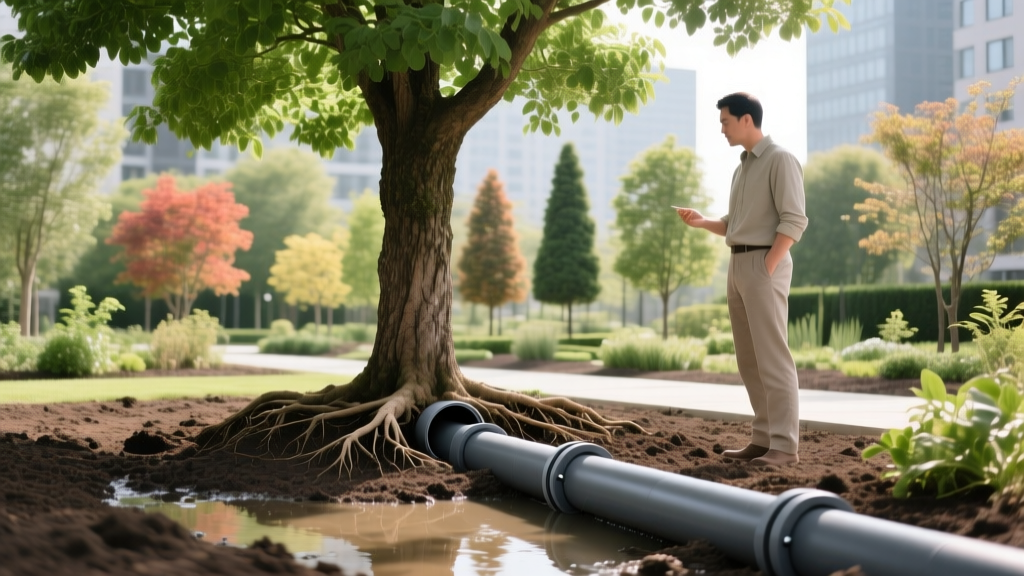
2026 Verticillium Wilt Guide: Drainage & Resistant Trees
David ParkPublished
The 2026 Landscape Challenge: Verticillium Wilt and Waterlogged Soils
As we navigate the 2026 growing season, landscape professionals and homeowners alike are facing an uptick in soil-borne diseases, most notably Verticillium wilt. Caused by the fungal pathogens Verticillium dahliae and Verticillium albo-atrum, this devastating disease attacks the vascular system of over 300 species of woody and herbaceous plants. While the pathogen itself is microscopic, its impact is macroscopic, leading to severe canopy dieback, stunted growth, and ultimately, tree mortality. However, the true catalyst for severe Verticillium outbreaks in residential landscapes is often hidden beneath the surface: poor soil drainage. When heavy spring rains saturate the soil profile, root systems become oxygen-deprived and stressed, creating the perfect entry points for fungal spores. This is where strategic infrastructure, specifically the installation of modern landscape drainage pipes, becomes a critical component of your tree care and disease management strategy.
Accurate Diagnosis of Verticillium Wilt
Before you can implement a drainage or replanting strategy, you must accurately diagnose the problem. Verticillium wilt is frequently misidentified as drought stress, compacted soil, or root rot. According to The Morton Arboretum, the hallmark above-ground symptom is 'flagging'—the sudden wilting and browning of leaves on one or more branches on one side of the tree, while the rest of the canopy appears healthy. As the disease progresses, marginal leaf scorch appears, and smaller branches die back entirely.
To confirm Verticillium wilt, you must look below the bark. Carefully peel back the bark on a recently wilted, but not entirely dead, branch. If Verticillium is present, you will see distinct vascular streaking in the sapwood. This discoloration typically appears as greenish-black, brown, or olive-green streaks following the grain of the wood. If the wood is uniformly brown or mushy, you are likely dealing with root rot exacerbated by standing water, which brings us back to the absolute necessity of landscape drainage pipes to correct the underlying environmental flaw.
Why Landscape Drainage Pipes Are Your Best Defense
Verticillium fungi thrive in cool, moist, and poorly aerated soils. When a landscape lacks proper subsurface drainage, water pools in the root zone, displacing vital oxygen. Anaerobic soil conditions weaken the tree's natural defense mechanisms, making it highly susceptible to fungal invasion. By integrating high-capacity landscape drainage pipes into your yard's hydrology plan, you actively manipulate the soil moisture content, creating an environment that is hostile to fungal proliferation and conducive to robust root health.
Selecting the Right Drainage Pipe for Tree Zones
Not all pipes are created equal when working around sensitive root systems. In 2026, the industry standard for residential and commercial landscape drainage involves a combination of rigid and flexible materials tailored to the specific hydrology of the site:
- Corrugated HDPE (High-Density Polyethylene) Slotted Pipe: Flexible and easy to route around existing tree root balls, 4-inch to 6-inch corrugated pipes with pre-drilled slots are ideal for French drains. They allow water to seep in from all sides while maintaining structural integrity under soil loads.
- Rigid PVC SDR 35: For main trunk lines that carry water away from the property, rigid PVC is superior. It resists root intrusion better than corrugated alternatives and maintains a precise slope, which is critical for gravity-fed drainage systems.
- Geotextile Wrapping: To prevent soil particles and fine root hairs from clogging the pipe slots over time, always wrap corrugated pipes in a non-woven geotextile fabric (such as Typar or Mirafi) before backfilling with aggregate.
Installing Subsurface Drainage Around Existing Trees
Installing landscape drainage pipes near mature trees requires extreme caution to avoid severing structural roots. Traditional trenching with a backhoe can fatally compromise a tree's stability and health. Instead, utilize pneumatic air excavation tools (like an AirSpade) to safely expose the root matrix. This allows you to tunnel under major lateral roots to lay your drainage pipe without causing catastrophic root damage.
When designing the drain field, ensure the trench is located just outside the tree's drip line. Lay a base of washed river rock (avoid crushed gravel, which can compact and impede water flow), place the geotextile-wrapped corrugated pipe on top, and cover it with more rock before folding the fabric over the top like a burrito. This prevents topsoil from migrating into the aggregate and clogging the system. Ensure the pipe maintains a minimum slope of 1/8 inch per foot to guarantee positive flow away from the tree's critical root zone.
To maximize the efficiency of your landscape drainage pipe system, integrate NDS catch basins at surface low points to capture runoff before it percolates into the subsoil. At the termination point of your pipe run, use a pop-up emitter to safely discharge the collected water into a daylighted area or dry well, ensuring that the water is truly removed from the property rather than just relocated to another part of the yard.
Top Verticillium-Resistant Trees for 2026 Landscapes
If a tree has succumbed to Verticillium wilt, it must be removed, and the soil will remain inoculated with fungal microsclerotia for up to a decade. Replanting with susceptible species is a recipe for failure. The University of Minnesota Extension strongly recommends selecting resistant or immune species for sites with a known history of the disease. Below is a comparison chart of susceptible versus resistant trees ideal for 2026 landscape designs.
| Tree Category | Common Name | Botanical Name | Verticillium Resistance |
|---|---|---|---|
| Susceptible | Norway Maple | Acer platanoides | Highly Susceptible |
| Susceptible | White Ash | Fraxinus americana | Highly Susceptible |
| Susceptible | American Elm | Ulmus americana | Moderately Susceptible |
| Resistant | Ginkgo | Ginkgo biloba | Immune |
| Resistant | Bur Oak | Quercus macrocarpa | Highly Resistant |
| Resistant | River Birch | Betula nigra | Highly Resistant |
| Resistant | Eastern Redbud | Cercis canadensis | Resistant |
| Resistant | Dogwood | Cornus florida | Immune |
Long-Term Soil and Moisture Management
Even with resistant trees and a newly installed landscape drainage pipe network, ongoing cultural care is essential. Avoid over-fertilizing with high-nitrogen synthetic fertilizers, as this promotes rapid, succulent growth that is more vulnerable to fungal penetration. Instead, rely on slow-release organic amendments that improve soil structure and microbial diversity.
Mulching is another critical practice, but it must be done correctly. Apply a 2-to-3-inch layer of organic arborist wood chips over the root zone to regulate soil temperature and retain moisture during dry spells. However, keep the mulch at least 4 inches away from the trunk flare to prevent bark decay and rodent damage. In 2026, smart irrigation controllers equipped with soil moisture sensors are invaluable. These devices prevent the overwatering that often negates the benefits of your drainage system. Furthermore, conduct a comprehensive soil test every three years to monitor pH and nutrient levels. Verticillium fungi prefer alkaline conditions; maintaining a slightly acidic to neutral soil pH (between 6.0 and 7.0) can subtly suppress fungal activity while optimizing nutrient uptake for your resistant tree species.
By combining the hydrological control of subsurface drainage pipes with intelligent tree selection and meticulous cultural practices, you can safeguard your landscape against Verticillium wilt for decades to come, ensuring a vibrant, healthy canopy year after year.