Tree Care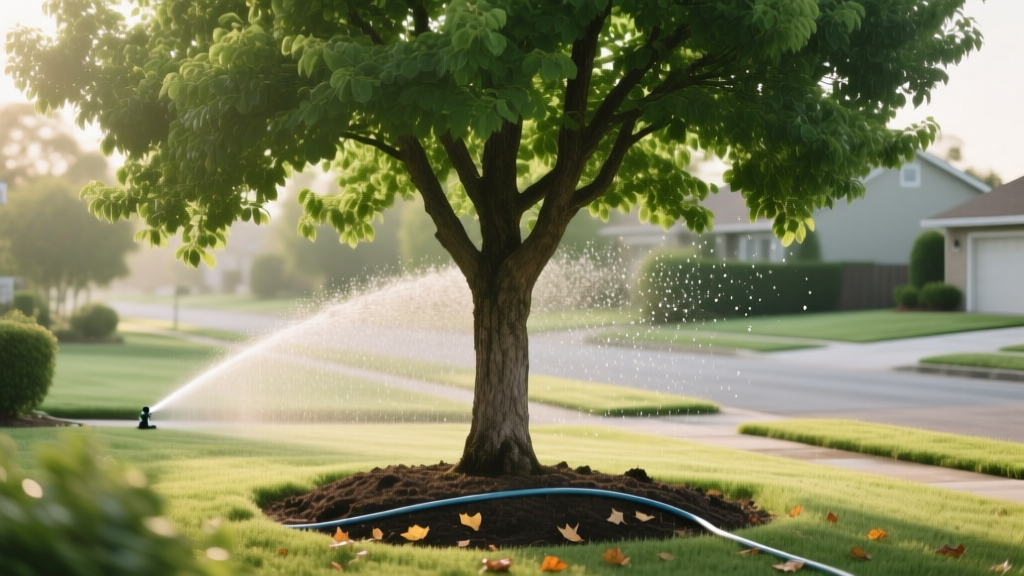
Verticillium Wilt & Irrigation: 2026 Resistant Tree Guide
James MillerPublished
The Hidden Threat in Your Sprinkler Zones
Verticillium wilt is a devastating soil-borne fungal disease caused primarily by Verticillium dahliae and Verticillium albo-atrum. For homeowners and landscape professionals managing irrigated properties in 2026, this pathogen presents a unique challenge. Unlike foliar diseases that thrive on wet leaves, Verticillium attacks the vascular system of trees from the roots up, and its proliferation is heavily influenced by soil moisture dynamics. When traditional sprinkler and irrigation systems are poorly designed or mismanaged, they create the exact cool, saturated soil conditions this fungus needs to thrive.
As climate patterns shift and water conservation becomes a stricter priority in 2026, understanding the intersection of irrigation hydrology and tree pathology is critical. Overwatering, poor drainage, and surface runoff from lawn sprinklers can inadvertently spread fungal microsclerotia (the survival structures of the disease) across your property, turning a localized infection into a landscape-wide epidemic.
Diagnosing Verticillium Wilt vs. Irrigation Stress
One of the most difficult aspects of managing Verticillium wilt is that its early symptoms closely mimic common irrigation issues, such as drought stress or overwatering-induced root rot. Accurate diagnosis requires looking beyond the canopy and understanding how water delivery impacts root health.
Key Symptoms to Monitor
- Flagging: Sudden wilting, yellowing, and browning of leaves on one side of the tree or on individual branches, while the rest of the canopy appears healthy.
- Marginal Leaf Scorch: Leaves develop V-shaped necrotic lesions at the tips and margins, often dropping prematurely in mid-summer.
- Vascular Streaking: The definitive diagnostic test. Peel back the bark on a recently wilted (but not dead) branch. If you see greenish-black or dark brown streaks in the sapwood (xylem), Verticillium is likely the culprit.
According to the University of Minnesota Extension, drought stress will cause uniform wilting across the canopy and lacks the dark vascular streaking seen in Verticillium infections. Conversely, if a sprinkler zone is overwatering a tree, you may see generalized yellowing and root decay, but again, without the characteristic xylem discoloration.
How Traditional Sprinkler Systems Exacerbate the Fungus
If you have confirmed Verticillium wilt on your property, your irrigation system may be acting as an accomplice. Here is how traditional spray-head sprinkler systems worsen the disease:
- Soil Saturation and Anaerobic Conditions: Spray heads designed for turfgrass often deliver water too quickly for clay or compacted soils to absorb. This leads to prolonged soil saturation, depriving tree roots of oxygen and weakening their natural defenses against soil-borne pathogens.
- Surface Runoff and Spore Migration: When sprinklers overspray onto hard surfaces or grade slopes, the resulting runoff picks up infected soil particles and microsclerotia, depositing them into the root zones of previously healthy trees.
- Root Crown Rot: Sprinklers that consistently hit the base of the trunk keep the root crown moist, inviting secondary opportunistic pathogens like Phytophthora to attack the already weakened tree.
2026 Irrigation Upgrades to Halt Disease Progression
To protect susceptible trees and create a safe environment for new plantings, upgrading your irrigation infrastructure is non-negotiable. In 2026, the industry standard for tree health revolves around precision moisture delivery and smart monitoring.
Transitioning to Subsurface Drip Irrigation
Eliminate spray heads within the dripline of your trees. Instead, install subsurface or point-source drip irrigation. Products like the Rain Bird XFD Dripline or Netafim UniTechline deliver water directly to the root zone at a slow rate, preventing surface saturation and eliminating the runoff that spreads fungal spores. By keeping the soil surface and the tree's root crown dry, you severely restrict the environment Verticillium needs to infect new roots.
Smart Controllers and Soil Moisture Sensors
Watering on a fixed schedule is a relic of the past. Modern smart controllers, such as the Hunter Hydrawise Pro-C or the Rachio 3, integrate with local weather data and on-site soil moisture sensors. The EPA WaterSense program heavily recommends these smart controllers to prevent the anaerobic soil conditions that accelerate root diseases. By ensuring your trees only receive water when the soil moisture drops below a specific threshold, you maintain optimal root aeration and tree vigor.
Top Verticillium-Resistant Trees for Irrigated Landscapes
If you are removing a tree lost to Verticillium wilt, do not replant a susceptible species in the same hole. The fungus can survive in the soil for over a decade without a host. Instead, select from the resistant species listed below, pairing them with the correct irrigation methodology.
| Tree Species | Common Name | Resistance Level | Ideal 2026 Irrigation Method | Mature Water Needs |
|---|---|---|---|---|
| Ginkgo biloba | Ginkgo | Highly Resistant | Point-Source Drip Emitters | Low to Moderate |
| Lagerstroemia indica | Crape Myrtle | Highly Resistant | Micro-Spray / Drip Ring | Moderate |
| Gleditsia triacanthos | Thornless Honeylocust | Highly Resistant | Subsurface Dripline | Low |
| Platanus occidentalis | American Sycamore | Resistant | Bubbler / Deep Root Watering | High |
| Zelkova serrata | Japanese Zelkova | Resistant | Point-Source Drip Emitters | Moderate |
| Liquidambar styraciflua | Sweetgum | Resistant | Subsurface Dripline | Moderate |
Note: Avoid planting Maples (Acer), Ash (Fraxinus), Catalpa, and Stone Fruits (Prunus) in areas with a known history of Verticillium wilt, as they are highly susceptible.
Step-by-Step Drip Conversion for Tree Health
To properly establish a resistant tree in a zone previously dominated by lawn sprinklers, follow these actionable steps:
- Cap the Sprinklers: Use PVC or poly pipe caps to seal off the spray heads within a 10-foot radius of the tree's trunk. Do not just turn off the valve; capping prevents pressure loss in the rest of the turf zone.
- Install a Dedicated Valve: Trees require longer, less frequent watering cycles than turfgrass. Run a new poly tube from your manifold to a dedicated tree valve equipped with a pressure regulator (drip systems require 15-25 PSI, whereas sprinklers run at 40-60 PSI).
- Layout the Drip Ring: Place drip emitters or a dripline ring at the tree's dripline (the outer edge of the canopy), not directly against the trunk. As the tree grows in 2026 and beyond, expand the drip ring outward to match canopy growth.
- Apply Proper Mulch: Apply a 2-to-3-inch layer of organic wood chip mulch over the drip zone to retain moisture and regulate soil temperature. Crucial: Keep the mulch at least 4 inches away from the trunk to prevent root crown rot and rodent damage.
Long-Term Management and Soil Health
While resistant trees and drip irrigation form your primary defense, overall soil biology plays a massive role in suppressing Verticillium. The Morton Arboretum emphasizes that maintaining tree vigor through proper fertilization and avoiding high-nitrogen synthetic fertilizers can help trees wall off the fungus internally. High nitrogen promotes rapid, succulent growth that is highly vulnerable to vascular invasion.
Furthermore, avoid deep tilling or using heavy machinery within the dripline of your trees. Wounding the roots provides a direct entry point for Verticillium spores lingering in the soil. By combining careful soil management with precision 2026 irrigation technology, you can successfully landscape with beautiful, shade-providing trees even in soils with a history of this destructive disease.
Conclusion
Verticillium wilt is a formidable opponent, but it is not an automatic death sentence for your landscape. By accurately diagnosing the disease, eliminating the excessive soil moisture caused by outdated sprinkler systems, and selecting genetically resistant tree species, you can build a resilient, thriving yard. Upgrading to smart-controlled drip irrigation not only protects your trees from fungal pathogens but also aligns your property with modern water conservation standards, ensuring your landscape remains vibrant and healthy for decades to come.