Tree Care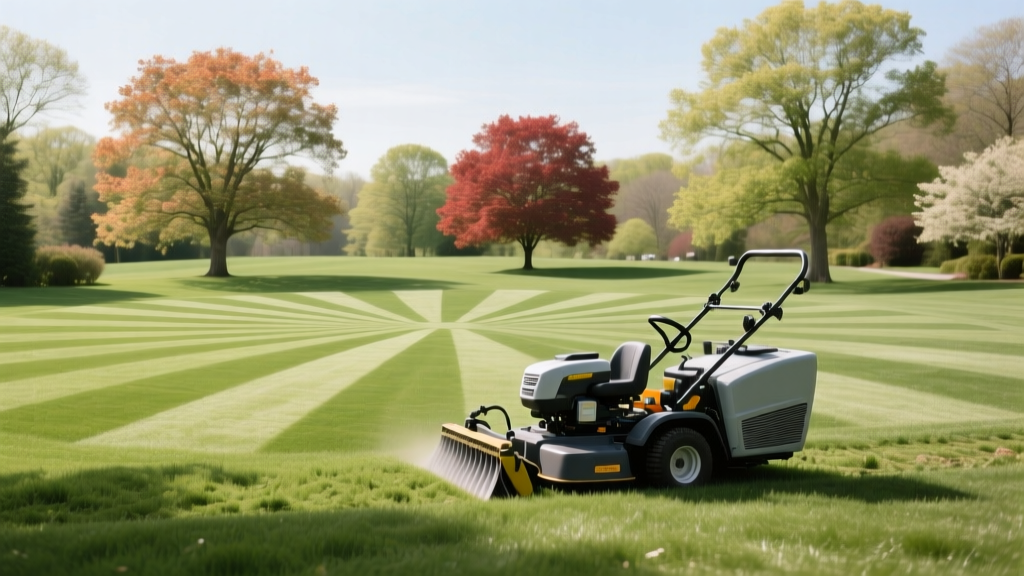
Verticillium Wilt & Resistant Trees: 2026 Mowing Guide
Emily WatsonPublished
The Hidden Link Between Mowing Practices and Verticillium Wilt
When managing a mixed landscape of turfgrass and ornamental trees in 2026, lawn care professionals and homeowners often overlook the mechanical vectors that spread devastating plant diseases. Verticillium wilt, caused by the soil-borne fungi Verticillium dahliae and Verticillium albo-atrum, is a notorious killer of over 300 woody plant species. While it is primarily a soil-borne pathogen, your mowing techniques, equipment sanitation, and turf patterns play a massive, often ignored role in both the spread of the disease and the physiological stress that makes trees susceptible to it.
The fungus survives in the soil as microscopic structures called microsclerotia, which can remain viable for over a decade without a host. When you mow turf adjacent to an infected tree, mower blades inevitably strike the soil surface, kick up debris, and lodge contaminated dirt into the mower deck. Moving that same zero-turn or push mower to a healthy tree's root zone effectively inoculates the new area. Furthermore, the physical act of mowing—heavy equipment, tight turning patterns, and frequent traffic—causes severe soil compaction over the critical root zone (CRZ), depriving tree roots of oxygen and weakening their natural chemical defenses against fungal invasion.
Diagnosing Verticillium Wilt vs. Mower-Induced Stress
Before selecting resistant species or altering your mowing routes, you must accurately diagnose the problem. Verticillium wilt symptoms often mimic drought stress or damage caused by improper mowing practices. According to the Penn State Extension, the hallmark sign of Verticillium wilt is 'flagging'—where individual branches or entire sections of the canopy suddenly wilt, turn yellow, and die back while the rest of the tree appears healthy.
To confirm the diagnosis, peel back the bark on a recently wilted, but not entirely dead, branch. Look for vascular streaking, which appears as olive-green, bluish-black, or brown streaks in the sapwood. This discoloration occurs because the fungus physically blocks the tree's xylem tissue, preventing water transport.
It is crucial to differentiate this from mower-induced damage. String-trimmer girdling at the root flare will cause general canopy decline, not one-sided flagging. Similarly, severe soil compaction from heavy commercial mowers pivoting on the root zone causes hypoxia (oxygen starvation), leading to uniform chlorosis (yellowing) and small leaf size, rather than the sudden vascular collapse seen with Verticillium. The UMass Amherst Urban Tree Program emphasizes that laboratory culturing of the wood is the only 100% definitive way to confirm the pathogen, as visual symptoms can overlap with other vascular diseases like oak wilt or Dutch elm disease.
Strategic Mowing Patterns and Equipment Sanitation
If you are managing a property with a history of Verticillium wilt, or if you are protecting high-value susceptible trees (like Japanese maples, redbuds, or catalpas), your 2026 mowing strategy must adapt. Implementing specific patterns and sanitation protocols will drastically reduce pathogen transmission.
The 'Halo' Mowing Pattern
Never execute a zero-turn pivot directly over a tree's root flare or critical root zone. The aggressive tires of a commercial mower tear the turf, sever surface roots, and compact the soil profile. Instead, use the 'Halo' pattern: approach the tree in a wide arc, lift the mower deck slightly as you pass over the outer dripline, and turn only when the mower is entirely on open, non-root-zone turf. This prevents root wounding, which serves as a direct entry point for soil-borne fungi.
Deck Sanitation Protocols
Cross-contamination via mower decks is a primary vector for spreading microsclerotia across a property. In 2026, landscape professionals are adopting strict sanitation zones.
- Pre-Entry Spray: Before entering a high-value tree zone, spray the underside of the mower deck and the tires with a disinfectant.
- Chemical Selection: A 10% sodium hypochlorite (bleach) solution is effective but highly corrosive to mower metals. A better alternative is a quaternary ammonium compound (like KleenGrow or Physan 20), which kills fungal spores without rusting your equipment.
- Debris Removal: Use a compressed air blower or a stiff wire brush to physically remove caked, potentially infected soil from the deck baffles and discharge chutes before applying the chemical spray.
Tire Pressure and Soil Compaction
Soil compaction stresses trees, making them highly susceptible to Verticillium. Lowering the tire pressure on your zero-turn mower to the manufacturer's minimum safe PSI (often around 10-12 PSI for drive tires and 8-10 PSI for casters) increases the tire footprint, distributing the machine's weight more evenly and reducing the pounds-per-square-inch impact on delicate tree roots.
The Rise of Robotic Mowers and Pathogen Vectors
In 2026, the adoption of commercial and residential robotic mowers has skyrocketed, fundamentally changing how we maintain turf near tree root zones. While robotic mowers are significantly lighter than traditional zero-turns—virtually eliminating soil compaction and root hypoxia—they introduce a new challenge for Verticillium management. Because these autonomous units operate on randomized or GPS-guided patterns, they frequently bump into tree trunks and traverse the root flare daily. If a robotic mower's blades encounter infected surface roots or contaminated soil, the small, enclosed cutting deck can harbor damp, fungus-laden clippings for days. To mitigate this, landscape managers are now programming 'exclusion zones' or 'virtual fences' around the critical root zones of susceptible trees, forcing the robotic mower to navigate around a mulched halo rather than driving directly over the vulnerable root flare. This integration of smart mowing technology with traditional tree pathology represents the cutting edge of modern landscape maintenance.
Top Verticillium-Resistant Trees for Mowed Landscapes (2026)
If a tree has died from Verticillium wilt, the soil remains infectious for years. Replanting with susceptible species is a guarantee of failure. When designing a landscape where turfgrass will be actively mowed, you must select species that are both highly resistant to the fungus and tolerant of the occasional soil compaction associated with lawn maintenance.
| Species | Recommended 2026 Cultivar | Wilt Resistance | Root Zone Mower Tolerance |
|---|---|---|---|
| Ginkgo (Ginkgo biloba) | 'Autumn Gold' | Highly Resistant | Excellent; deep rooting handles mild compaction |
| Northern Red Oak (Quercus rubra) | Straight Species | Highly Resistant | Good; requires wide mulch rings to protect shallow feeders |
| Honeylocust (Gleditsia triacanthos) | 'Shademaster' (Thornless) | Highly Resistant | Very Good; adaptable to urban turf environments |
| Zelkova (Zelkova serrata) | 'Green Vase' | Highly Resistant | Moderate; needs structural soil or aeration if mowed heavily |
| Sycamore (Platanus occidentalis) | 'Bloodgood' (London Plane) | Resistant | Excellent; highly tolerant of heavy equipment and poor soils |
When planting these resistant species in 2026, ensure they are placed in areas with adequate drainage. While they resist Verticillium, prolonged waterlogging from poor turf grading can invite secondary root rot pathogens like Phytophthora.
Integrating Turf and Tree Care: The Mulch Buffer
The ultimate defense against both mower damage and pathogen spread is eliminating the need to mow directly over the root zone. Establish a strict mulch buffer using the 3-3-3 rule: apply 3 inches of organic mulch, in a 3-foot radius (minimum) around the trunk, keeping it 3 inches away from the bark. This buffer acts as a physical barrier that keeps mower decks and string trimmers away from the root flare, preserves soil moisture, and regulates soil temperature, keeping the tree vigorous and naturally equipped to fend off disease.
By aligning your mowing patterns, sanitation habits, and species selection, you create a resilient landscape where turf and trees can coexist without the looming threat of vascular collapse.