Tree Care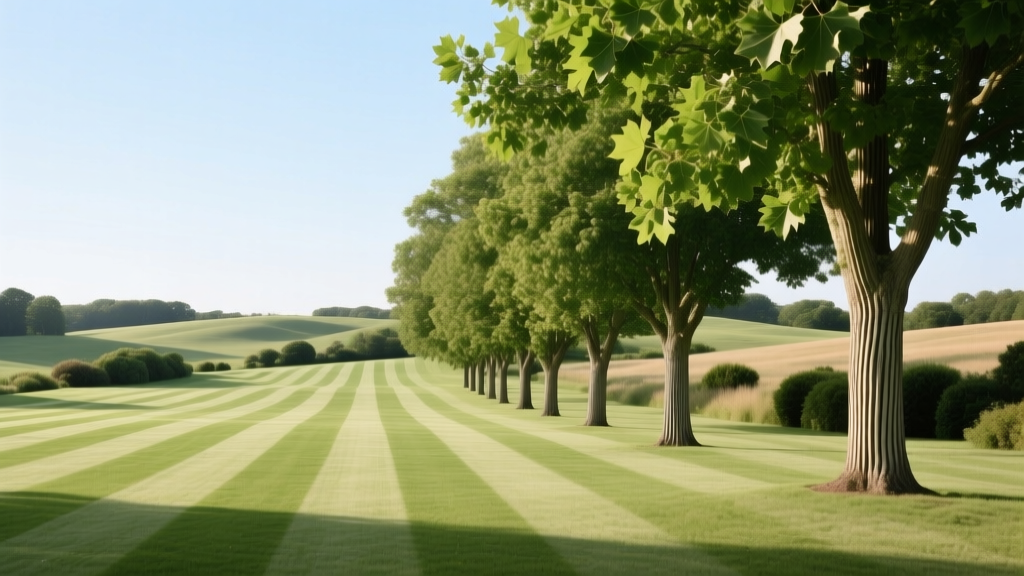
Verticillium Wilt Diagnosis & Resistant Trees For 2026 Lawns
Lisa ThompsonPublished
The Intersection of Lawn Striping and Tree Health
When you invest hours into creating pristine checkerboard, diamond, or wave patterns on your turf using a heavy lawn striper kit, the surrounding landscape acts as the visual frame for your masterpiece. A perfectly striped lawn relies heavily on symmetry, focal points, and clean borders. However, nothing destroys the visual balance of a meticulously patterned yard faster than a dying focal tree. In 2026, landscape architects and turf managers increasingly recognize that tree health is not just an arboriculture issue—it is a critical component of lawn aesthetics.
One of the most devastating and common threats to landscape trees is Verticillium wilt, a soil-borne fungal disease caused primarily by Verticillium dahliae and Verticillium albo-atrum. This pathogen blocks the tree's xylem (water-conducting tissue), leading to sudden wilting, branch dieback, and eventually, tree death. If a prized Japanese Maple or Ash tree succumbs to this disease, its asymmetrical leaf loss and dead limbs will completely ruin the sightlines and symmetry of your striped lawn. To maintain flawless landscape patterns, you must understand how to diagnose this disease and select resistant tree species that complement your turf designs.
Identifying Verticillium Wilt: The Silent Pattern Killer
Verticillium wilt is notoriously difficult to diagnose in its early stages because its symptoms mimic other environmental stresses, such as drought or soil compaction. For lawn care enthusiasts who use heavy steel rollers to bend grass blades for striping, soil compaction is a frequent issue, which can inadvertently stress tree roots and make them more susceptible to fungal invasion.
Key Symptoms to Monitor
- Flagging: The most telltale sign is 'flagging,' where branches on only one side of the tree canopy wilt, turn yellow, and die back while the rest of the tree appears healthy. This asymmetrical dieback is disastrous for formal, symmetrical lawn borders.
- Marginal Leaf Scorch: Leaves develop V-shaped yellow or brown necrotic areas at the margins and tips, often dropping prematurely in mid-summer.
- Vascular Discoloration: The definitive diagnostic feature occurs beneath the bark. The sapwood of infected branches will show olive-green, black, or dark brown streaking.
The Diagnostic Process in 2026
Accurate diagnosis is essential before you remove a tree and disrupt your carefully planned landscape design. According to Penn State Extension, visual symptoms alone are not enough to confirm Verticillium wilt, as oak wilt and environmental stress can look similar.
The Bark Peel Test
To perform a preliminary diagnosis, select a recently wilted branch (do not choose a completely dead, dry branch, as the fungus may no longer be active there). Sterilize a sharp knife with 70% isopropyl alcohol. Peel back the outer bark and examine the sapwood. If you see dark, longitudinal streaks in the wood, Verticillium wilt is highly likely.
Laboratory Confirmation
For absolute certainty, especially before investing in expensive mature replacement trees for your lawn's focal points, send a sample to a university plant diagnostic clinic. In 2026, many extension offices utilize rapid PCR (Polymerase Chain Reaction) testing, which can identify the exact Verticillium species within 48 hours. As noted by the University of Minnesota Extension, confirming the pathogen ensures you do not replant a susceptible species in the same infected soil, which would only lead to a repeat of the aesthetic disaster.
Susceptible vs. Resistant Trees: A Landscaper's Guide
Because the fungus can survive in the soil for over a decade as dormant microsclerotia, chemical fungicides are largely ineffective for curing infected landscape trees. The most reliable strategy for maintaining your lawn's aesthetic integrity is to plant resistant or immune species. Below is a comparison chart tailored for landscape designers focused on turf framing and lawn striping patterns.
| Susceptible Tree (Avoid) | Aesthetic Role in Lawn | Resistant Alternative (2026 Picks) | Stripe Pattern Compatibility |
|---|---|---|---|
| Norway Maple | Dense shade border | Ginkgo biloba 'Autumn Gold' | Excellent for diamond patterns; brilliant fall color |
| Green Ash | Central focal point | Thornless Honeylocust | Dappled light preserves turf health for striping |
| Catalpa | Background framing | Bur Oak (Quercus macrocarpa) | Strong vertical lines complement linear stripes |
| Japanese Maple | Accent islands | Kousa Dogwood | Perfect for curved borders and circle patterns |
| Elm (American) | Canopy archways | Zelkova serrata | Vase shape frames the lawn without blocking light |
Top Resistant Trees for Symmetrical Lawn Designs
When selecting trees to frame a striped lawn, you must consider not only disease resistance but also how the tree's canopy affects the grass below. Dense shade from susceptible trees like Norway Maples often leads to thin, weak turf that refuses to hold a crisp stripe. Resistant alternatives often offer better light filtration.
Ginkgo biloba (Maidenhair Tree)
Ginkgo is completely immune to Verticillium wilt. For lawn aesthetics, the 'Autumn Gold' cultivar is a top choice in 2026. Its unique fan-shaped leaves provide dappled shade, allowing the turfgrass below to remain thick and vibrant—essential for achieving high-contrast lawn stripes. The sudden, uniform drop of its golden leaves in autumn also creates a stunning temporary border around your turf patterns.
Thornless Honeylocust (Gleditsia triacanthos var. inermis)
Recommended by The Morton Arboretum for its high tolerance to urban stress and disease resistance, the Thornless Honeylocust is a lawn manager's dream. Its finely textured, fern-like foliage casts a light, filtered shade. This ensures the grass beneath it receives enough sunlight to maintain the deep green color and rigid cell structure required for bending with a lawn striper kit.
Bur Oak (Quercus macrocarpa)
If you need a massive, structural framing tree to anchor the corners of a large checkerboard lawn, the Bur Oak is an exceptional, resistant choice. Its deep taproot means it will not compete heavily with your turf's shallow root system for surface water and fertilizer, ensuring your lawn remains lush and ready for patterning.
Soil Management: Protecting Trees from Striping Equipment
While selecting resistant trees is vital, proper lawn care practices are equally important to prevent stress that could invite other pathogens. The pursuit of the perfect lawn stripe often involves attaching heavy metal or polyurethane rollers to the back of your mower. Repeatedly driving this heavy equipment over the root zones of your trees causes severe soil compaction.
Compacted soil lacks the pore space necessary for oxygen and water infiltration. When tree roots are starved of oxygen, the tree's natural defense mechanisms weaken. To protect your landscape investments in 2026:
- Establish Mulch Rings: Create a mulch ring extending to the tree's drip line. This keeps heavy mowing and striping equipment away from the critical root zone. Use 2 to 3 inches of organic hardwood mulch, but ensure it is pulled 3 inches away from the trunk to prevent 'volcano mulching,' which causes bark rot.
- Core Aeration: If you must mow near the tree, perform annual core aeration in the fall to alleviate compaction caused by your striping kit. Leave the soil plugs on the lawn to decompose and return nutrients to the turf.
- Avoid Root Trenching: When installing underground irrigation systems for your patterned lawn, never trench through the structural roots of your focal trees. Use directional boring beneath the root zone instead.
Conclusion
A beautifully striped lawn is a work of art, but it requires a healthy, thriving canvas. Verticillium wilt poses a severe threat to the structural and aesthetic trees that frame your landscape patterns. By learning to accurately diagnose the disease through the bark peel test and lab confirmation, and by intentionally planting resistant species like Ginkgo, Honeylocust, and Oak, you can ensure your landscape remains symmetrical, vibrant, and visually striking. Combine these tree selections with mindful soil management to protect your root zones from heavy striping equipment, and your 2026 lawn will remain the envy of the neighborhood.
