Gardening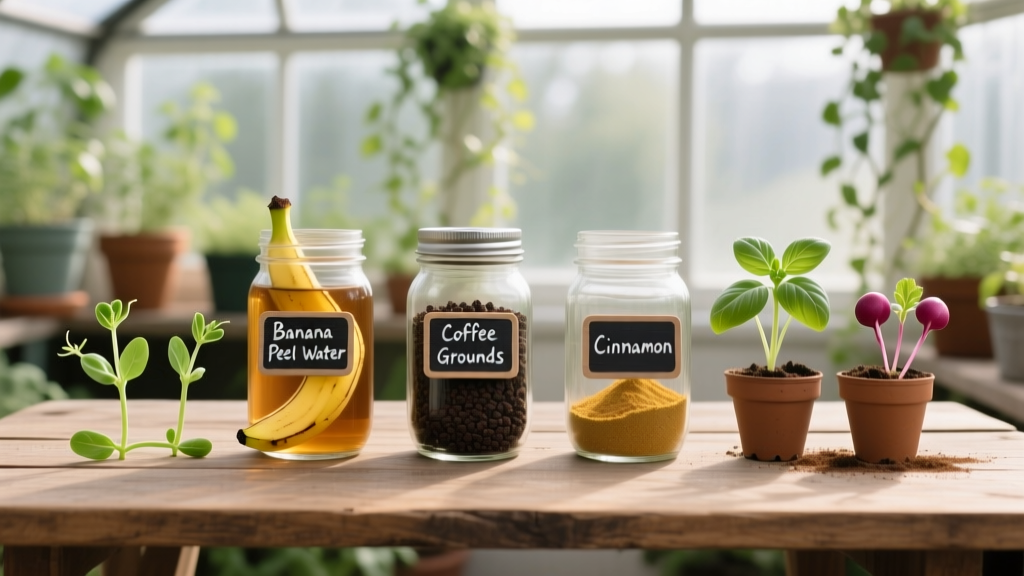
Viral Gardening Hacks: Do Banana Peels & Coffee Grounds Work?
Lisa ThompsonPublished
The Rise of Viral Gardening Hacks
If you have spent any time on TikTok, Instagram, or YouTube Shorts, you have likely encountered the booming world of viral gardening hacks. Social media influencers and hobbyists frequently promise miraculous, zero-waste solutions for common garden problems. From brewing banana peel tea to sprinkling cinnamon on seedling trays, these trends are visually appealing and claim to save you money on commercial fertilizers and fungicides. But as any seasoned horticulturist knows, what works in a 60-second video does not always translate to a thriving vegetable garden.
At LawnsGuide, we believe in evidence-based gardening. While upcycling household waste is a fantastic way to reduce your environmental footprint, applying the wrong materials directly to your soil can alter pH levels, lock up essential nutrients, or even invite fungal diseases. In this comprehensive guide, we are putting four of the most popular viral gardening trends under the microscope. We will break down the science, provide exact measurements, and tell you whether you should try them or skip them this growing season.
1. Banana Peel Water: The Potassium Miracle?
The Viral Claim
The trend involves stuffing leftover banana peels into a mason jar, covering them with water, and letting the mixture steep for 48 to 72 hours. Influencers claim this creates a potent, potassium-rich liquid fertilizer that will result in explosive blooms for flowers and massive yields for tomatoes and peppers.
The Scientific Reality
Banana peels are indeed rich in potassium, containing roughly 42% of their dry weight in this essential macronutrient. However, potassium in plant tissue is not readily water-soluble in a simple cold-water steep. Without a fermentation process or the breakdown of cellular structures via composting, only a negligible amount of potassium leaches into the water. Furthermore, leaving sugary, organic matter sitting in stagnant water at room temperature can breed harmful anaerobic bacteria and attract fungus gnats or fruit flies to your garden beds.
The Verdict & Best Practice
Verdict: Skip the tea. The nutrient transfer is incredibly inefficient, and the pest risk outweighs the minimal benefits.
Best Practice: Chop your banana peels into half-inch pieces and add them directly to your compost bin. According to the EPA's guidelines on composting basics, mixing nitrogen-rich 'greens' (like vegetable scraps) with carbon-rich 'browns' (like dried leaves) creates the ideal environment for microbes to break down the peels. Once composted, the potassium becomes bioavailable to your tomato and pepper plants. If you want a quick potassium boost without composting, opt for a certified organic kelp meal or greensand, applying 1 to 2 pounds per 100 square feet of garden bed.
2. Used Coffee Grounds: Slug Deterrent and Nitrogen Booster?
The Viral Claim
Gardeners are often advised to save their used coffee grounds and sprinkle them thickly around the base of hostas, lettuce, and strawberries. The claims are twofold: first, that the abrasive texture and residual caffeine will deter slugs and snails; second, that the grounds will immediately acidify the soil and provide a massive nitrogen boost.
The Scientific Reality
While pure, highly concentrated caffeine is indeed toxic to slugs, the brewing process extracts almost all the caffeine from the beans into your morning cup. Used coffee grounds contain virtually no caffeine left to act as a chemical deterrent. Furthermore, while coffee grounds are rich in nitrogen (roughly 2% by volume), this nitrogen is locked up in complex organic molecules. If applied thickly on the soil surface, the grounds form a hydrophobic crust that repels water and prevents oxygen from reaching plant roots. As soil microbes work to break down the carbon in the grounds, they can actually temporarily tie up soil nitrogen, causing a deficiency in your plants.
According to extensive soil studies published by Penn State Extension, applying raw coffee grounds directly to garden soil can inhibit seed germination and stunt the growth of young plants due to allelopathic compounds that survive the brewing process.
The Verdict & Best Practice
Verdict: Do not top-dress your garden beds with raw coffee grounds.
Best Practice: Coffee grounds are an incredible addition to your compost pile, provided they are used correctly. Treat used coffee grounds as a 'green' nitrogen source. Limit coffee grounds to no more than 20% of your total compost volume to prevent the suppression of beneficial soil microbes. Mix them thoroughly with carbon-heavy materials like shredded cardboard or straw. For slug control, rely on proven methods like iron phosphate-based organic baits or setting up shallow beer traps at soil level.
3. Cinnamon Powder: The Ultimate Fungicide?
The Viral Claim
When starting seeds indoors, 'damping off'—a fatal fungal disease that causes seedling stems to pinch and collapse at the soil line—is a gardener's worst nightmare. A highly viral hack suggests dusting the surface of your seed-starting mix with common kitchen cinnamon powder to prevent fungal growth and save your seedlings.
The Scientific Reality
Cinnamon contains cinnamaldehyde, a compound that possesses genuine, albeit mild, antifungal properties. In laboratory settings, cinnamon oil has been shown to inhibit certain fungal pathogens. However, the culinary cinnamon powder found in your spice rack (often Cassia cinnamon) has a much lower concentration of these active compounds. While it may help suppress minor surface mold on the top layer of your seed trays, it will not penetrate the soil deeply enough to protect the vulnerable root systems and lower stems from the primary culprits of damping off, such as Pythium and Rhizoctonia.
The Verdict & Best Practice
Verdict: Use it as a mild preventative, but do not rely on it as your sole line of defense.
Best Practice: If you want to use cinnamon, lightly dust the surface of the soil immediately after sowing your seeds using about 1/4 teaspoon per standard 10x20 seed tray. However, the University of Minnesota Extension emphasizes that environmental controls are vastly superior to chemical or natural fungicides for preventing damping off. To truly protect your seedlings, ensure you are using a sterile, soilless seed-starting mix, provide continuous gentle airflow with an oscillating fan, and water from the bottom to keep the soil surface dry.
4. Toilet Paper Roll Seed Starters
The Viral Claim
Upcycling empty toilet paper and paper towel cardboard tubes into biodegradable seed-starting pots is a staple of viral gardening content. Creators show themselves cutting slits in the bottom, folding them into pots, filling them with soil, and eventually planting the entire tube directly into the garden to avoid transplant shock.
The Scientific Reality
This is one viral hack that is rooted in solid logic, but it comes with hidden pitfalls. Cardboard is indeed biodegradable and carbon-rich. However, modern toilet paper rolls are often heavily processed and can take a surprisingly long time to break down in the soil, especially in cooler, drier climates. If the cardboard does not degrade quickly, it acts as a physical barrier, girdling the delicate roots of your transplants and stunting their growth. Additionally, the constant moisture required for seed starting can cause the rolls to develop aggressive blue-green mold before the seeds even germinate.
The Verdict & Best Practice
Verdict: A great zero-waste hack, but requires specific preparation to avoid root binding.
Best Practice: If you use TP rolls, do not just plant them whole. Before transplanting into the garden, use a pair of sterilized scissors to cut the cardboard roll vertically in two places, or peel the wet cardboard away entirely just before planting. If you insist on planting the cardboard, soak the entire pot in a weak liquid seaweed solution for an hour before putting it in the ground to accelerate microbial breakdown. Always ensure the top rim of the cardboard is buried at least a half-inch below the soil surface; if exposed to the air, it will act as a wick, rapidly drawing moisture out of your soil and drying out your plant's root zone.
Viral Gardening Hacks: The Final Verdict Table
To help you quickly navigate the sea of internet gardening advice, we have summarized our findings into an actionable reference chart.
| Viral Hack | The Primary Claim | Scientific Reality | LawnsGuide Best Practice |
|---|---|---|---|
| Banana Peel Water | Provides instant potassium for blooming plants. | Water extraction is inefficient; breeds pests. | Compost peels; use kelp meal for quick potassium. |
| Coffee Grounds Top-Dressing | Deters slugs and adds instant nitrogen. | Forms hydrophobic crust; lacks caffeine; ties up nitrogen. | Compost at max 20% volume; use iron phosphate for slugs. |
| Cinnamon Dusting | Cures and prevents seedling damping off. | Mild surface antifungal; won't protect deep roots. | Use sterile mix, bottom watering, and airflow fans. |
| TP Roll Seed Pots | Biodegradable pots that prevent transplant shock. | Degrades slowly; can girdle roots and wick moisture. | Peel or cut cardboard before planting; bury rims fully. |
Final Thoughts on Internet Gardening Advice
The democratization of gardening knowledge through social media is a wonderful thing. It has inspired millions of people to start growing their own food, embrace composting, and connect with nature. However, plants are living organisms governed by the immutable laws of biology, chemistry, and physics. A hack that looks visually satisfying on a smartphone screen might disrupt the delicate soil food web in your raised beds.
Whenever you encounter a new viral gardening trend, ask yourself: Does this mimic natural ecological processes? In nature, organic matter is broken down by fungi, bacteria, and invertebrates over time before it feeds plant roots. By channeling your kitchen scraps into a well-managed compost system rather than applying them directly to your soil, you work with nature rather than against it. Stick to the science, trust the soil biology, and your garden will reward you with a bountiful, healthy harvest season after season.
