Gardening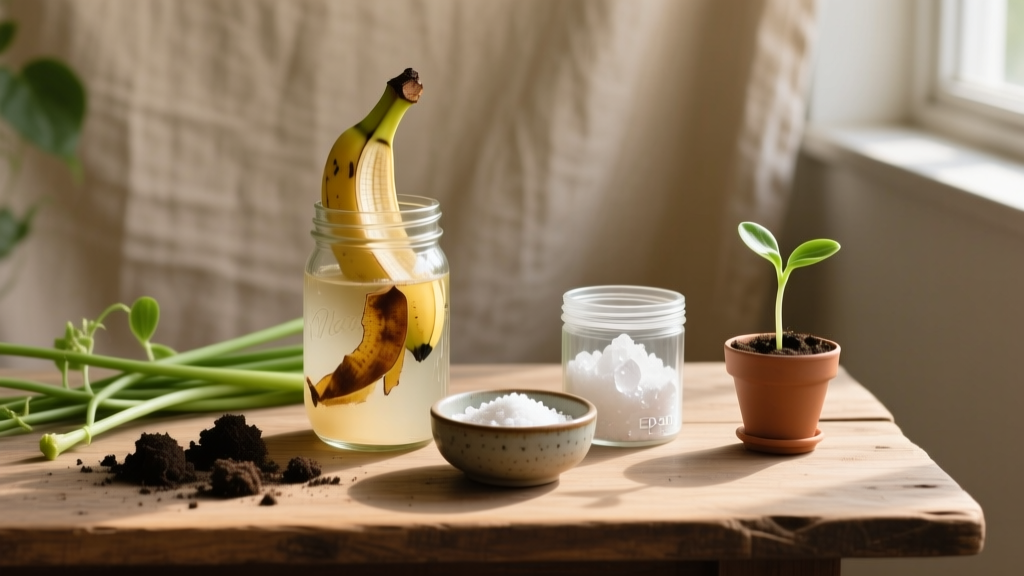
Viral Gardening Hacks: Do Banana Peels and Eggshells Work?
David ParkPublished
The Allure of the Viral Garden Hack
Scroll through TikTok, Instagram Reels, or YouTube Shorts, and you will inevitably encounter a myriad of miracle gardening hacks. Content creators frequently promise that common kitchen scraps and household items can replace expensive commercial fertilizers. From brewing banana peel tea to burying crushed eggshells and drenching plants in Epsom salts, these trending viral ideas boast millions of views. But as any seasoned horticulturist knows, social media algorithms reward engagement, not scientific accuracy.
At LawnsGuide, we believe your garden deserves evidence-based care. We put the internet's most popular viral gardening hacks under the microscope to separate fact from fiction. Below, we break down the science behind banana peels, eggshells, and Epsom salts, and provide the exact, science-backed alternatives you need for a thriving vegetable and flower garden.
Hack #1: Banana Peel Tea for Potassium
The Viral Claim: Soaking banana peels in water for 48 hours creates a nutrient-dense tea packed with potassium, which supposedly triggers massive blooms and heavy fruit yields in tomatoes, peppers, and roses.
The Scientific Reality: While it is true that bananas contain potassium, the nutrient is locked inside the plant's cellular structure. According to horticultural scientists at The Garden Professors, a collaborative extension blog run by university researchers, soaking peels in water extracts only a minuscule fraction of potassium. Most of the nutrients remain trapped in the fibrous peel. Furthermore, pouring this starchy, sugar-laden water into your garden beds can attract fungus gnats, rodents, and harmful anaerobic bacteria.
The Verdict: Skip the tea. If you want to compost banana peels, chop them into half-inch pieces and add them to a hot compost pile where microbial activity will properly break down the cellular walls over several months.
Hack #2: Crushed Eggshells to Prevent Blossom End Rot
The Viral Claim: Dropping a handful of crushed eggshells into the planting hole of a tomato seedling provides a steady stream of calcium, completely preventing Blossom End Rot (BER)—the dreaded black, sunken lesion on the bottom of tomatoes and peppers.
The Scientific Reality: Eggshells are primarily made of calcium carbonate. However, calcium carbonate is highly insoluble in water unless the soil pH is distinctly acidic (below 5.5). Most vegetable gardens aim for a pH between 6.2 and 6.8. In this optimal pH range, crushed eggshells will sit in the soil for years without breaking down into a plant-available form. Additionally, research highlighted by Washington State University Extension confirms that Blossom End Rot is rarely a true calcium deficiency in the soil; rather, it is a water-transport issue. Inconsistent watering prevents the plant from moving existing soil calcium into the developing fruit.
The Verdict: Do not rely on eggshells for acute calcium needs. Instead, focus on consistent, deep watering and mulching with 2 inches of straw to retain soil moisture.
Hack #3: Epsom Salts for Greener Leaves and More Peppers
The Viral Claim: Dissolving Epsom salt (magnesium sulfate) in water and applying it to the soil or foliage will result in lush, dark green leaves and double the yield of peppers and roses.
The Scientific Reality: Epsom salt is highly soluble and does provide magnesium and sulfur. However, most home gardens already have sufficient magnesium. Adding excess magnesium creates a cation imbalance in the soil. Magnesium, calcium, and potassium compete for the same uptake receptors on plant roots. By flooding the soil with magnesium, you inadvertently lock out calcium and potassium, leading to deficiencies that stunt growth and cause leaf necrosis. As noted in an extensive soil amendment review by Dr. Linda Chalker-Scott, applying Epsom salts without a prior soil test is more likely to harm your garden than help it.
The Verdict: Never apply Epsom salts blindly. Only use it if a professional soil test explicitly indicates a magnesium deficiency.
The Ultimate Viral Hack Comparison Chart
To save you time and money, we have compiled a quick-reference comparison chart detailing the viral hacks versus the proven, professional alternatives.
| Viral Hack | Primary Claim | Scientific Reality | Proven Alternative | Estimated Cost |
|---|---|---|---|---|
| Banana Peel Tea | High potassium for blooms | Extracts negligible nutrients; attracts pests | Kelp Meal or Greensand | $15 - $25 per bag |
| Crushed Eggshells | Calcium to stop Blossom End Rot | Takes years to break down; BER is a water issue | Agricultural Gypsum & Straw Mulch | $10 for Gypsum; $8 for Straw |
| Epsom Salts | Magnesium for green leaves | Causes nutrient lockout of calcium/potassium | Soil Test & Dolomitic Lime (if needed) | $15 for Soil Test |
Science-Backed Alternatives That Actually Work
Now that we have debunked the trending myths, it is time to implement actionable, science-backed strategies that professional growers use to maximize yields and soil health.
1. For Potassium: Kelp Meal and Greensand
If your goal is to boost flowering and fruiting, potassium is essential. Instead of banana peels, use Espoma Organic Kelp Meal or Down To Earth Greensand. Kelp meal not only provides a slow-release form of potassium but also contains vital trace minerals and natural growth hormones (cytokinins) that reduce plant stress during heatwaves.
- Application Rate: Apply 1/4 cup of kelp meal per square foot of garden bed.
- Timing: Work into the top 2 inches of soil two weeks before transplanting seedlings.
- Cost: Approximately $18 for a 4-pound bag, which treats up to 100 square feet.
2. For Calcium: Agricultural Gypsum
If you are battling Blossom End Rot or growing heavy feeders like brassicas, you need fast-acting calcium that will not alter your soil pH. Agricultural Gypsum (calcium sulfate) is the gold standard. Unlike lime, gypsum adds calcium without raising the soil pH, making it safe for all garden beds.
- Application Rate: Apply 1 tablespoon of gypsum directly into the planting hole at the root zone of each tomato or pepper transplant.
- Timing: Apply at transplanting, and side-dress with another tablespoon when the first fruits reach the size of a golf ball.
- Cost: Around $12 for a 5-pound bag.
3. For Soil Health: The Chop and Drop Compost Method
Instead of brewing messy teas, utilize the viral—but scientifically sound—Chop and Drop method. When you harvest crops or pull spent weeds (before they go to seed), chop them into small pieces with pruning shears and drop them directly onto the soil surface as mulch. This mimics natural forest floor ecology, feeding soil microbes, retaining moisture, and slowly releasing a balanced spectrum of NPK nutrients back into the earth.
Feed the soil, not the plant. A thriving soil food web will unlock the nutrients your plants need far more efficiently than any kitchen scrap tea. — Dr. Elaine Ingham, Soil Microbiologist.
4. Composting Kitchen Scraps Correctly
If you are determined to use kitchen waste in your garden, composting is the only scientifically viable method. However, a successful compost pile requires the correct Carbon-to-Nitrogen (C:N) ratio. Banana peels, coffee grounds, and vegetable scraps are greens (nitrogen-rich). To prevent a slimy, anaerobic mess, you must balance them with browns (carbon-rich materials) like shredded cardboard, dry autumn leaves, or straw. Aim for a C:N ratio of roughly 30:1 by volume. Turn the pile every 10 to 14 days to introduce oxygen, and maintain a moisture level akin to a wrung-out sponge. Within 90 to 120 days, you will have a rich, dark humus that improves soil structure, increases cation exchange capacity (CEC), and provides a slow-release buffet of micronutrients for your entire garden.
Final Thoughts: Trust Science Over Social Media
The gardening community on social media is a fantastic place for inspiration, layout ideas, and variety recommendations. However, when it comes to soil chemistry and plant nutrition, trending viral hacks often fall flat. By ditching the banana peels, eggshells, and Epsom salts in favor of targeted, slow-release organic amendments like kelp meal and gypsum, you will save time, reduce pest pressure, and cultivate a vastly more productive garden. Always begin your season with a comprehensive soil test from your local university extension office, such as the resources provided by Penn State Extension, to take the guesswork out of your gardening routine.
